A failed access workflow rarely begins with a dramatic security event. More often, it starts with a new application, an exception for a business unit, an unowned service account, or an integration that was never designed for production scale. An identity orchestration evaluation identifies where those small decisions have created uncontrolled paths to critical systems, data, and privileged capability.
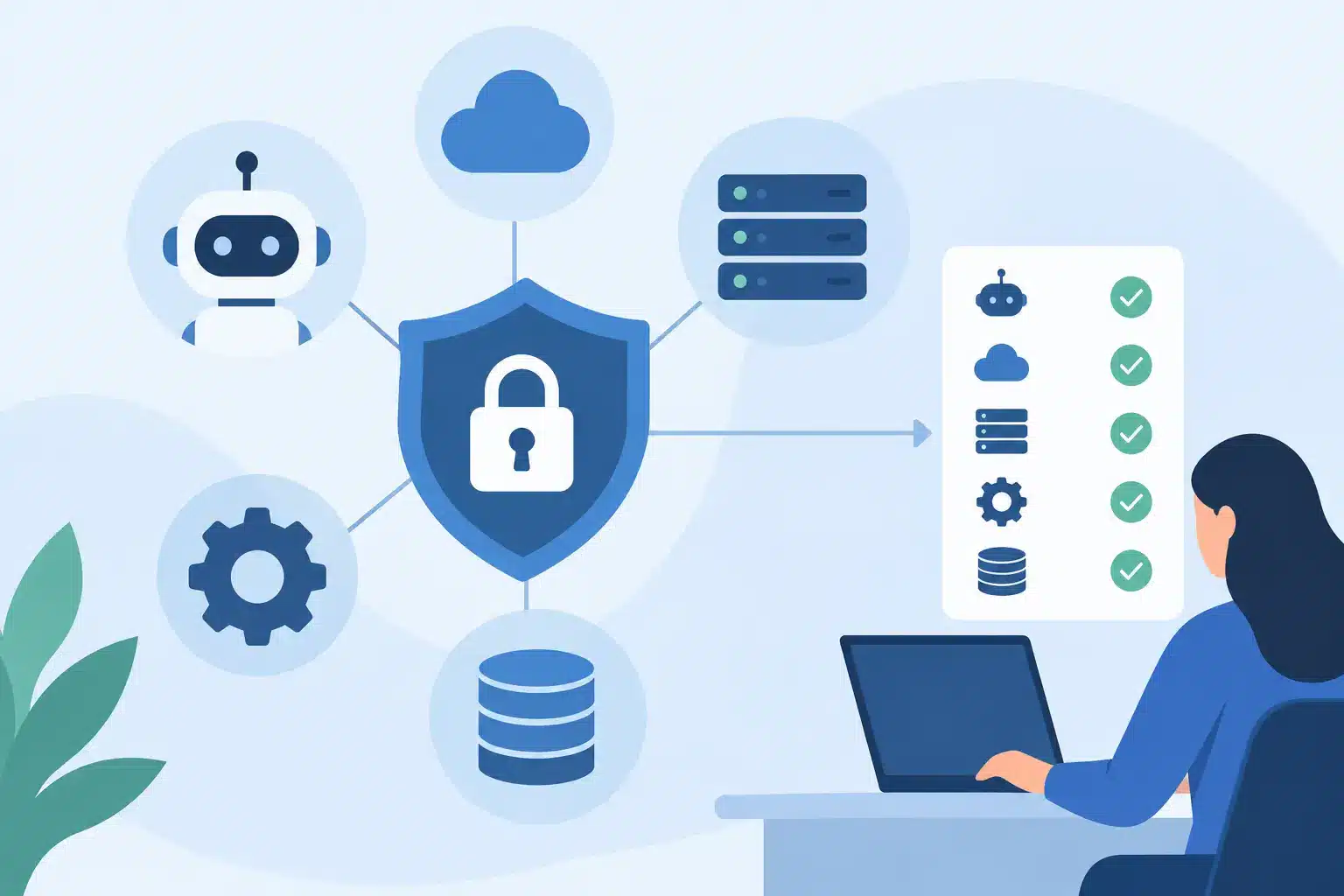
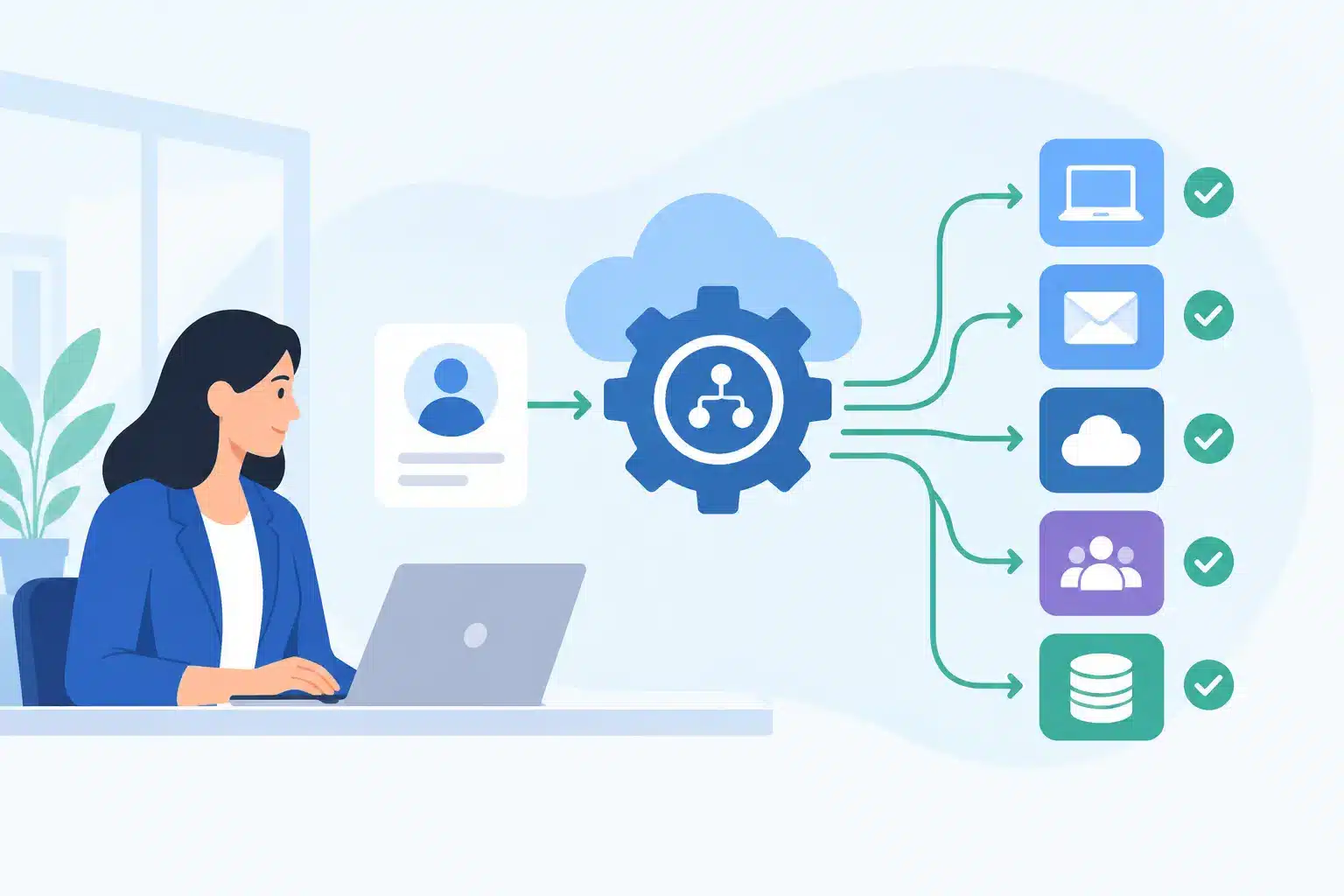
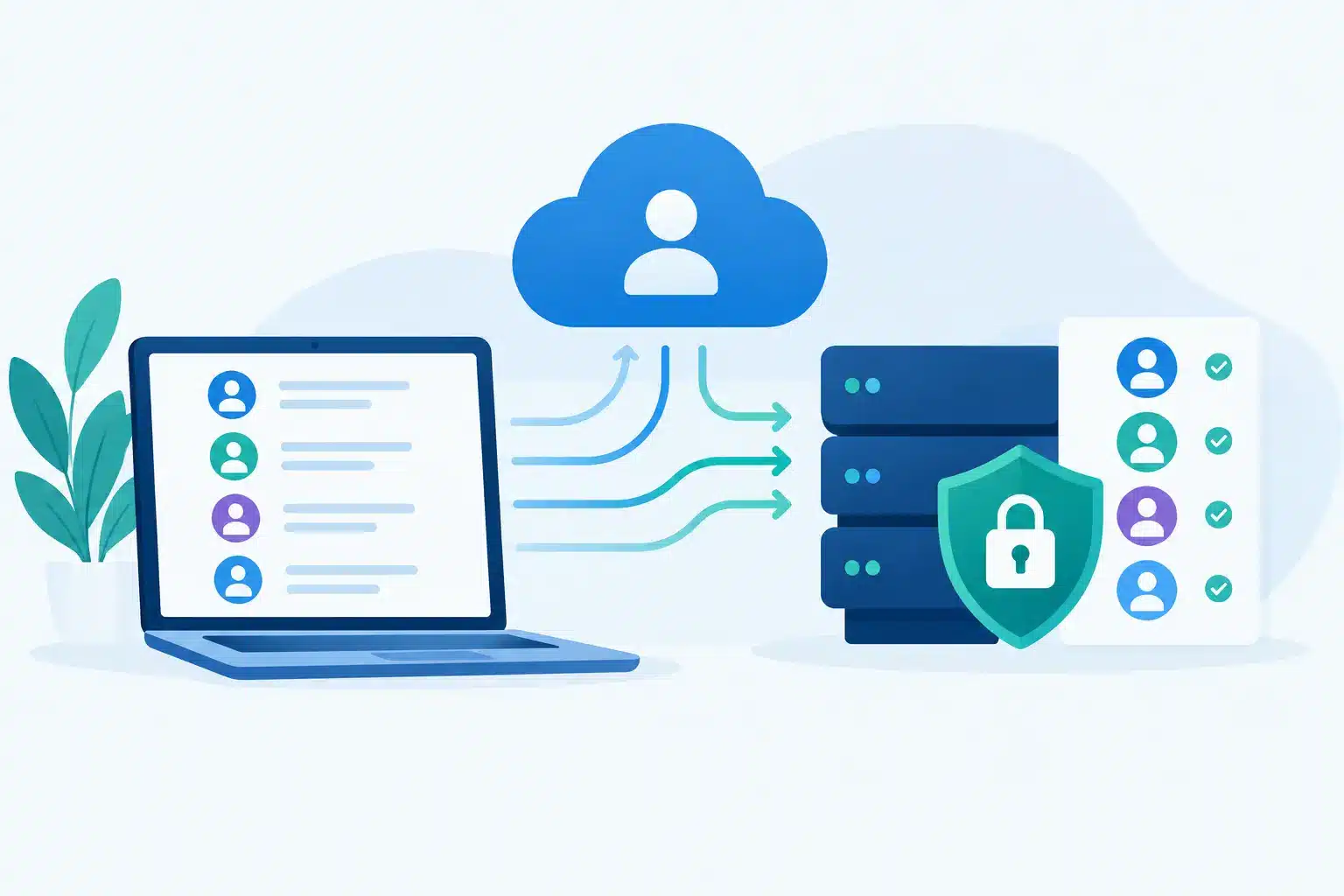
Identity orchestration is the coordination layer that turns identity policies into operational actions across authoritative sources, directories, applications, cloud platforms, privileged access tools, governance platforms, certificate services, and increasingly AI agents. It determines how identities are created, verified, provisioned, elevated, reviewed, changed, and removed. Evaluating that layer requires more than checking whether integrations are technically connected. It requires testing whether access decisions remain controlled when business conditions, threats, and technology change.
Why identity orchestration fails in production
Most enterprises do not design a single identity ecosystem from scratch. They inherit it. One platform supports workforce SSO. Another governs access reviews. A PAM tool protects selected administrator accounts. HR data drives some joiner-mover-leaver workflows, while contractors arrive through a separate process. Cloud teams automate access through infrastructure pipelines, often outside established IAM controls.
Each component may be functioning as intended. The risk appears between them. A terminated user can be disabled in the directory but retain a cloud role. A role change can update an HR record while leaving privileged access unchanged. An application may accept group membership but not support timely deprovisioning. A machine identity may receive a certificate without a reliable owner, renewal process, or revocation path.
Orchestration exposes these dependencies. It also exposes a difficult operational truth: automation without authority, evidence, and exception management can move risk faster than manual processes ever did.
What an identity orchestration evaluation should assess
A meaningful evaluation examines the control model, the technical architecture, and the operating model together. Looking at only one produces false confidence. A well-configured platform cannot compensate for unclear ownership, and a strong policy is ineffective when integrations bypass it.
Identity sources and lifecycle authority
Start by establishing which source is authoritative for each identity type. This includes employees, contractors, partners, customers, service accounts, workload identities, certificates, and AI agents. In many environments, the answer differs by system, geography, or business unit. That is manageable only when the exceptions are explicit and governed.
The evaluation should trace how identity attributes are created and changed, which attributes drive entitlement decisions, and how conflicts are resolved. It should also measure lifecycle timing. A deprovisioning control that completes after an employee has left the organization is not an effective termination control, even if the workflow eventually succeeds.
Access policy and entitlement design
Access orchestration is only as reliable as the policy it executes. Teams should examine whether entitlements are understandable, owned, and tied to business purpose. Excessive use of direct grants, nested groups, shared accounts, and broad default roles creates access that is difficult to evaluate and even harder to remove safely.
This is where role design requires judgment. Overly granular roles create an administration burden and encourage workarounds. Broad roles reduce friction but can accumulate toxic combinations of access. The right model depends on the application landscape, regulatory obligations, operating maturity, and the rate of organizational change. The objective is not perfect role engineering. It is a model that can be governed, audited, and sustained.
Integration reliability and control coverage
Every connector and API should be treated as a security dependency. An evaluation should determine whether integrations are monitored for failure, whether retries can create duplicate or incorrect access, and whether reconciliation detects drift between the identity platform and target systems.
Critical questions include whether provisioning is bidirectional or one-way, whether target applications return reliable status, and whether manual changes are detected. An integration that reports success without confirming the resulting entitlement is a visibility gap. A connector that fails silently during a high-volume onboarding event is an operational risk.
Particular attention should go to privileged access, cloud infrastructure, and non-human identities. These domains often have separate automation paths and higher consequences when controls fail.
Exceptions, approvals, and emergency access
Exception workflows reveal the real maturity of an identity program. Business urgency is legitimate. Uncontrolled urgency is not. The evaluation should review who can approve elevated access, how long access remains active, whether approvals are based on current risk, and whether emergency access is recorded and reviewed.
Temporary access should have an expiration mechanism that works independently of human follow-up. Break-glass accounts need documented ownership, protection, testing, and post-use review. If administrators rely on standing privilege because request workflows are too slow, the program has an operating problem, not simply a user-experience problem.
The evidence that matters
A productive identity orchestration evaluation does not stop at architecture diagrams or vendor configuration screens. It follows actual identity events from start to finish. Sample real onboarding, transfer, termination, access request, privileged elevation, certificate renewal, and account recovery scenarios. Then compare expected outcomes with evidence from source systems, orchestration logs, target systems, and governance records.
The strongest findings are measurable. They describe the affected population, the access exposure, the failed control point, the accountable owner, and the remediation path. For example, “deprovisioning needs improvement” is not actionable. “Contractor accounts in three SaaS platforms remain active for up to 14 days after vendor offboarding because the vendor management feed is not connected to the lifecycle workflow” is actionable.
Metrics should reflect both security and execution. Useful measures include time to provision and deprovision, percentage of orphaned accounts, percentage of privileged accounts under PAM control, access-review completion quality, connector failure rate, unresolved reconciliation exceptions, and certificate renewal success. Metrics without a defined response owner become reporting artifacts rather than controls.
A practical evaluation sequence
The work should begin with risk-based scoping, not an attempt to document every identity process at once. Prioritize systems that hold sensitive data, administer production infrastructure, support regulated processes, or create broad downstream access. Include the workflows that move identities into and out of those systems.
A disciplined evaluation typically moves through four connected activities:
- Establish the current-state identity architecture, data flows, owners, and trust boundaries.
- Test high-risk lifecycle and access scenarios against policy, technical configuration, and operational evidence.
- Identify control gaps, integration dependencies, and process failures by business impact and exploitability.
- Build a remediation plan that separates immediate exposure reduction from longer-term platform and operating-model improvements.
The sequence matters. Organizations often start by selecting a replacement product or expanding a tool already in place. That can be appropriate when a clear capability gap exists. But technology selection before control evaluation often transfers the same fragmented processes into a new environment.
Evaluate the operating model, not just the platform
Identity orchestration is a continuous service. It needs defined ownership across security, IAM, HR, application teams, infrastructure, cloud engineering, and audit. When ownership is distributed without decision rights, critical work falls into gaps: connector maintenance, role certification, policy changes, exception reviews, and application onboarding.
An evaluation should establish who owns identity data quality, who approves entitlement models, who maintains integrations, and who responds when a workflow fails. It should also determine whether the team has enough capacity and expertise to operate the environment after implementation. A program that depends on one administrator with undocumented knowledge is not resilient.
Managed operational support can reduce this dependency, but only when accountability remains clear. External expertise should strengthen monitoring, administration, and continuous improvement, not obscure who accepts risk or approves access policy.
AI agents and machine identities raise the standard
AI agents are adding a new class of identity to enterprise environments. An agent may access business systems, call APIs, retrieve sensitive data, initiate workflows, and act with delegated authority. Treating it as a generic service account removes the context needed for control.
The evaluation should ask what the agent is authorized to do, which human or business owner is accountable, how its permissions are constrained, how actions are logged, and how credentials are rotated or revoked. The same discipline applies to service accounts, workload identities, API keys, and certificates. Non-human identities often outnumber workforce users, change more quickly, and receive less review.
Turn findings into controlled execution
The goal is not a lengthy assessment report. It is a prioritized control plan that can be executed without disrupting essential operations. Fast remediation may include disabling orphaned accounts, removing standing privilege, assigning owners to unmanaged applications, or correcting a broken offboarding integration. Strategic work may include redesigning the identity data model, consolidating access patterns, implementing governance workflows, or extending PAM and certificate lifecycle controls.
IDENT1TY approaches this work as an operational discipline: assess the environment, establish control priorities, integrate the right capabilities, and support the service after deployment. That approach recognizes that identity security is tested every time a person changes roles, an administrator needs urgent access, a certificate renews, or an automated agent acts.
The next useful step is to choose one high-risk workflow and trace it with evidence, from the source of identity data to the final access decision. That exercise will usually show whether orchestration is providing control or merely moving requests between disconnected systems.