A terminated contractor still has access to a production application. A service account owns credentials no one can trace. A certificate expires inside a customer-facing service. An AI agent receives permissions designed for a human administrator. These are not isolated administration errors. They are identity security failures, and they expose how quickly access risk grows when identity is managed as a collection of tools rather than an operating discipline.
For enterprise security teams, identity has become the control plane for the business. Every employee, administrator, partner, workload, API, device, certificate, and autonomous agent needs access to something. The question is no longer whether an organization has identity controls. The question is whether those controls provide reliable visibility, enforceable policy, and evidence that critical access is appropriate at every stage of its lifecycle.
Identity Security Starts With Control, Not Products
Identity security is the practice of governing and protecting digital identities and their access to systems, data, and services. That definition sounds straightforward. The operational reality is not.
Most organizations have accumulated identity capabilities over years of cloud adoption, acquisitions, regulatory requirements, and urgent security projects. A workforce identity platform may sit beside a separate privileged access solution. Joiner, mover, and leaver processes may depend on HR data, ticket queues, custom scripts, and manual approvals. Machine identities may be distributed across cloud accounts and application teams. Certificate ownership may be unclear until renewal fails.
Each platform can be valuable. Fragmentation is the problem. When identity data, access policies, and operational responsibility are disconnected, teams lose the ability to answer basic questions with confidence: Who has access? Why do they have it? Is the access still required? What happens when the identity changes? Can the organization prove that privileged activity is controlled?
A product deployment does not answer those questions on its own. A disciplined identity program does. It defines authoritative data sources, establishes ownership, automates repeatable controls, monitors exceptions, and measures outcomes over time. This is why identity work should be treated as a sustained security capability, not a project completed at go-live.
The Attack Surface Is No Longer Just Human Users
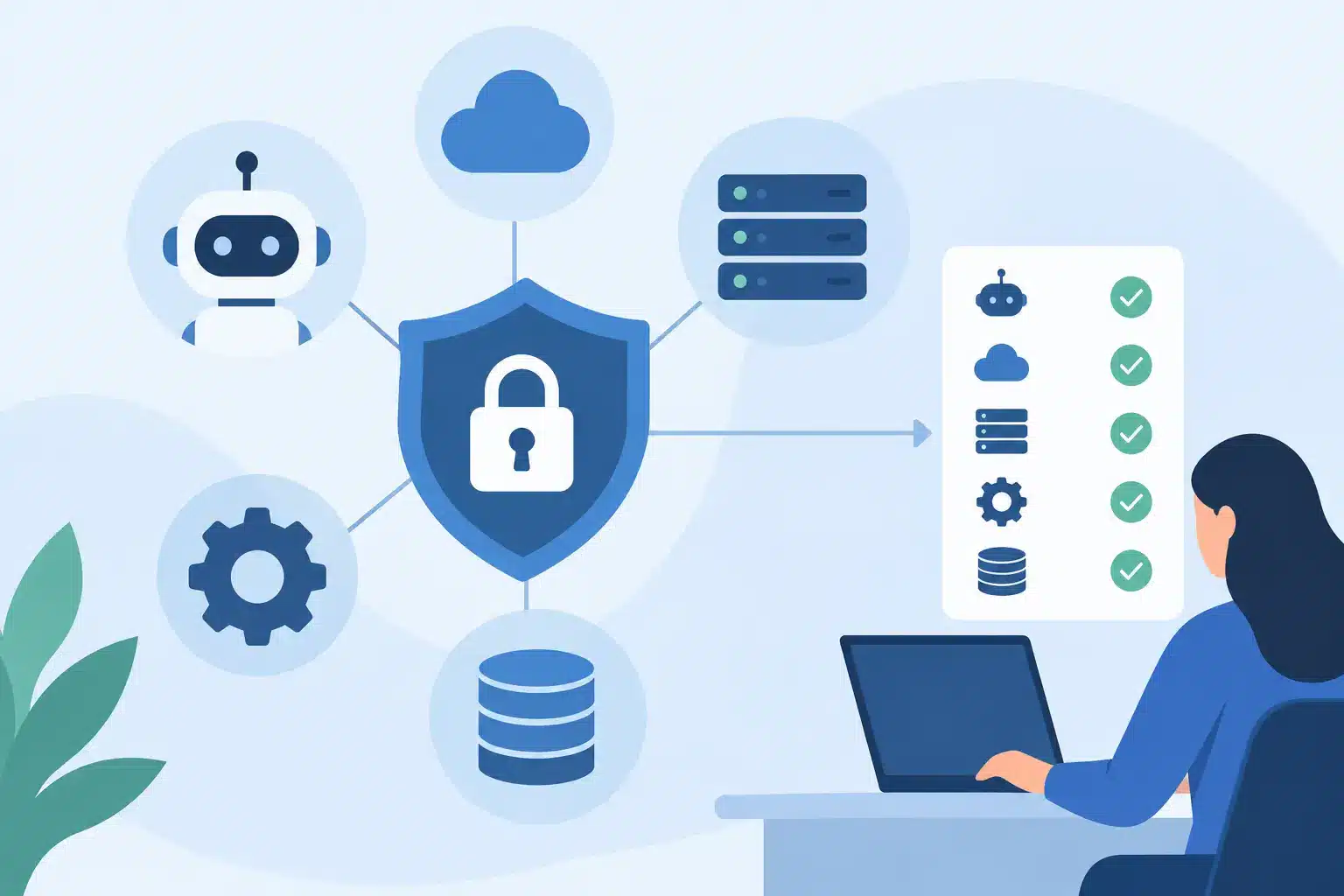
Workforce identities remain central, but they are only part of the access environment. Modern enterprises operate with several identity populations, each with different risk characteristics and control requirements.
Human users need access that reflects their role, location, business function, and current employment status. Privileged identities require stricter controls because they can alter infrastructure, bypass standard safeguards, or access highly sensitive information. Third parties require defined, time-bound access that can withstand limited oversight. Machine identities need lifecycle management despite having no manager, no HR record, and often no natural expiration date.
AI agents add another category. An agent that reads business data, calls APIs, initiates workflows, or takes actions across systems is an identity with meaningful authority. Treating it as merely an application feature creates a governance gap. Organizations need to know who sponsors the agent, what data it can access, which actions it can perform, how permissions are constrained, and how its activity is logged and reviewed.
The same principle applies to certificates and cryptographic keys. They are machine credentials that establish trust between services and devices. A missed renewal can interrupt operations. A compromised private key can permit unauthorized access. Certificate lifecycle management is therefore both a resilience requirement and an identity security control.
Build the Operating Model Around the Access Lifecycle
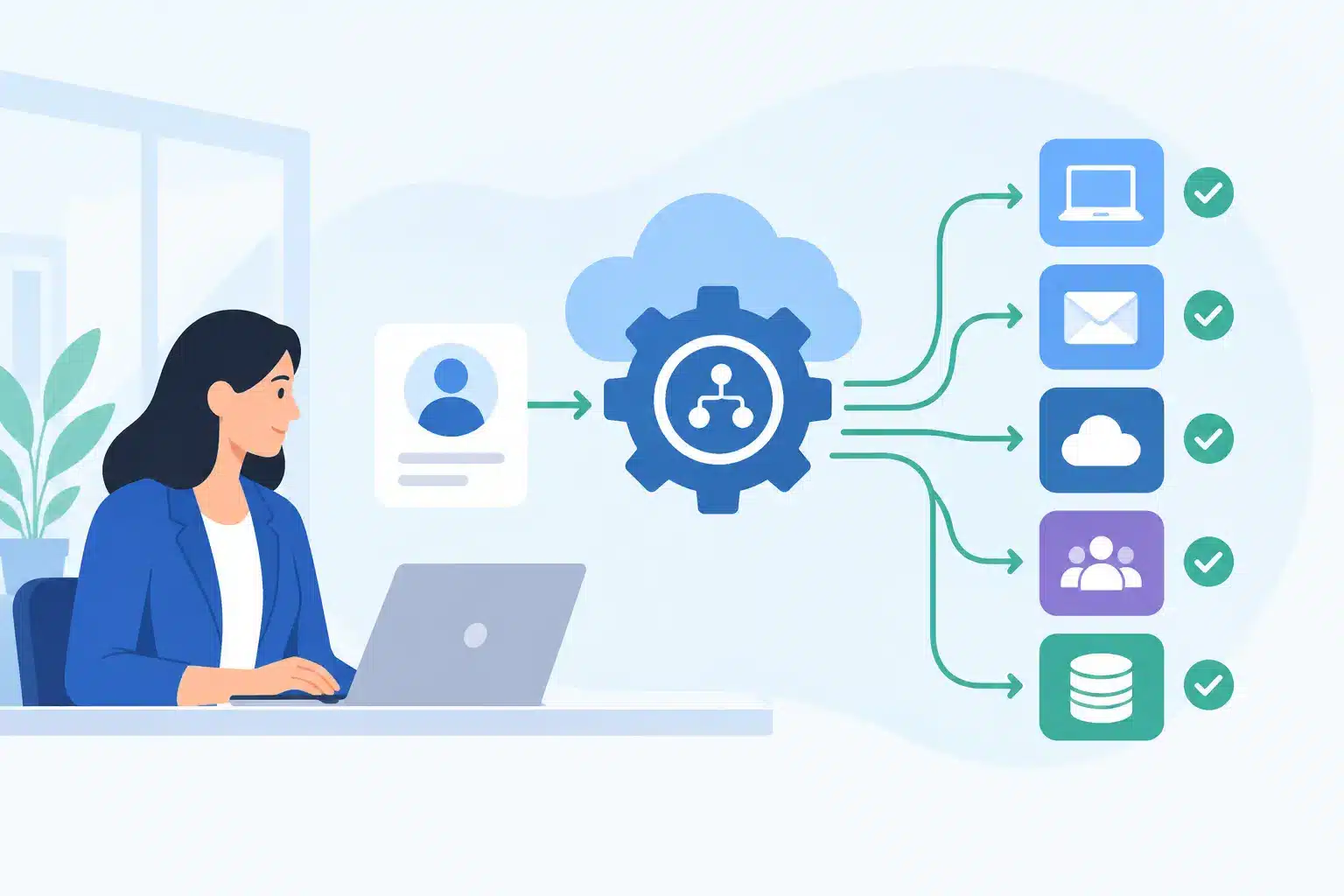
A workable identity program follows access from request through removal. This sounds basic, but lifecycle gaps are where many material exposures begin.
Start with authoritative identity data. HR, contractor management, partner systems, and asset inventories must provide reliable signals about who or what exists, what status it holds, and who is accountable. If source data is incomplete or delayed, downstream automation will reproduce the error faster. Identity architecture should account for data quality, reconciliation, and the ownership needed to correct exceptions.
Next, establish access models that fit the business. Role-based access control is useful where job functions are stable and can be defined consistently. Attribute-based controls can provide greater flexibility for dynamic environments. In practice, many enterprises need a combination. The objective is not to force every entitlement into a perfect model. It is to reduce unnecessary access while making exceptions visible, approved, and reviewable.
Provisioning and deprovisioning should then be automated wherever the risk and volume justify it. Automation reduces delays and manual error, but it should not automate poor decisions. High-impact access needs appropriate approval logic, separation-of-duties controls, and clear escalation paths. The right balance depends on the sensitivity of the target system, the maturity of identity data, and the organization’s tolerance for operational delay.
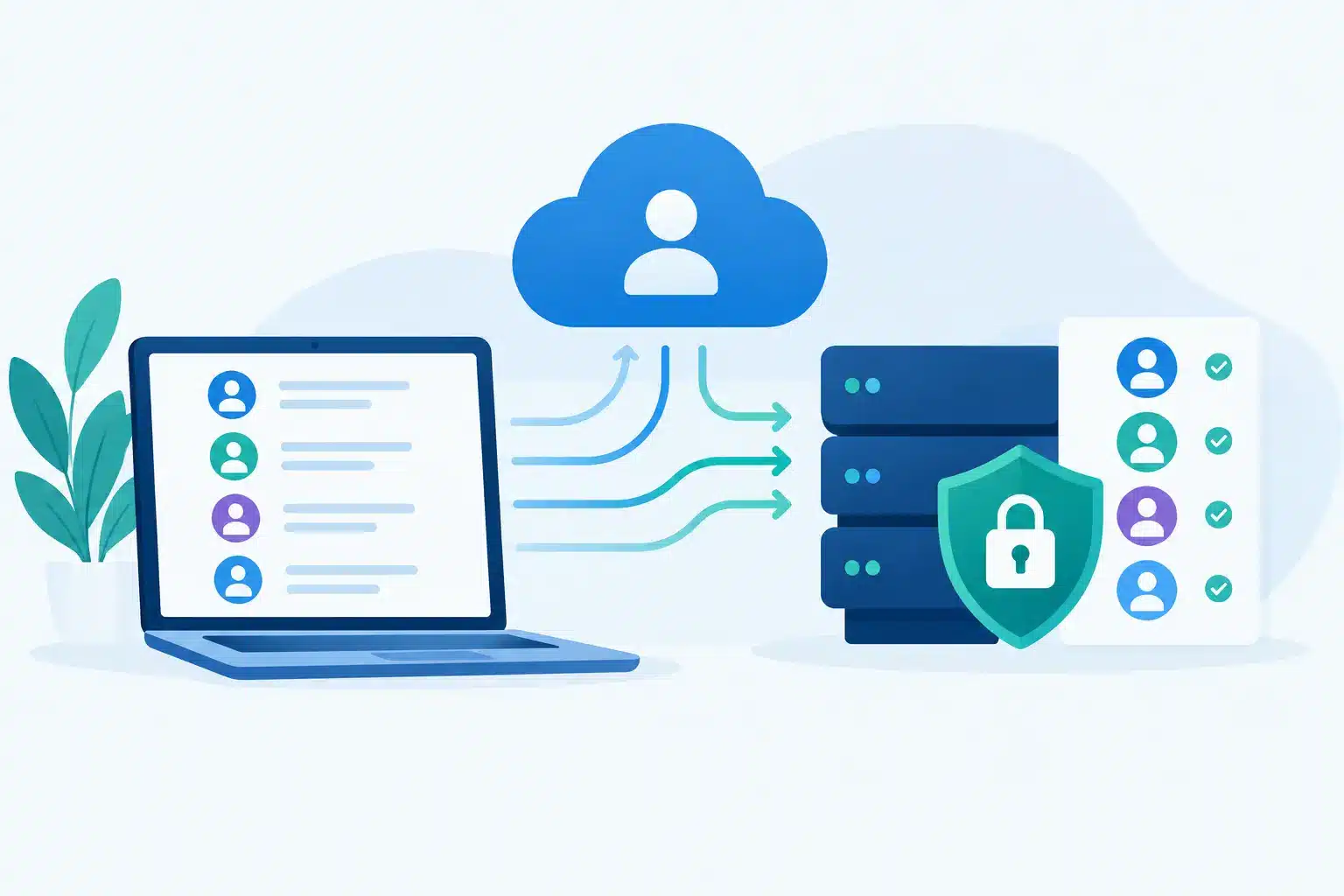
Finally, access must be reviewed and adjusted continuously. Certifications, entitlement reviews, privileged session oversight, anomalous access detection, and policy enforcement provide the feedback loop. Without that loop, organizations only know that access was approved at one point in time. They do not know whether it remains justified.
Privileged Access Requires Different Rules
Privileged access deserves its own operating model because its consequences are different. An over-provisioned employee account may create risk. An unmanaged administrator credential can change configurations, disable controls, create new accounts, or access regulated data at scale.
Privileged Access Management should reduce standing privilege, secure credential storage, enforce strong authentication, and record administrative activity where appropriate. Just-in-time access can sharply reduce exposure by granting elevated permissions only for a defined task and duration. Session controls add visibility, but teams still need operating procedures for emergency access, incident response, break-glass accounts, and review of suspicious activity.
The trade-off is practical: controls that are too rigid will be bypassed during operational pressure. Controls that are too permissive become theater. Effective privileged access design reflects how administrators actually work while preserving approval, accountability, and traceability.
Measure What Is Controlled and What Is Not
Identity programs often report deployment milestones: applications integrated, accounts migrated, or workflows configured. Those measures matter, but they do not show whether risk has decreased.
Security leaders need operational metrics that identify control coverage and unresolved exposure. Useful indicators include the percentage of applications connected to a central identity provider, the number of orphaned accounts, privileged accounts without an accountable owner, stale service credentials, access review completion rates, time to revoke access after termination, and certificates nearing expiration without assigned ownership.
Metrics should also expose exceptions. A small number of high-risk exceptions can matter more than broad compliance percentages. For example, an emergency account without strong authentication, a dormant domain administrator, or an AI agent with unrestricted access to sensitive records may require immediate action even if overall access review completion is high.
This is where governance becomes operational rather than administrative. Leadership can prioritize remediation based on business impact, system criticality, and exploitability. Engineering teams can see which integrations and processes need attention. Audit teams receive evidence grounded in actual access controls instead of manually assembled spreadsheets.
Identity Security Needs a Delivery Model That Lasts
Identity environments change continuously. New applications are introduced, cloud platforms expand, employees move roles, vendors rotate, and business units acquire new technologies. A program that relies on a one-time implementation will drift away from the environment it was designed to protect.
Sustained execution requires architecture, integration expertise, development capability, and managed operational support. It also requires the discipline to standardize where possible without ignoring the systems that make the business distinct. Vendor platforms are powerful, but their value depends on sound design, clean integrations, defined ownership, and continuous tuning.
For many organizations, the most effective approach is phased. Address critical privileged access and termination gaps first. Establish identity governance for high-risk applications. Bring machine identities and certificates into inventory and ownership. Then expand coverage with a repeatable integration pattern. This sequence produces visible risk reduction while building a foundation that can scale.
IDENT1TY approaches this work as an end-to-end operating capability: from assessment and target architecture through implementation, custom integration, governance, and ongoing service. The goal is not more identity tooling. It is controlled access that remains measurable as the enterprise changes.
The practical next step is to test one critical access path end to end. Choose a high-value application or administrative function and verify the identity source, approval path, authentication controls, privilege level, activity visibility, review process, and removal process. The gaps found in that single path will often show where your identity security program needs its next decision.