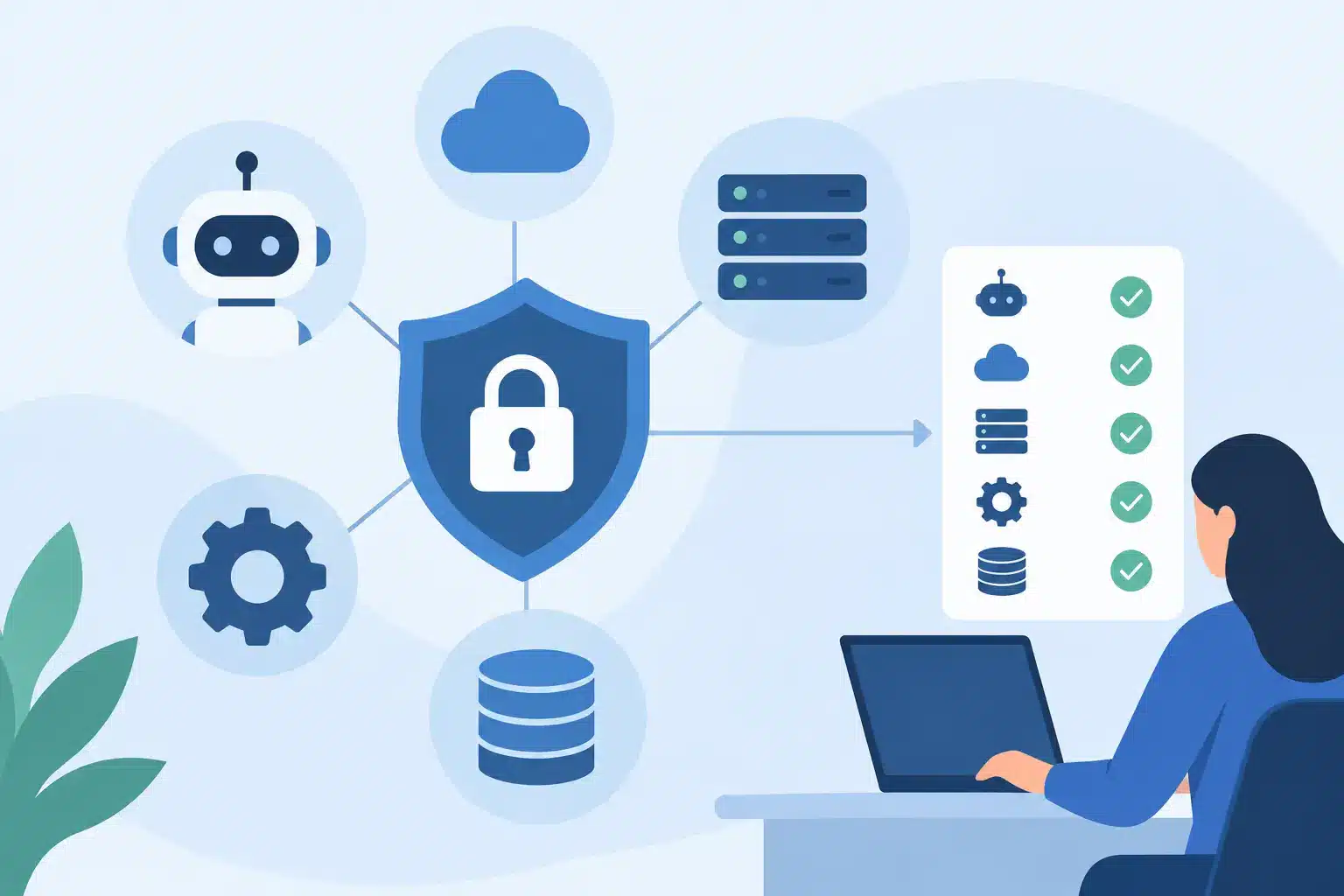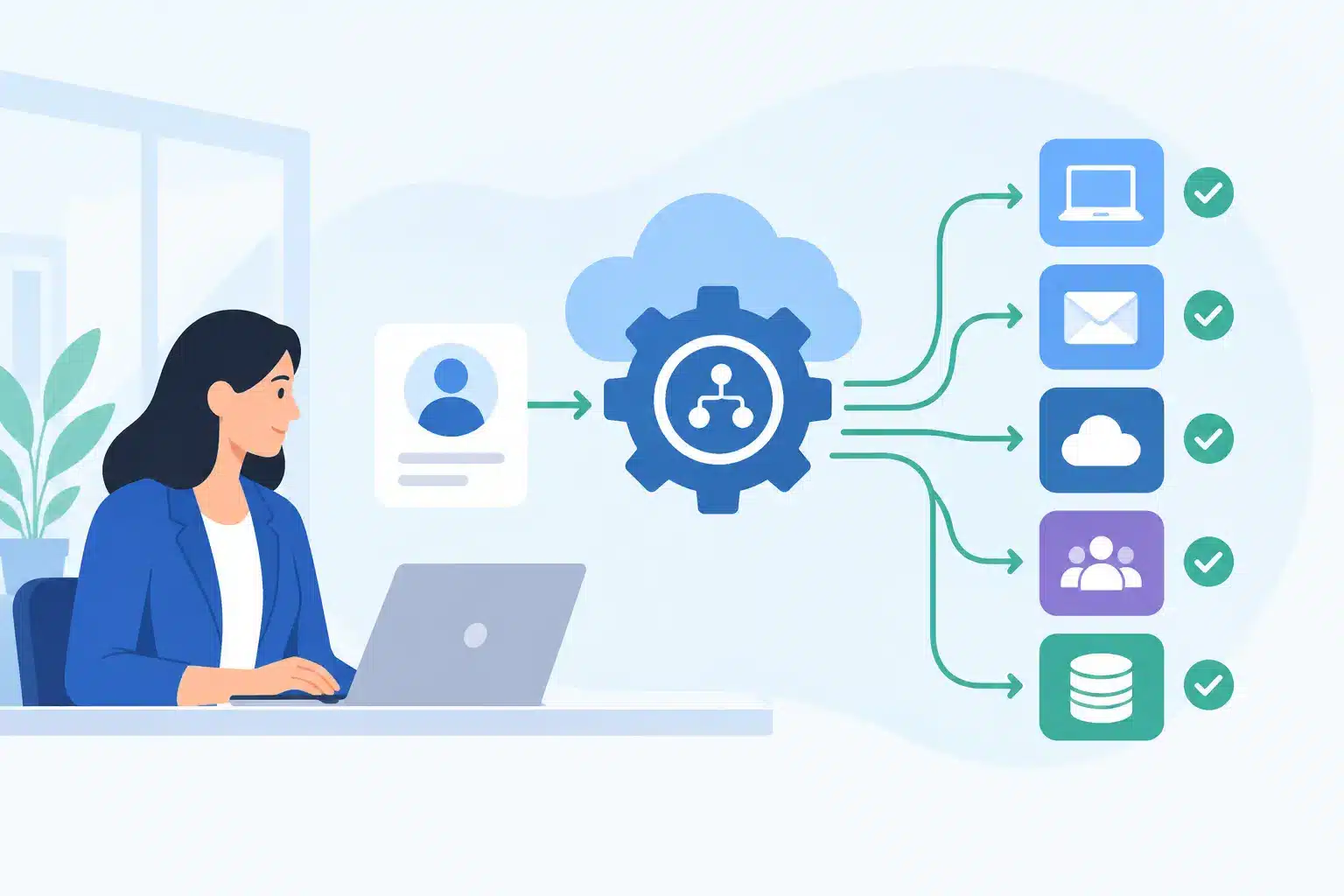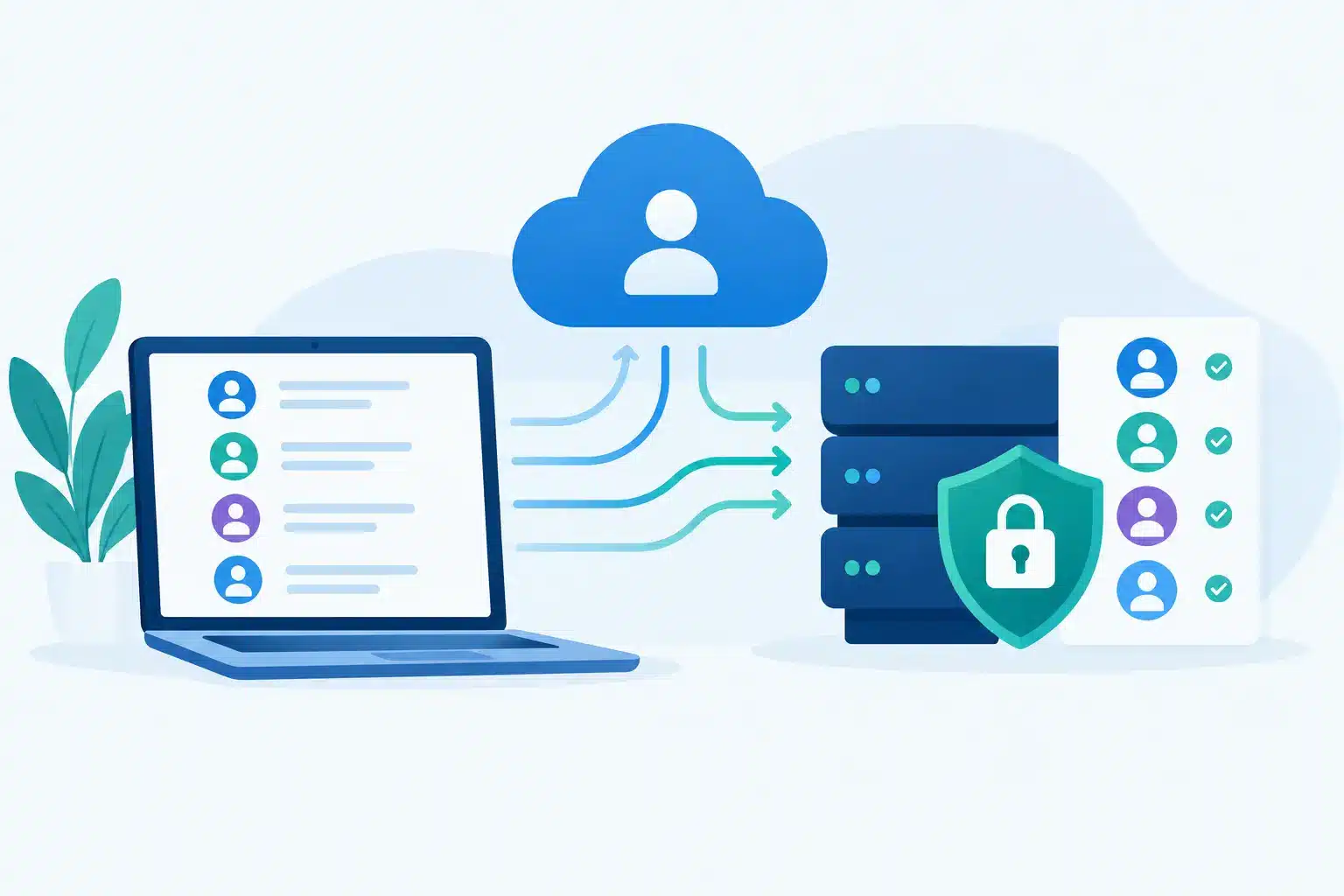
An identity assessment often exposes a hard fact: the organization can describe its IAM tools, but it cannot reliably answer who has access to its most critical systems, why they still need it, or how that access is removed. That is the operational gap attackers exploit. Knowing how to assess identity security gaps means testing the controls that govern real access across people, privileged accounts, applications, machine identities, certificates, and AI agents – not simply reviewing policy documents or tool dashboards.
For enterprise teams, the goal is not to produce another risk register. It is to establish a defensible view of identity exposure, prioritize the failures that create material risk, and assign clear ownership for remediation.
Start With the Business Services That Matter Most
Do not begin with every directory object or every application in the environment. Begin with the services where an identity compromise would cause the greatest operational, financial, safety, or regulatory impact. That typically includes production cloud tenants, payment and financial systems, electronic health record platforms, industrial control environments, customer data platforms, code repositories, and identity administration systems.
For each service, identify the identities that can administer it, change data, approve transactions, access sensitive records, or disable security controls. Map the authentication paths, authorization model, privileged roles, service accounts, federated connections, and recovery processes that support those identities.
This business-first scope prevents a common assessment failure: treating every access issue as equally urgent. An inactive account in a low-risk collaboration platform is not the same as an unmanaged administrator account in a production tenant. Severity should reflect both the access granted and the business consequence of misuse.
Build an Identity Inventory You Can Trust
An assessment is only as credible as the identity population it examines. Most organizations have more identities than their authoritative sources suggest. Accounts persist after mergers, contractors retain access after engagements, applications create local accounts outside central governance, and automation depends on credentials no team actively owns.
Create a consolidated inventory that reconciles identity data across directories, HR systems, contractors, cloud platforms, SaaS applications, PAM vaults, certificate authorities, CI/CD pipelines, and security tooling. Include identity type, owner, source system, authentication method, entitlements, last activity, privilege level, and lifecycle status.
At minimum, distinguish these identity categories:
- Workforce identities, including employees, contractors, and temporary staff
- Privileged human accounts, emergency accounts, and administrator role assignments
- Non-human identities, such as service accounts, API keys, workloads, and bots
- Machine identities, including certificates, keys, and workload credentials
- External and federated identities, including partners, suppliers, and customer administrators
- AI agents and agentic workflows that can retrieve data, call tools, or initiate actions
The inventory must identify an accountable owner for each high-risk identity. “IT” is not an owner. A named business or technical owner must be able to confirm the identity’s purpose, access requirements, and retirement conditions. Where ownership cannot be established, treat the identity as a remediation candidate rather than an administrative exception.
Test for orphaned, dormant, and duplicate access
Lifecycle controls frequently look complete in design but fail at the edges. Compare HR termination and transfer records with directory disablement, SaaS deprovisioning, group removal, and PAM access removal. Measure the actual delay between a triggering event and access revocation.
Also examine dormant accounts that retain active credentials, duplicate accounts created through multiple identity stores, and accounts exempted from standard lifecycle processes. A break-glass account may be justified. A shared administrator account with no owner, no vaulting, and no session record is not.
Assess Authentication and Access Paths
The next question is whether an attacker could use a valid identity to reach a critical service. This requires more than checking whether multifactor authentication is enabled somewhere in the environment. Assess where MFA is enforced, which methods are permitted, which applications bypass central authentication, and how exceptions are approved and reviewed.
Focus on authentication strength in context. Phishing-resistant MFA should protect administrators and access to sensitive systems. Legacy protocols, password-only application access, weak recovery flows, unmanaged device access, and broad conditional-access exclusions can reduce the value of an otherwise mature identity platform.
Review federation trust relationships and single sign-on configurations with the same discipline. A compromise in one identity provider, tenant, or partner connection can become a path into multiple downstream applications. Confirm that claims are minimized, privileged roles are not assigned through overly broad groups, and dormant enterprise applications do not retain active trust.
Examine Privilege as an Operating Process
Privilege is where identity gaps become incident paths. The assessment should determine not only who has administrative access, but whether that access is controlled at the moment it is used.
Review standing privilege, local administrator rights, cloud role assignments, directory administration, database administration, and access to security tools. Look for role sprawl, nested groups, direct assignments that bypass governance, and administrators who use the same account for daily work and privileged tasks.
A mature privileged access model uses separate administrative identities, just-in-time or time-bound elevation where practical, credential vaulting, session monitoring, and documented emergency access. The exact control mix depends on operational constraints. A 24/7 operations team may need rapid elevation. That does not eliminate the need for approval, recording, expiration, and review.
Pay particular attention to privilege outside the PAM program. Cloud-native roles, application-level administration, SaaS super-admin accounts, and DevOps secrets are often governed separately from traditional infrastructure administration. Attackers do not care which team owns the control gap.
Find Non-Human and Machine Identity Exposure
Non-human identities usually outnumber human users, and they change faster. Service accounts run applications, API credentials connect services, certificates secure machine-to-machine traffic, and workload identities support cloud automation. Yet many organizations cannot state where these credentials are used, who owns them, or whether they are rotated.
Assess whether each non-human identity has a defined purpose, owner, least-privilege access model, credential rotation process, and expiration or retirement control. Scan for hard-coded secrets, long-lived tokens, shared service accounts, certificates approaching expiration, and private keys stored in developer workstations or unapproved repositories.
Certificate lifecycle management deserves specific attention. Expired certificates create outages; compromised or unmanaged certificates create trust failures. Measure discovery coverage, issuance controls, inventory accuracy, renewal automation, key protection, and the ability to revoke certificates quickly. A renewal process that depends on a manual spreadsheet is a continuity risk as well as a security gap.
Include AI agents in the assessment scope
AI agents add a new identity boundary because they can act through delegated permissions, API tokens, service accounts, and connected tools. Assess each agent as an operational identity: what data can it read, which actions can it perform, what identity does it use, and where are its decisions and actions logged?
Do not accept broad inherited permissions simply because an agent is experimental. Start with constrained scopes, short-lived credentials, approval gates for consequential actions, and clear separation between retrieval access and write access. The risk changes significantly when an agent can modify tickets, provision accounts, transfer data, or execute commands.
Validate Governance Through Evidence, Not Policy
Identity governance gaps are often visible in the difference between an access policy and the evidence that it operates. Sample access certifications, joiner-mover-leaver records, privileged access approvals, exception logs, and entitlement review results. Check whether reviewers understand the access they are approving and whether remediation is completed within defined timeframes.
Entitlement reviews can become a compliance exercise when managers receive unclear role names and thousands of decisions at once. Improve the assessment by measuring decision quality: Can the reviewer see the application, business purpose, risk level, and last use of the entitlement? Are high-risk decisions escalated? Are rejected entitlements actually removed from every connected system?
Segregation-of-duties analysis also requires context. A conflict on paper may be harmless if systems enforce transaction controls. Conversely, a user with separate permissions across multiple platforms may create a material conflict that no single application detects. Test end-to-end business processes, especially those involving payment approval, vendor changes, sensitive data export, or production deployment.
Turn Findings Into an Executable Remediation Plan
A useful assessment ranks findings by exploitability, privilege, exposure, and business impact. It also identifies the control owner, target state, dependencies, and verification method. Avoid vague actions such as “improve IAM.” Define the exact correction: remove a standing cloud role, vault and rotate a service credential, enforce phishing-resistant MFA for administrators, establish a certificate inventory, or recertify access to a specified application population.
Separate immediate containment from structural improvement. Disabling an orphaned administrator account is immediate risk reduction. Integrating contractor lifecycle events with downstream deprovisioning is the control change that prevents recurrence. Both belong in the plan, but they require different owners, timelines, and measures of success.
Track a small set of operational metrics over time: orphaned high-risk accounts, privileged accounts with standing access, applications outside centralized authentication, non-human identities without owners, overdue access reviews, and certificates without managed renewal. Metrics should show whether exposure is shrinking, not merely whether a project milestone was completed.
Identity security is not fixed when an assessment report is delivered. New applications, acquisitions, cloud services, automation, and AI use cases continuously create new access paths. The organizations that maintain control are the ones that turn assessment into a repeatable operating discipline: measure access, challenge exceptions, remediate with ownership, and verify that the control still works when the environment changes.