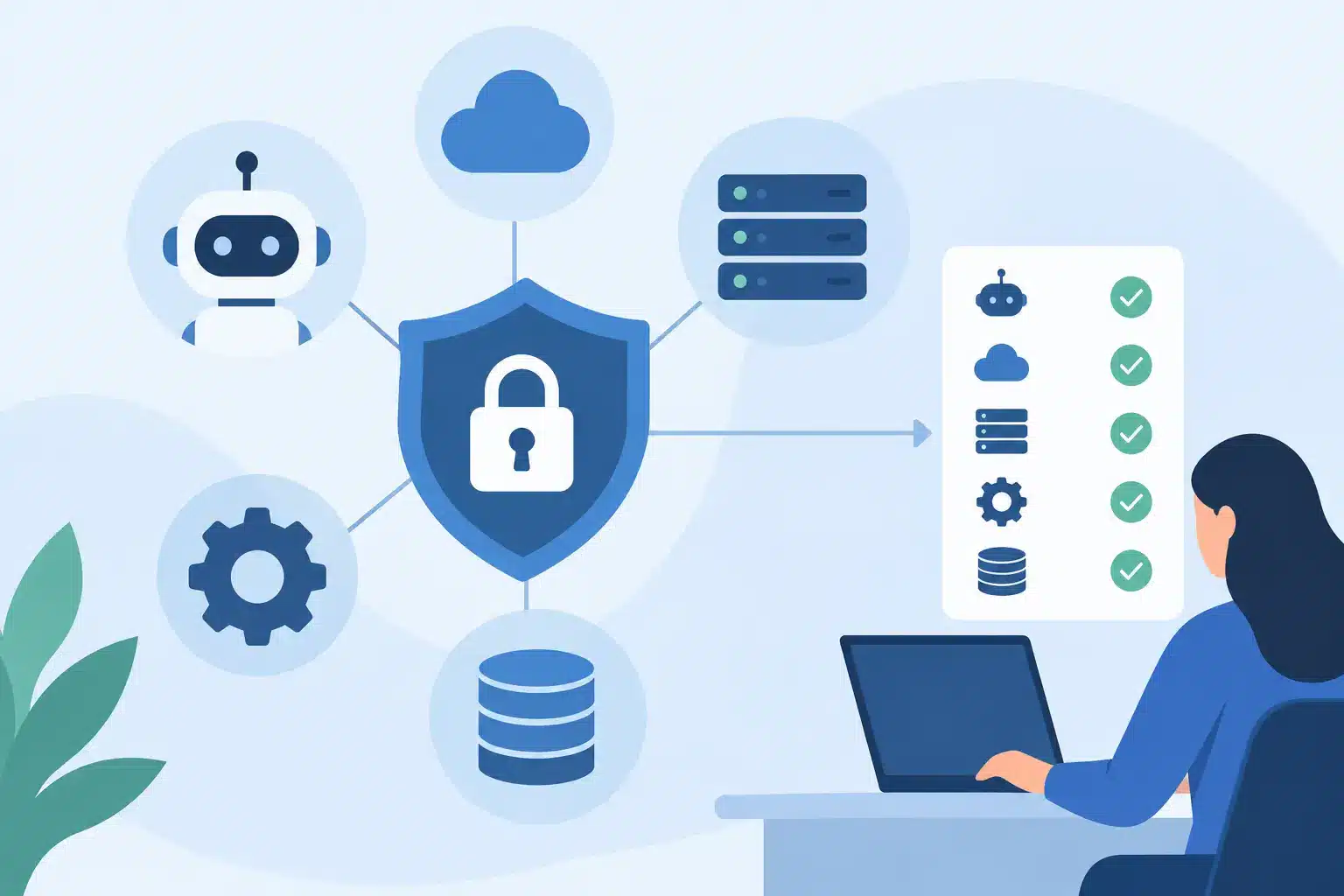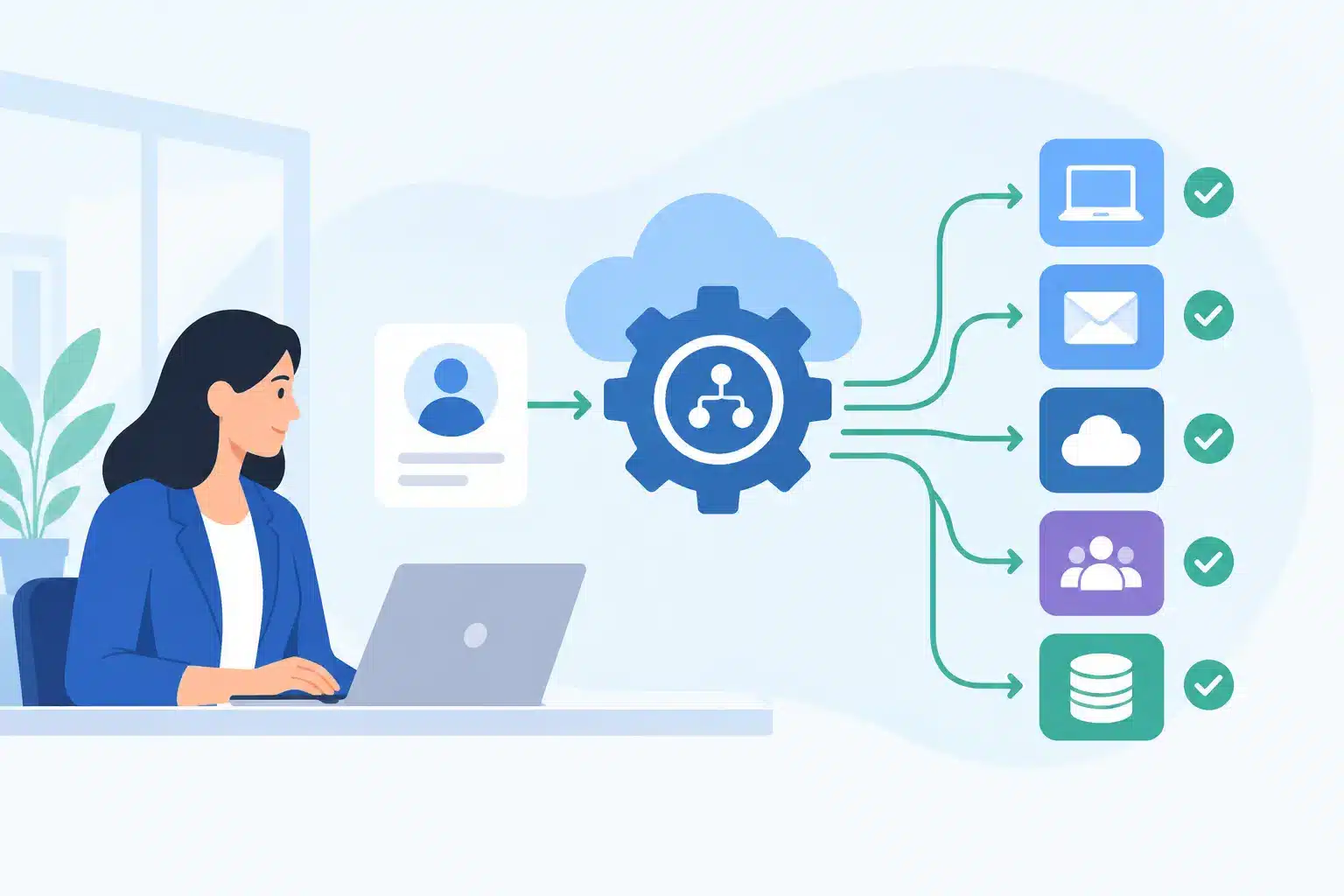
A terminated employee still has access to a cloud dashboard. A contractor’s account remains in a privileged group after a project ends. A service desk approves a password reset without enough verification. These are not isolated IAM defects. They are identity control failures. Knowing how to secure workforce identities means treating every employee, contractor, administrator, and temporary worker account as a continuously managed security boundary.
For enterprise security teams, the objective is not simply to deploy single sign-on or require multifactor authentication. The objective is to establish control over who has access, why they have it, how long they need it, and what happens when their role or risk profile changes. That requires an operating model that joins identity lifecycle management, authentication, access governance, privileged access controls, and active monitoring.
Start With a Complete Workforce Identity Inventory
You cannot govern identities that you cannot see. Most enterprises have more workforce identities than their HR system suggests: employees, contingent workers, seasonal staff, external consultants, shared operational accounts, emergency accounts, and accounts created directly in SaaS platforms.
Create a trusted inventory that connects each identity to an authoritative source, an accountable owner, and a defined lifecycle state. HR is typically the authoritative source for employees, but contractor management systems, vendor systems, and partner directories may be required for nonemployees. Every identity should have enough context to support access decisions, including department, location, manager, employment type, job role, and end date where applicable.
This work often exposes difficult realities. Some organizations have orphaned accounts with no owner. Others cannot reliably distinguish a human account from a service account. Still others rely on spreadsheets to track contractors. These conditions increase access risk and make audit evidence unreliable. Clean data is not administrative overhead. It is the foundation for enforceable access controls.
Establish identity ownership
Each application, group, privileged role, and shared operational account needs a named business or technical owner. Ownership is what makes reviews, approval decisions, and remediation possible. When nobody is responsible for an entitlement, excessive access tends to persist by default.
Automate the Joiner, Mover, and Leaver Lifecycle
The workforce lifecycle is where identity security succeeds or fails. Access should be provisioned when a worker starts, adjusted when responsibilities change, and removed promptly when employment or engagement ends. Manual tickets and disconnected approval chains cannot reliably operate at enterprise speed.
Automated joiner-mover-leaver processes reduce both exposure and operational effort. A new employee can receive baseline access based on verified attributes and role. A transfer can trigger removal of access tied to the prior department before new access is granted. A termination event can disable access across the identity provider, endpoints, VPN, business applications, and privileged systems according to a defined policy.
Speed matters most during offboarding. Delayed deprovisioning creates a clear window for misuse, whether intentional or accidental. However, immediate removal is not always straightforward. Organizations may need to preserve access temporarily for legal hold, knowledge transfer, or business continuity. The right approach is not to accept open-ended exceptions. It is to make every exception time-bound, approved, monitored, and reviewed.
Require Strong Authentication Without Creating Workarounds
Multifactor authentication is a baseline control, but the method matters. SMS-based codes may be suitable as a transitional option in some environments, yet they provide less protection against phishing and number-porting attacks than phishing-resistant methods. For privileged users, administrators, finance personnel, and users accessing sensitive systems, favor FIDO2 security keys, passkeys, or certificate-based authentication where the environment supports them.
Authentication policy should reflect risk. A user signing in from a managed device on a trusted network may require a different level of verification than the same user accessing a critical application from an unmanaged device or an unfamiliar location. Adaptive access policies can use device posture, geolocation, network reputation, session risk, and user behavior to increase assurance when conditions change.
Do not overlook recovery flows. Attackers frequently target password resets, MFA enrollment, and help desk verification because these paths can bypass strong primary authentication. Require rigorous identity proofing for recovery, limit high-risk changes, and retain detailed audit records. A strong sign-in control is weakened if the recovery process is easy to manipulate.
Apply Least Privilege to Everyday and Privileged Access
Least privilege is often described as a principle. It must become an operational process. Users should receive the minimum access required for their role, for the minimum time needed, with clear accountability for approvals.
Role-based access control is a useful starting point for common job functions, but it can become too broad when roles accumulate exceptions over time. Attribute-based policies can provide more precision where access depends on factors such as location, business unit, project assignment, device type, or data classification. The appropriate model depends on the organization’s application landscape and the quality of its identity data. Many mature environments use both.
Privileged access requires stricter treatment. Administrators should not use their everyday email and collaboration account for domain administration, cloud tenancy changes, or production support. Separate privileged identities, credential vaulting, just-in-time elevation, session monitoring, and approval workflows reduce the impact of account compromise and improve accountability.
Standing administrative access is particularly risky in hybrid environments where legacy infrastructure, cloud platforms, and SaaS administration consoles overlap. When permanent privilege cannot be eliminated immediately, prioritize visibility and controls around the highest-impact roles first: directory administrators, cloud administrators, security tool administrators, database administrators, and users who can modify identity policy.
Govern Access Through Reviews That Drive Action
Access certifications are valuable only when reviewers can make informed decisions and remediation follows quickly. A manager asked to review hundreds of technical entitlements without context will often approve everything. That produces audit activity, not access governance.
Effective reviews are focused, risk-based, and understandable. Present the reviewer with the user’s role, business purpose, last activity where available, sensitive access indicators, and the consequences of approval or removal. Prioritize privileged access, toxic combinations of access, dormant accounts, and access to regulated data.
Reviews should also feed remediation. If a recurring certification repeatedly identifies the same excessive group membership, the underlying provisioning rule, role design, or application ownership model needs correction. Governance should identify structural access problems, not merely remove them one user at a time.
Monitor Identity Activity as a Security Signal
Workforce identity security does not end when access is approved. Monitor sign-ins, privilege elevation, group membership changes, new MFA enrollments, authentication failures, and administrative actions for behavior that conflicts with expected use.
Security operations and IAM teams need shared response paths. A suspicious sign-in may require a security analyst to contain the session, an IAM administrator to disable the account, and an application owner to validate business impact. Define those responsibilities before an incident. Delayed decisions are common when identity telemetry exists but no team owns the response.
Correlating identity events with endpoint, network, and cloud telemetry provides stronger detection. For example, a newly enrolled MFA factor followed by a successful sign-in from an unmanaged device and a privileged group change should receive more scrutiny than any one event alone.
Design for Hybrid Environments and Nonemployee Reality
Most enterprises operate across on-premises directories, multiple identity providers, SaaS applications, cloud infrastructure, and specialized systems that do not support modern standards equally well. A workforce identity program must account for that complexity without allowing each system to become its own access authority.
Centralize policy and visibility where possible, then use integration patterns that fit each application’s capabilities. Modern applications may support federation and automated provisioning. Older systems may require directory synchronization, connectors, or controlled manual processes. The priority is to maintain a consistent identity record, enforce a clear approval path, and detect when access drifts from policy.
Nonemployees deserve the same discipline as employees, with controls tailored to their engagement. Contractor accounts should have sponsors, expiration dates, limited default access, and periodic validation. Shared accounts should be replaced where practical. Where a shared operational account is unavoidable, use a vault, individual checkout, session logging, and documented ownership so activity remains attributable.
Measure Control Effectiveness, Not Deployment Progress
A completed implementation is not proof that workforce identities are secure. Measure the outcomes that reveal whether controls operate in production. Useful indicators include the percentage of accounts linked to an authoritative source, time to disable access after termination, percentage of privileged access protected by MFA and vaulting, number of dormant accounts, certification completion and remediation rates, and exceptions that have passed their expiration date.
These measures give leadership a practical view of identity risk. They also reveal where process design, integration coverage, or operational staffing needs attention. A mature program improves through regular control testing, policy refinement, and remediation of recurring failures.
IDENT1TY approaches identity security as an operational discipline: assess the current access model, establish control priorities, integrate the right IAM, PAM, and governance capabilities, and support the program after deployment. The technology matters, but sustained control depends on ownership, process, and measured execution.
Workforce identities change every day as people join, move, leave, and take on new responsibilities. Build security around that reality. The strongest identity program is the one that can prove access remains appropriate long after the initial rollout is complete.