A cloud breach rarely starts with a firewall failure. More often, it starts with the wrong person having the wrong access for too long. That is why the question what is identity access management in cloud computing matters at the operational level, not just the architectural one.
In simple terms, identity access management in cloud computing is the set of policies, technologies, and processes used to verify who or what is requesting access, determine what they should be allowed to do, and enforce that decision across cloud systems. It covers human users, service accounts, workloads, APIs, devices, and increasingly AI agents. Its purpose is straightforward: control access, reduce risk, and maintain visibility across environments that change constantly.
What is identity access management in cloud computing?
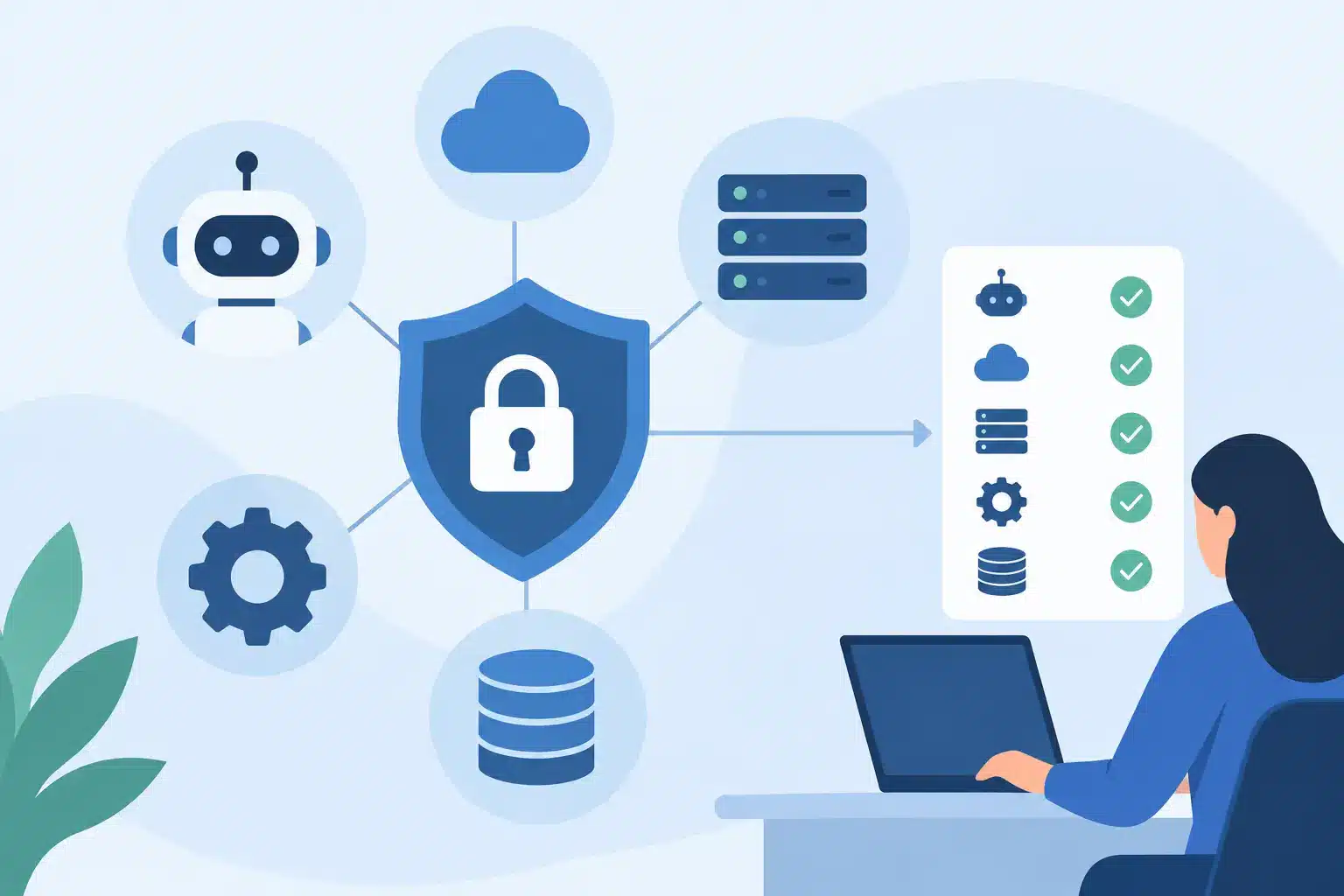
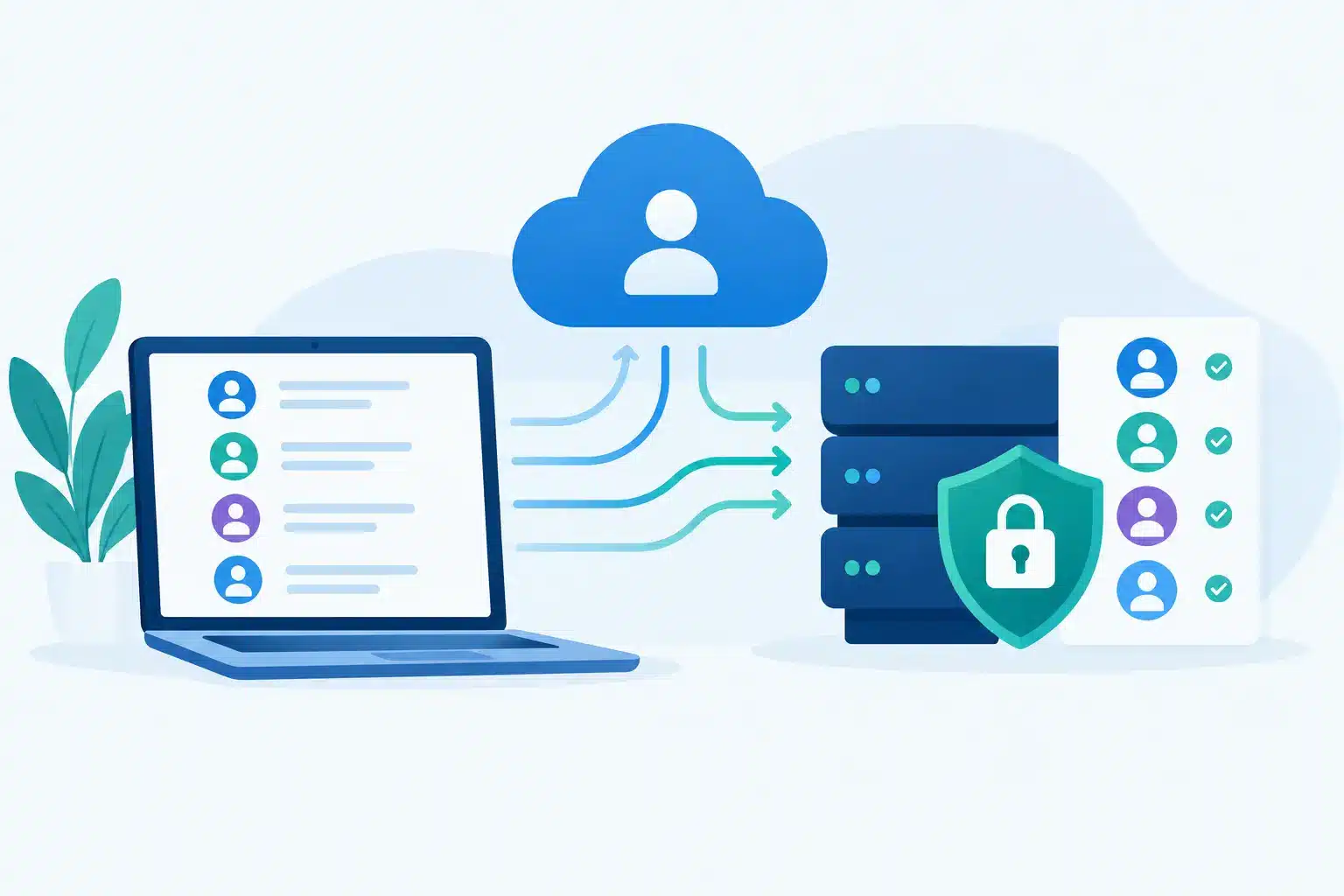
Cloud IAM is the control layer that sits between an identity and a resource. When a user signs in to a cloud application, when an administrator accesses a console, or when a machine calls an API, IAM decides whether access should be granted and under what conditions.
That sounds simple, but in production environments it quickly becomes complex. Most organizations are not running a single application in a single cloud. They are operating SaaS platforms, public cloud infrastructure, legacy directories, third-party integrations, remote workforces, contractors, and non-human identities at scale. Without a disciplined IAM model, access sprawls faster than security teams can govern it.
At its core, cloud IAM answers four operational questions: who is requesting access, how that identity is verified, what permissions are assigned, and whether that access remains appropriate over time.
The core functions of cloud IAM
Identity is the starting point. An identity can be an employee, partner, vendor, application, bot, workload, or privileged administrator. Each identity needs a unique record, a trusted source, and lifecycle controls tied to business events such as onboarding, role changes, and termination.
Authentication is the next control point. This is how the system confirms the identity is genuine. In cloud environments, that usually means a combination of passwords, single sign-on, multifactor authentication, certificate-based authentication, or federated trust with an enterprise identity provider.
Authorization defines what happens after authentication. Just because a user is legitimate does not mean they should have broad access. IAM applies policies, roles, group memberships, and conditional rules to determine what resources can be accessed and what actions can be taken.
Governance keeps the model under control over time. This includes access reviews, separation of duties, policy enforcement, logging, and evidence for audit and compliance. In enterprise settings, governance is often the difference between an IAM deployment that looks good on paper and one that actually reduces exposure.
Why IAM changes in the cloud
Traditional access control was often built around a network perimeter and a centralized directory. Cloud computing breaks that pattern. Users connect from anywhere. Applications run across multiple providers. Infrastructure is provisioned and decommissioned automatically. Machine identities often outnumber human users. Access decisions have to be faster, more granular, and more adaptive.
That is why cloud IAM is not just a hosted version of on-prem access management. It has to support federation across platforms, short-lived credentials, dynamic role assignment, API-driven enforcement, and policy decisions based on context such as device posture, location, session risk, or workload behavior.
There is also a shared responsibility issue. Cloud providers secure the underlying platform, but the customer is usually responsible for defining identities, assigning permissions, managing privileged access, and proving control. Many organizations discover this only after an audit finding or an incident.
What cloud IAM looks like in practice
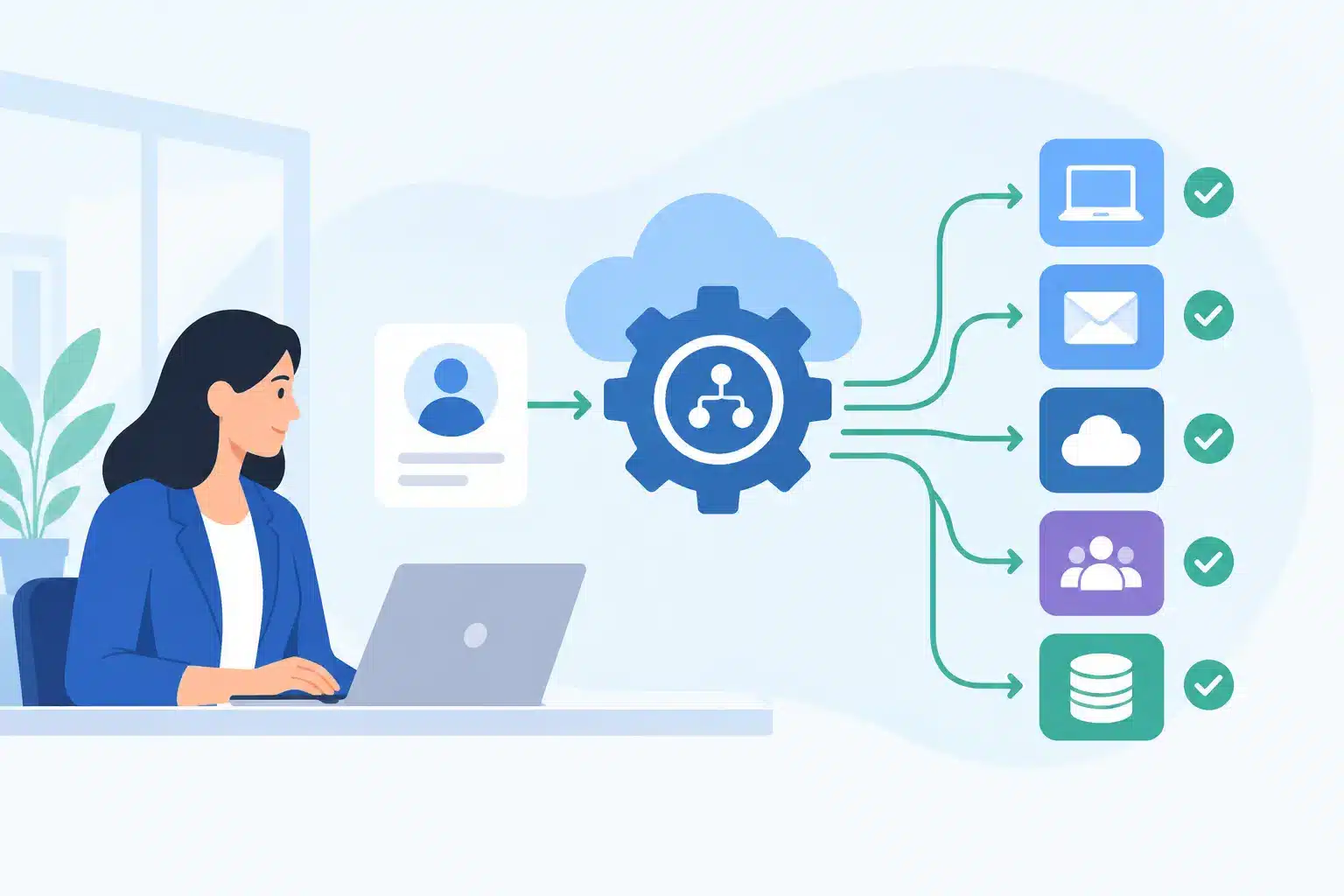
In a mature environment, cloud IAM connects identity sources, cloud platforms, and business applications into a controlled access model. A user joins the company through HR, their digital identity is created automatically, access is assigned based on role, multifactor authentication is enforced, and high-risk actions require stronger controls. When that user changes departments, access is updated. When they leave, accounts are disabled quickly and consistently.
The same discipline should apply to administrators, vendors, and non-human identities. Privileged access should be segregated, monitored, and limited. Service accounts should not hold permanent broad permissions. API keys and secrets should be rotated and governed. Certificates should be tracked through their lifecycle. If AI agents are interacting with enterprise systems, their identities and permissions should be treated as controlled entities, not invisible automation.
This is where many programs fail. They focus on user login experience but neglect lifecycle control, privilege management, and visibility into machine access. That gap creates risk even when the front-end authentication flow appears strong.
What is identity access management in cloud computing used for?
The practical use cases are broad, but they usually fall into a few high-impact areas.
First, IAM enables secure workforce access. Employees need reliable access to cloud applications and infrastructure without creating password fatigue or unmanaged privilege growth.
Second, it controls administrative access. Cloud consoles, tenant settings, production environments, and identity platforms themselves all require tighter oversight because a single privileged account can have enterprise-wide impact.
Third, it supports governance and compliance. Regulated organizations need evidence that access is approved, reviewed, and removed when no longer needed.
Fourth, it protects machine-to-machine activity. Modern cloud operations depend on workloads, scripts, connectors, and service identities. These identities often carry elevated privileges and are commonly under-governed.
Finally, IAM supports resilience. When access is centralized and policy-driven, organizations can respond faster to mergers, workforce changes, third-party onboarding, cloud expansion, and incident containment.
Common cloud IAM risks
The most common problem is excessive access. Permissions are granted for speed, then never removed. In cloud platforms, that often means inherited rights, wildcard permissions, standing admin access, or stale accounts tied to old projects.
Fragmentation is another issue. Many enterprises run separate IAM tools for workforce identity, privileged access, governance, and cloud-native permissions. That is not always wrong, but without a coordinated operating model it leads to inconsistent policy enforcement and blind spots between systems.
Machine identity risk is growing quickly. Service accounts, certificates, workload identities, and automation tokens are often created outside standard governance. They can persist for years, are rarely reviewed, and may have direct access to sensitive resources.
There is also a trade-off between control and operational friction. Overly rigid policies can slow administrators and business teams, which leads to workarounds. Weak policies make access easier but increase risk. Good IAM design balances both through automation, role engineering, and step-up controls for higher-risk activity.
How strong cloud IAM programs are structured
Strong programs do not start with tool sprawl. They start with a control model. That means defining authoritative identity sources, access policies, role structures, privileged access boundaries, approval workflows, and review requirements before expanding across platforms.
From there, organizations typically standardize authentication through federation and single sign-on, enforce multifactor authentication, reduce standing privilege, and implement lifecycle automation. Governance then adds certification campaigns, segregation controls, reporting, and audit evidence.
Cloud-native permission models also need dedicated attention. AWS, Azure, Google Cloud, and SaaS platforms all express access differently. Copying old directory structures into cloud environments rarely works well. Permissions should be designed around business function, operational need, and measurable risk.
This is also why IAM should be treated as an operating discipline rather than a one-time deployment. The access model must keep pace with new applications, acquisitions, contractors, automation, and identity types. IDENT1TY approaches this as a continuous control problem, which is the right mindset for enterprises that cannot afford drift.
Choosing the right level of IAM maturity
Not every organization needs the same IAM architecture on day one. A mid-market company moving to Microsoft 365 and a few core SaaS tools may prioritize centralized authentication, MFA, and clean joiner-mover-leaver processes. A large enterprise with hybrid infrastructure, regulated data, and cloud engineering teams will need stronger governance, privileged access controls, machine identity management, and policy integration across multiple platforms.
The key is sequencing. If identity data is inconsistent, governance will struggle. If privileged access is unmanaged, standard user controls will not close the highest risks. If machine identities are ignored, cloud automation can become the weakest point in the environment.
A practical IAM strategy addresses the biggest control gaps first while building toward a model that is scalable, auditable, and operationally sustainable.
Cloud adoption increases speed, but it also increases the number of identities, trust relationships, and access paths that need to be controlled. The organizations that handle that well are not the ones with the most tools. They are the ones that know exactly who has access, why they have it, and how quickly it can be changed when risk changes.