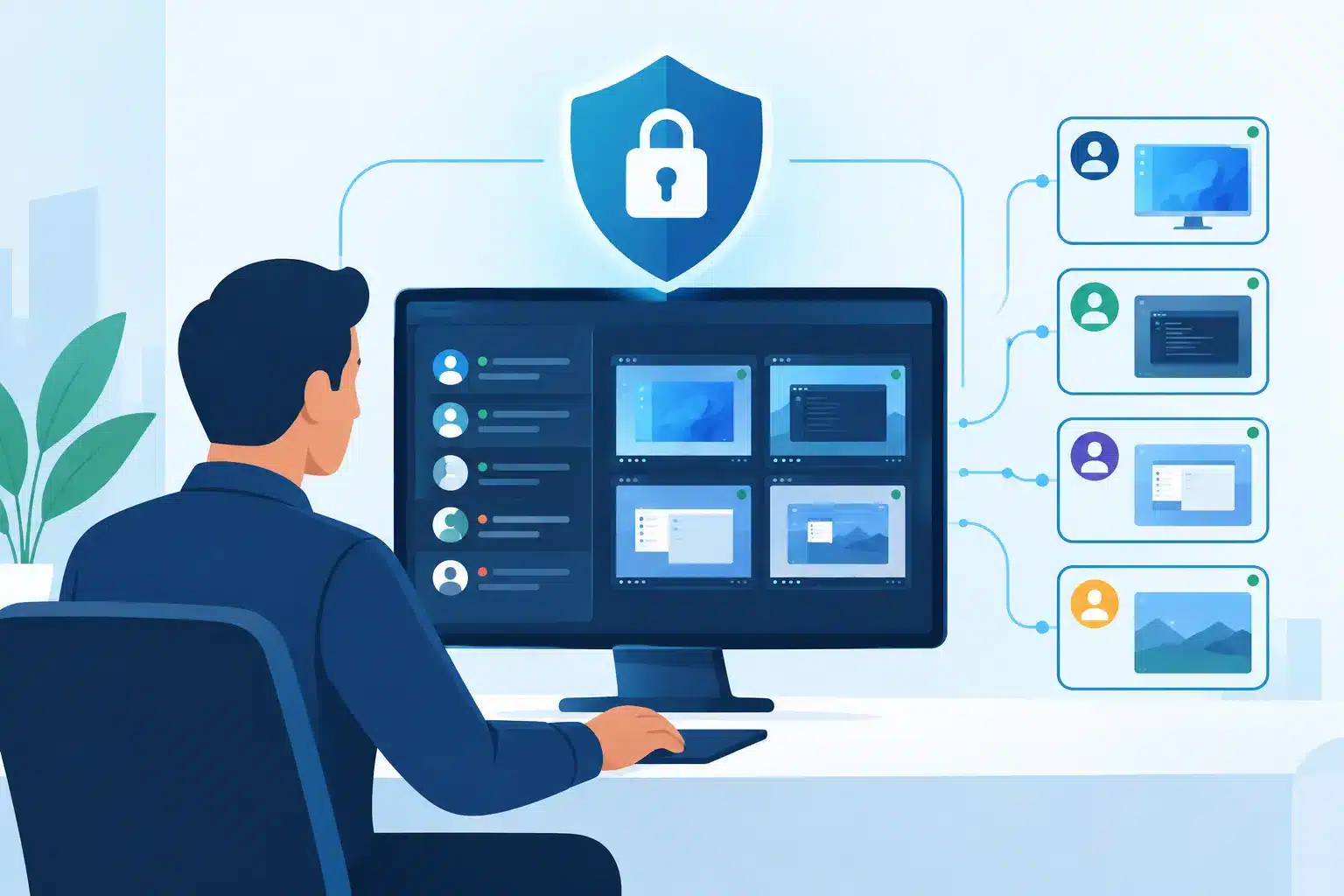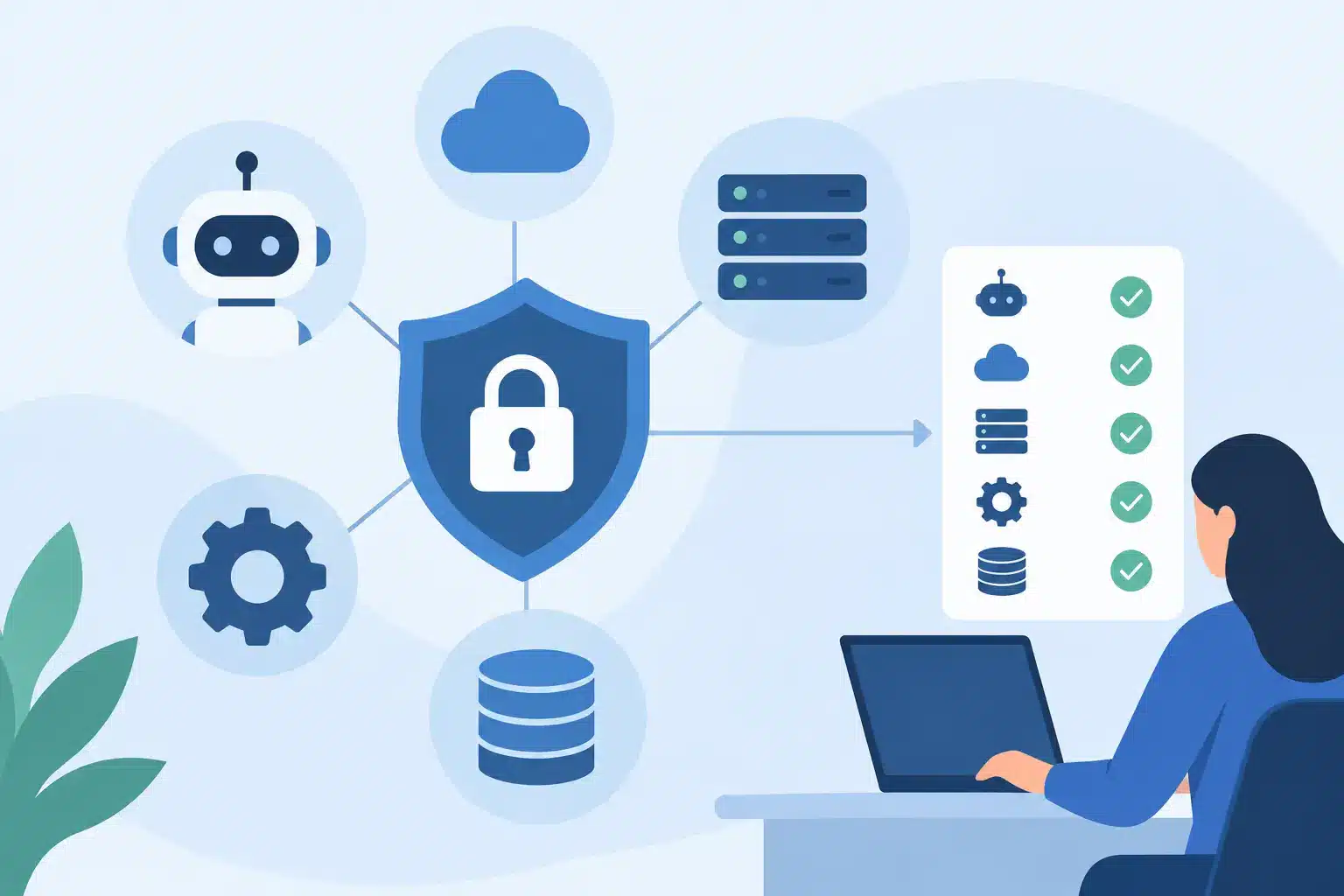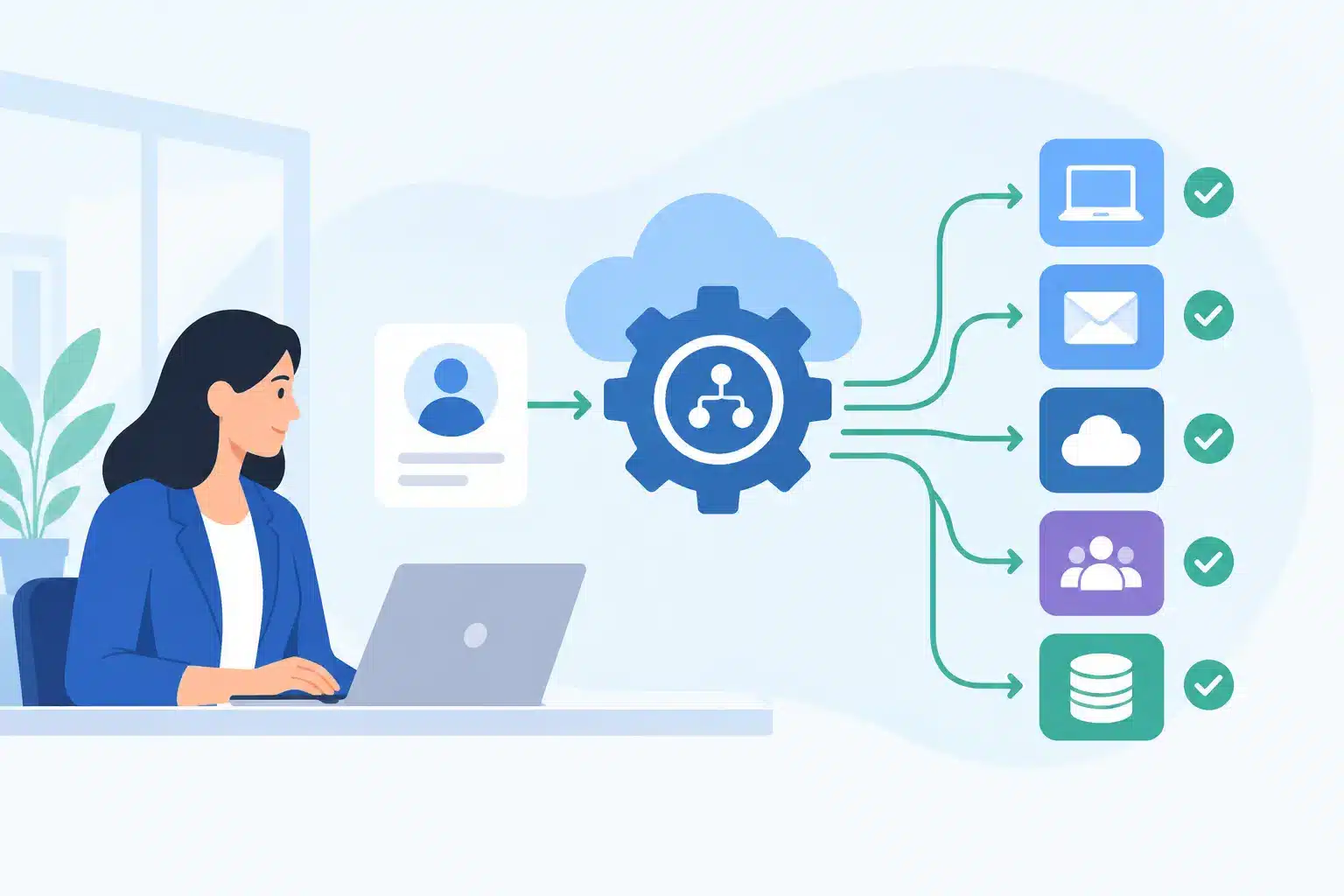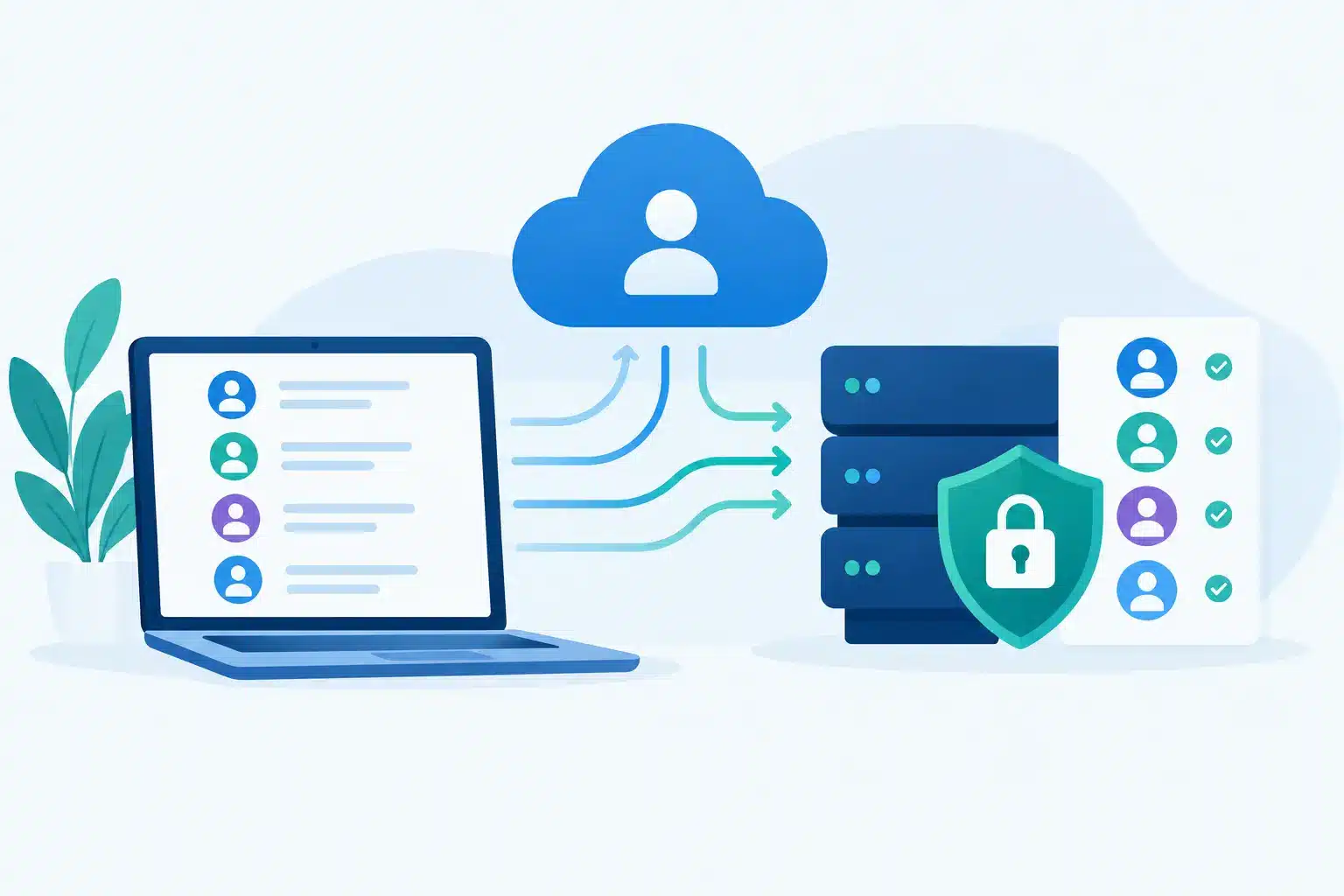
An AI agent that can read customer records, query financial systems, create tickets, and trigger workflows is not simply a new application feature. It is a new operational identity with the ability to affect the business. Secure enterprise AI agents begin with treating that identity as a governed security principal from the moment it is designed.
The risk is not limited to a flawed model response. An agent can make technically valid API calls against systems it was never meant to influence, expose sensitive data through an overly broad retrieval source, or inherit the privileges of the person who launched it. When an agent acts across SaaS platforms, cloud infrastructure, internal applications, and data stores, weak identity controls become a direct path to business impact.
For security leaders, the question is not whether AI agents will enter the enterprise. They already are, through packaged copilots, custom automation, embedded SaaS features, and development teams experimenting with agent frameworks. The operational question is whether those agents will be visible, authenticated, authorized, monitored, and governed before they become another uncontrolled access layer.
Why AI agent security is an identity problem
AI agents do not fit neatly into traditional user access models. They may operate continuously, delegate tasks to other agents, call tools autonomously, use non-human credentials, and make decisions based on dynamic context. Yet every meaningful action still depends on an identity and a permission path.
An agent may use an OAuth token to access a collaboration platform, a service account to query a database, a certificate to connect to an internal API, and a privileged credential to execute infrastructure changes. Without centralized visibility, those relationships quickly become difficult to explain. Security teams cannot answer the questions that matter most: What is this agent? Who owns it? What can it access? Why does it need that access? Where has it acted?
This is why deploying an agent under a shared service account is a poor shortcut. It erases accountability, expands the blast radius, and makes access review nearly impossible. The agent needs a distinct, durable identity that can be tied to a business owner, application owner, purpose, lifecycle state, and control set.
Secure enterprise AI agents need a defined identity model
A secure design starts by creating an identity record for every agent, including internally developed agents, vendor-provided assistants, orchestrators, and subordinate task agents. The record should distinguish between the agent itself, the human or system that initiates it, and any identities it is authorized to act on behalf of.
That distinction matters. An employee asking an agent to summarize a document does not automatically authorize the agent to access every document the employee can view. Likewise, an agent acting for a finance team should not retain broad finance access after the workflow ends. Authorization must be evaluated for the specific action, data source, transaction, and time window.
Each agent identity should have a named accountable owner. Technical teams need an operator who can maintain integrations and secrets, while business teams need an owner who can validate purpose and acceptable use. In regulated environments, this ownership model also supports audit evidence, access certification, and incident response.
Authenticate agents without creating permanent secrets
Long-lived API keys and embedded credentials are especially dangerous in agent deployments. Agents often connect to many tools, which creates pressure to store credentials in configuration files, prompts, vector stores, or development pipelines. Any of those locations can become an exposure point.
Use centralized machine identity controls instead. Where supported, use workload identity federation, short-lived tokens, managed identities, and certificate-based authentication. Secrets that remain necessary should be stored in an approved vault, issued only at runtime, rotated on a defined schedule, and never exposed to the model context.
Authentication also needs to prove the calling workload, not merely the application name. A production agent should not be able to impersonate a development agent simply because both use the same integration. Environment separation, attestation where available, and unique credentials per agent reduce this risk.
Apply least privilege at the tool and action level
An agent rarely needs unrestricted access to an entire platform. It may need to create a support ticket but not delete one, retrieve a specific customer account but not export the full database, or restart a defined cloud workload but not alter identity policies.
Permissions should be designed around discrete actions and constrained resources. Scope API tokens to the required endpoints. Restrict database access through views, row-level controls, or approved query services. Limit cloud roles to specific accounts, subscriptions, projects, or resources. When an agent requires elevated access, grant it just in time, for a short duration, and require stronger policy conditions.
This is not only a security measure. Fine-grained authorization reduces operational errors. If an agent hallucinates an action or receives malicious instructions through an external document, a limited permission model can prevent a bad recommendation from becoming a damaging transaction.
Put policy between the agent and critical systems
A common design flaw is allowing the model to select tools and execute actions directly. The agent may have a documented policy, but documentation does not enforce access. Enforcement must exist in the control path between the agent and the target system.
A policy layer should validate the identity of the agent, the initiating user or workflow, the requested action, the target resource, data classification, risk level, and time-based conditions. It should also reject actions that fall outside the agent’s approved purpose. For sensitive actions, policy can require human approval before execution.
Consider an agent that prepares payments. It may be authorized to retrieve invoice details and draft payment instructions, but final release should require an approved human role and a separate privileged transaction control. The same principle applies to agents that change firewall rules, provision users, modify source code, or update clinical and customer records.
High-risk workflows benefit from clear execution boundaries:
- Read-only agents can retrieve and summarize approved data sources.
- Transactional agents can create or update low-risk records within defined limits.
- Privileged agents can request elevated access but require policy approval and full session recording.
- Autonomous agents can execute only preapproved actions with strict scope, rate, and financial or operational thresholds.
The appropriate boundary depends on the business process. A low-risk internal knowledge agent does not require the same controls as an agent operating in production infrastructure. But both require an explicit access design rather than assumed trust.
Control what agents can see and retain
Data access is where AI agent risk often becomes difficult to contain. Retrieval-augmented generation can connect an agent to large document repositories, collaboration spaces, case systems, and data warehouses. If source permissions are not preserved, the agent can become a bypass around existing access controls.
The agent should retrieve only content the requesting user and the agent are both permitted to access. Security classifications, document entitlements, tenant boundaries, and geographic restrictions must travel with the data. A broad index of sensitive content may improve answer quality, but it can create unacceptable disclosure risk.
Teams also need to control retention. Prompts, tool inputs, model outputs, traces, and evaluation datasets may contain confidential information. Define what is logged, where it is stored, who can access it, and how long it remains available. Redact secrets and sensitive fields before they enter telemetry where possible. This is particularly important when third-party models, observability platforms, or support tools are involved.
Make agent activity auditable and detectable
A secure agent program requires more than access logs from individual applications. Security operations need an end-to-end activity record that connects the initiating identity, agent identity, model decision, tool call, authorization result, target system, and outcome.
This evidence supports incident investigation and improves operational quality. When an agent performs an unexpected action, teams should be able to determine whether the cause was excessive permissions, a malicious prompt, a flawed tool definition, compromised credentials, or a policy gap.
Monitoring should identify abnormal patterns such as new tool usage, repeated authorization failures, unusual data volumes, access outside expected operating hours, privilege escalation requests, or actions across unfamiliar systems. Detection logic should account for the agent’s established purpose. A backup automation agent transferring large data volumes may be normal; a human resources assistant doing the same is not.
Govern the full lifecycle, not just deployment
Agent identities require the same lifecycle discipline applied to workforce and machine identities. Before release, teams should document ownership, purpose, permissions, data sources, authentication method, dependencies, approval requirements, and recovery procedures. Changes to prompts, models, tools, integrations, or privileges should trigger review when they alter the agent’s effective access.
Periodic access reviews are essential because agent capabilities expand quickly. A pilot that began as a read-only assistant can become a workflow executor after several incremental changes. Decommissioning matters as well. When an agent is retired, revoke credentials, remove integrations, archive required audit evidence, and confirm that dependent agents cannot continue using its permissions.
For organizations with fragmented IAM, PAM, IGA, and machine identity controls, this lifecycle cannot be managed through spreadsheets and disconnected application settings. It requires a defined operating model that connects architecture, governance, implementation, and ongoing service. IDENT1TY helps organizations establish that control model so AI innovation does not outpace identity security.
The safest path is not to slow every AI initiative. It is to make identity control a release requirement. When every agent has an accountable owner, a distinct identity, constrained permissions, enforced policy, and usable audit evidence, the organization can move from experimentation to production with far greater confidence.