A domain administrator account used once during an emergency can be as dangerous as a permanently assigned root account. Both can alter systems, access sensitive data, and disrupt operations. So, what are privileged credentials? They are the authentication secrets that grant elevated access to critical systems, applications, infrastructure, and data. Securing them is a core requirement for controlling enterprise identity risk.
What Are Privileged Credentials?
Privileged credentials are the passwords, keys, tokens, certificates, and other authenticators associated with permissions beyond those of a standard user. They enable actions that can change configurations, create or remove accounts, deploy code, access protected records, manage security controls, or take systems offline.
The credential is not the same as the account. A privileged account has elevated permissions; a privileged credential is what proves an identity can use that account. This distinction matters operationally. An organization may identify its administrator accounts yet still lack visibility into the shared passwords, SSH keys, service account secrets, cloud access keys, and API tokens that activate them.
Privilege is also contextual. A user may have limited access in one application but hold approval authority, data export rights, or configuration permissions that make their access privileged in another. Effective control starts with understanding what a credential can do, where it works, and what business process it can affect.
Where Privileged Credentials Exist
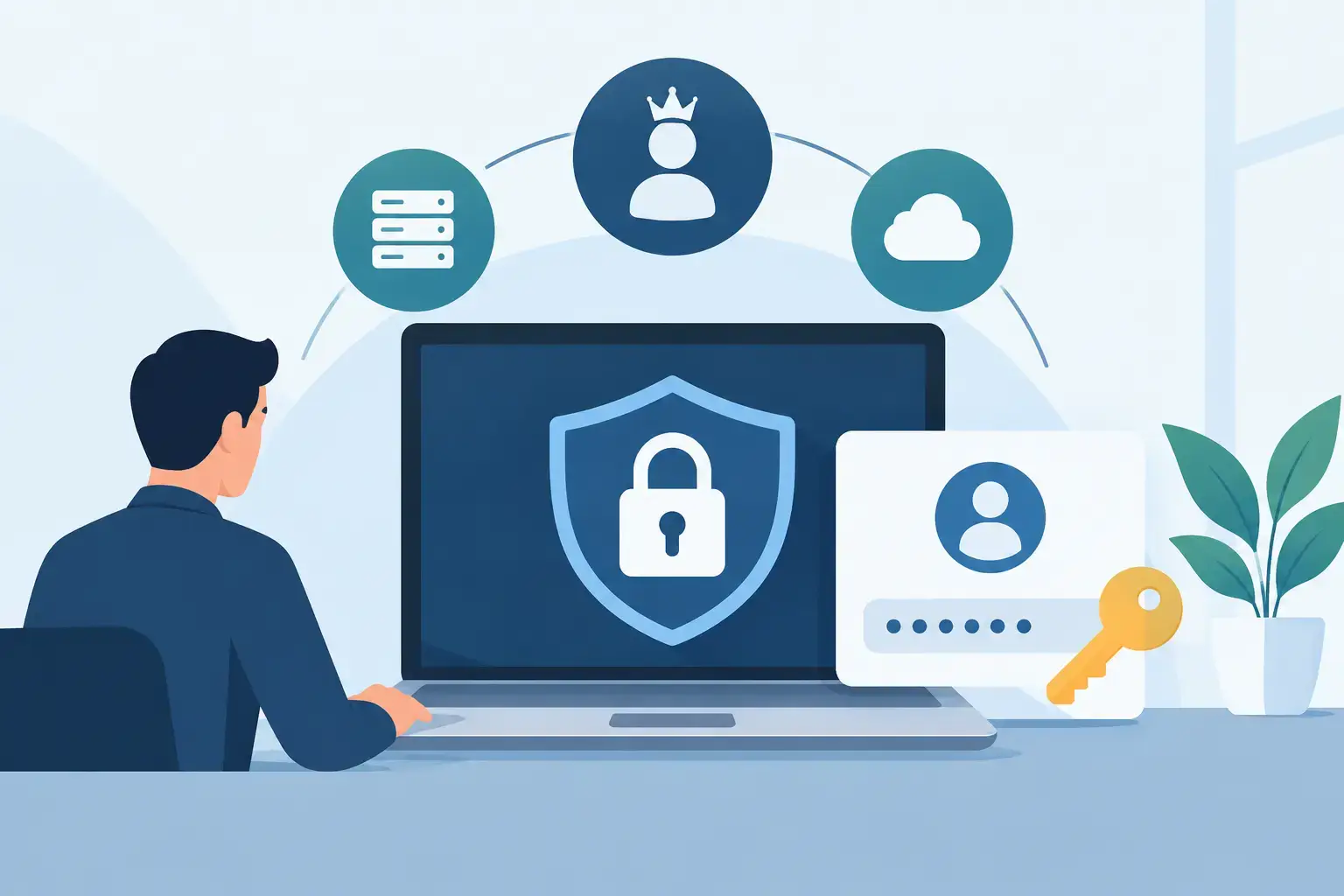
Privileged credentials are distributed across far more than the traditional data center. In a modern enterprise, they commonly support identity platforms, cloud environments, databases, network devices, endpoints, DevOps pipelines, SaaS administration, and security tooling.
Human administrators use credentials to manage Active Directory, cloud tenants, enterprise applications, and production infrastructure. These credentials may be assigned to named individuals, shared among support teams, or activated only when elevated work is required. Shared access can be operationally convenient, but it weakens accountability unless every session is controlled and attributable.
Non-human identities often create a larger and less visible exposure. Service accounts run scheduled tasks and application services. Workloads use secrets to connect to databases. Automation tools use tokens to provision infrastructure. Devices and services use certificates to establish trust. AI agents may require access to knowledge repositories, APIs, workflows, or business systems to complete assigned tasks.
Each of these identities can become highly privileged. A service account that can modify payroll data, a CI/CD token that can deploy production code, or a cloud key with broad subscription permissions deserves the same level of scrutiny as a domain administrator account.
Why Privileged Credentials Are a Primary Attack Target
Attackers pursue privileged credentials because elevated access reduces the number of barriers between initial compromise and business impact. A stolen standard user password may provide an entry point. A compromised privileged credential can provide control.
With administrative access, an attacker may disable security tools, create persistence, change identity settings, extract sensitive data, encrypt systems, or move laterally into higher-value environments. In cloud and hybrid environments, excessive privileges can enable rapid expansion across accounts, subscriptions, and connected services.
The risk is not limited to external threats. Privileged access can also be misused by insiders, contractors, or former employees when offboarding and access reviews are incomplete. Misconfiguration presents another risk: a credential can be protected by strong authentication while still carry permissions far beyond what the role requires.
The operational consequence is significant. Privileged credential failures can interrupt manufacturing, delay patient care, expose financial data, compromise public services, and create material regulatory and recovery costs. That is why privileged access must be managed as a continuous security discipline, not a vault deployment or annual audit exercise.
Common Types of Privileged Credentials
The precise inventory varies by architecture, but four categories require consistent attention:
- Named administrative credentials used by IT, security, database, network, and cloud administrators.
- Shared and emergency credentials such as break-glass accounts, local administrator passwords, and support accounts used across teams.
- Machine and application credentials including service account passwords, API keys, access tokens, SSH keys, and workload identities.
- Cryptographic credentials such as certificates and private keys used for service authentication, encryption, code signing, and device trust.
These categories overlap. For example, an automation account may authenticate with a certificate and hold cloud administrator permissions. Treating each credential type in isolation creates blind spots. The goal is a unified view of identity, authentication method, entitlement, owner, environment, and lifecycle status.
Control Privileged Credentials Through Their Full Lifecycle
Strong privileged access management begins with discovery. Organizations cannot protect credentials they have not identified. Discovery should cover on-premises systems, cloud platforms, SaaS applications, endpoints, source code repositories, automation platforms, and secrets stores. It should also identify dormant accounts, hard-coded secrets, unmanaged local administrators, duplicate credentials, and accounts without a clear owner.
Once identified, privileged credentials should be classified by business impact and access scope. A credential that can administer a production identity provider or access regulated data requires stricter controls than one used for a low-risk development task. Classification helps teams apply controls proportionately instead of treating every account as identical.
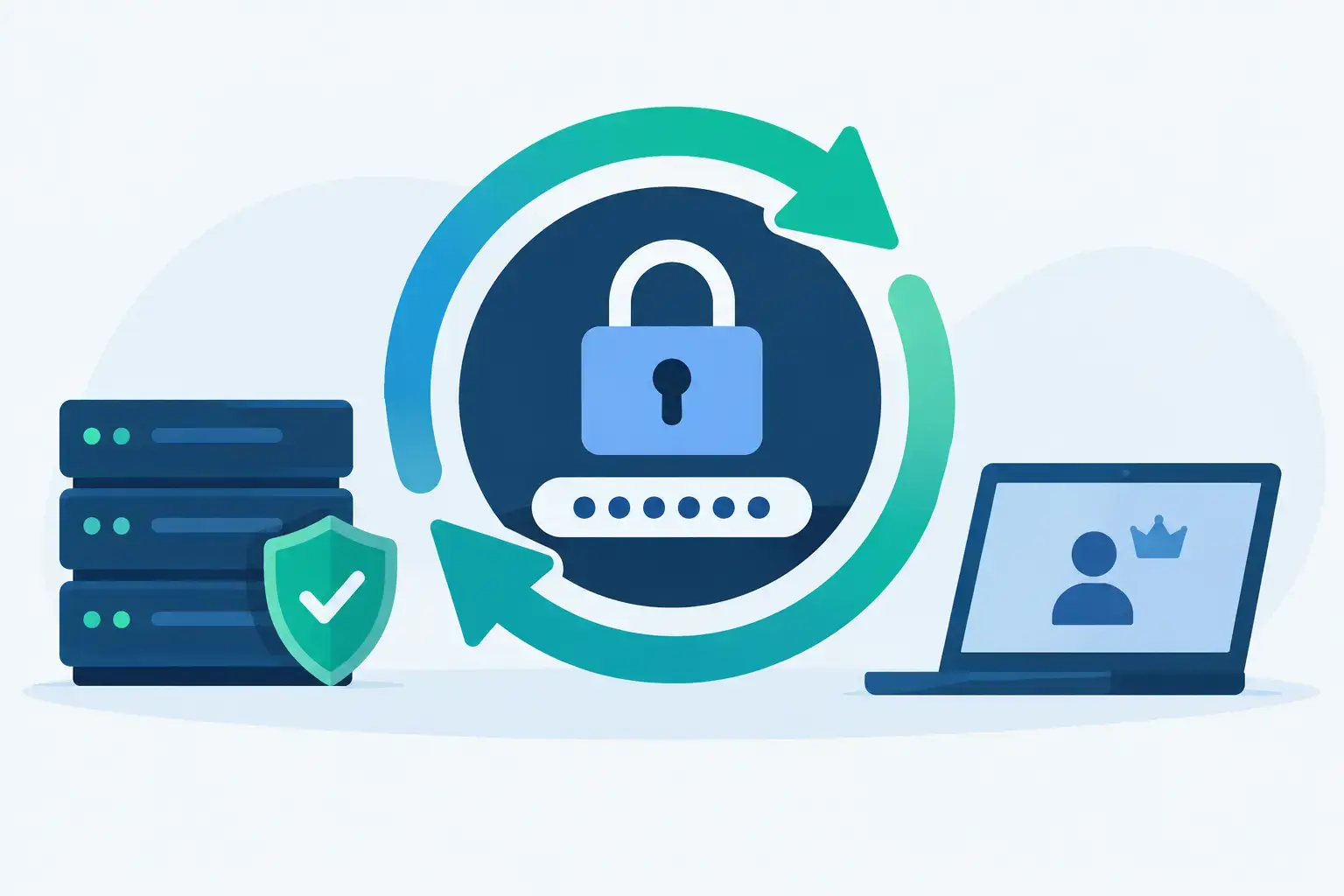
Credential storage and rotation are the next priorities. Passwords and secrets should be held in a controlled repository rather than spreadsheets, scripts, tickets, or personal password managers. Rotate them after use where practical and immediately after suspected exposure, role changes, or vendor offboarding. Automated rotation reduces the risk of stale credentials, but it must be tested carefully. Poorly coordinated rotation can break applications and create availability incidents.
For human access, favor named identities, multifactor authentication, and just-in-time elevation. Rather than granting standing administrative rights, provide elevated access for a defined task and time period. This reduces the window in which a stolen or misused credential can cause harm. It also supports cleaner audit evidence.
For non-human access, remove hard-coded secrets, use short-lived tokens where supported, and restrict permissions to the specific workload and action required. Machine identities need owners, expiration policies, and periodic reviews just as human accounts do. Certificates require the same lifecycle discipline: inventory, ownership, issuance controls, renewal, revocation, and monitoring for expiration.
Privileged Access Requires Visibility and Accountability
A credential vault alone is not sufficient. Security teams need visibility into how privileged access is requested, approved, used, and reviewed. Session monitoring and recording can provide evidence for high-risk administrative activity. Command-level visibility may be justified for sensitive environments, though it should be applied with clear governance and privacy considerations.
Access governance closes another gap. Privileged roles must be reviewed regularly by the business and technical owners who understand whether the access remains necessary. Privilege should be removed when responsibilities change, projects end, systems are retired, or a third-party engagement concludes. This is particularly critical in organizations where mergers, cloud migrations, and new SaaS deployments continuously create new identities and entitlements.
The right level of control depends on risk, operational maturity, and system criticality. Highly regulated production environments may require approval workflows, session recording, and frequent rotation. Smaller teams may begin with credential discovery, multifactor authentication, vaulting, and elimination of shared accounts. The direction is consistent: reduce standing privilege, strengthen traceability, and make elevated access measurable.
Build a Program, Not a Collection of Tools
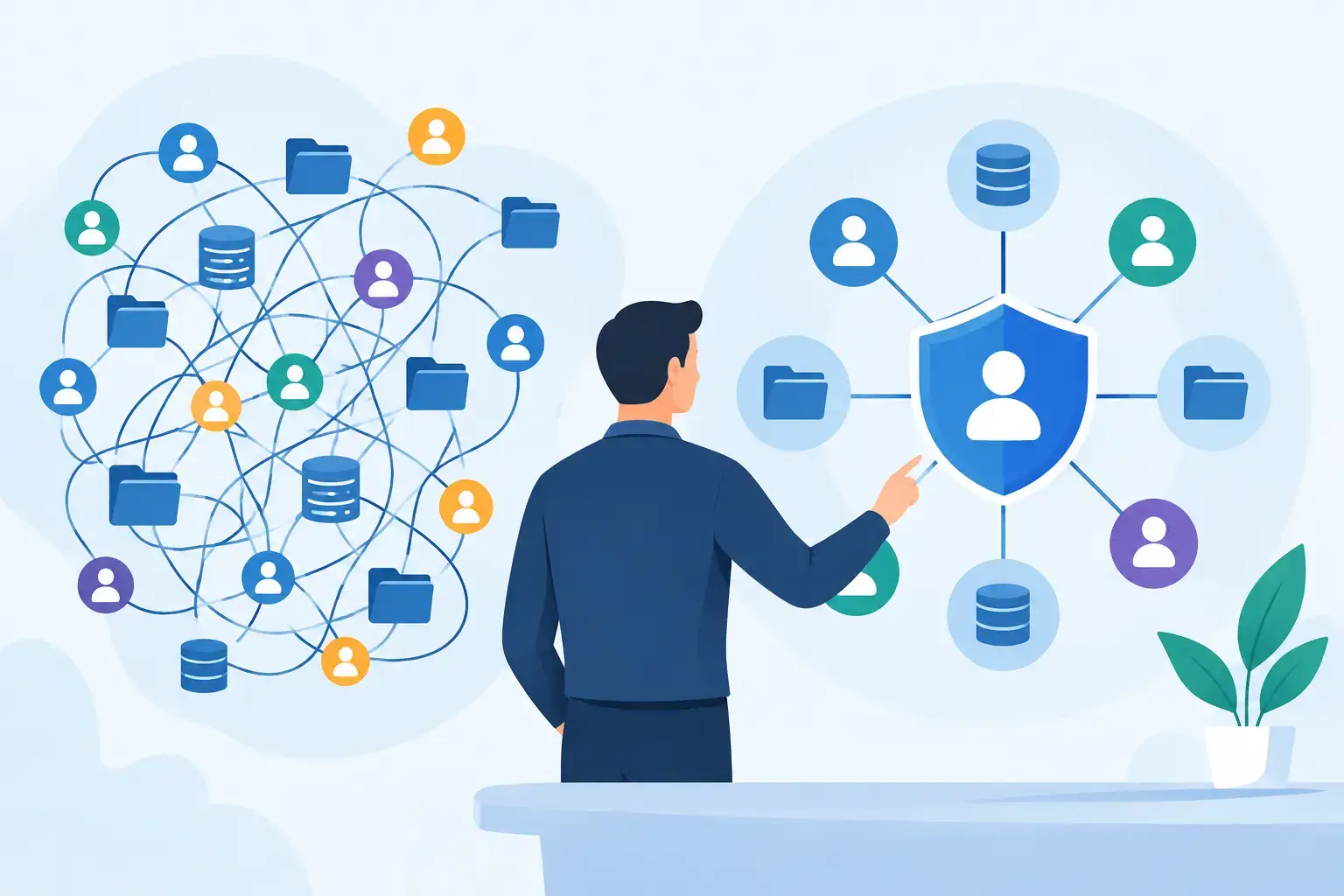
Privileged credential security crosses IAM, privileged access management, identity governance, cloud security, DevOps, and certificate lifecycle management. Fragmented ownership is a common reason controls fail. One team may manage administrator passwords, another owns cloud roles, and application teams retain service secrets with limited central oversight.
A sustainable program establishes common policies for ownership, access approval, credential rotation, emergency access, logging, and review. It also defines operational responsibilities: who remediates an orphaned account, who validates a failed secret rotation, who approves a production break-glass event, and who verifies that terminated access has been removed.
Technology supports these controls, but execution determines their value. IDENT1TY helps organizations translate privileged access requirements into an operating model that can be deployed, governed, and maintained across complex identity environments.
The practical next step is to examine the credentials that can change your most critical systems. Identify who owns them, how they are authenticated, what they can reach, and whether their use can be traced. That work turns privileged access from an assumed control into a defensible one.