A fragmented identity stack rarely fails in one dramatic event. It fails in the gaps: a privileged account outside the PAM program, an orphaned SaaS user missed during offboarding, a certificate renewed manually at the last minute, or an AI agent granted more access than its task requires. An effective identity platform consolidation strategy addresses those gaps by creating a controlled operating model for every identity, access decision, and lifecycle process.
Consolidation is not a mandate to purchase one platform or force every identity function into a single vendor suite. It is a disciplined effort to reduce unnecessary tools, eliminate overlapping controls, establish authoritative data sources, and make accountability visible. The objective is control without creating a new operational bottleneck or a single point of failure.
Why identity environments become difficult to control
Most enterprises did not intentionally design a fragmented identity architecture. The environment grew around business needs: a workforce IAM deployment for employees, a separate customer identity service, a PAM tool for administrators, point solutions for cloud access, and manual processes for certificates and service accounts. Acquisitions, cloud migration, regulatory requirements, and departmental buying add further layers.
The result is not merely higher licensing cost. It is conflicting policy, duplicated identity data, inconsistent authentication requirements, and access reviews that depend on spreadsheets. Security teams cannot confidently answer basic questions: Who has privileged access? Which identities are inactive? What applications trust this certificate? Which non-human identities can access production data?
These are operational questions. If the organization cannot answer them quickly and accurately, it cannot govern access at enterprise scale.
What an identity platform consolidation strategy should achieve
A sound consolidation strategy starts with business outcomes, not a vendor catalog. The program should improve visibility, reduce the number of control planes administrators must operate, and establish repeatable lifecycle processes for human and non-human identities.
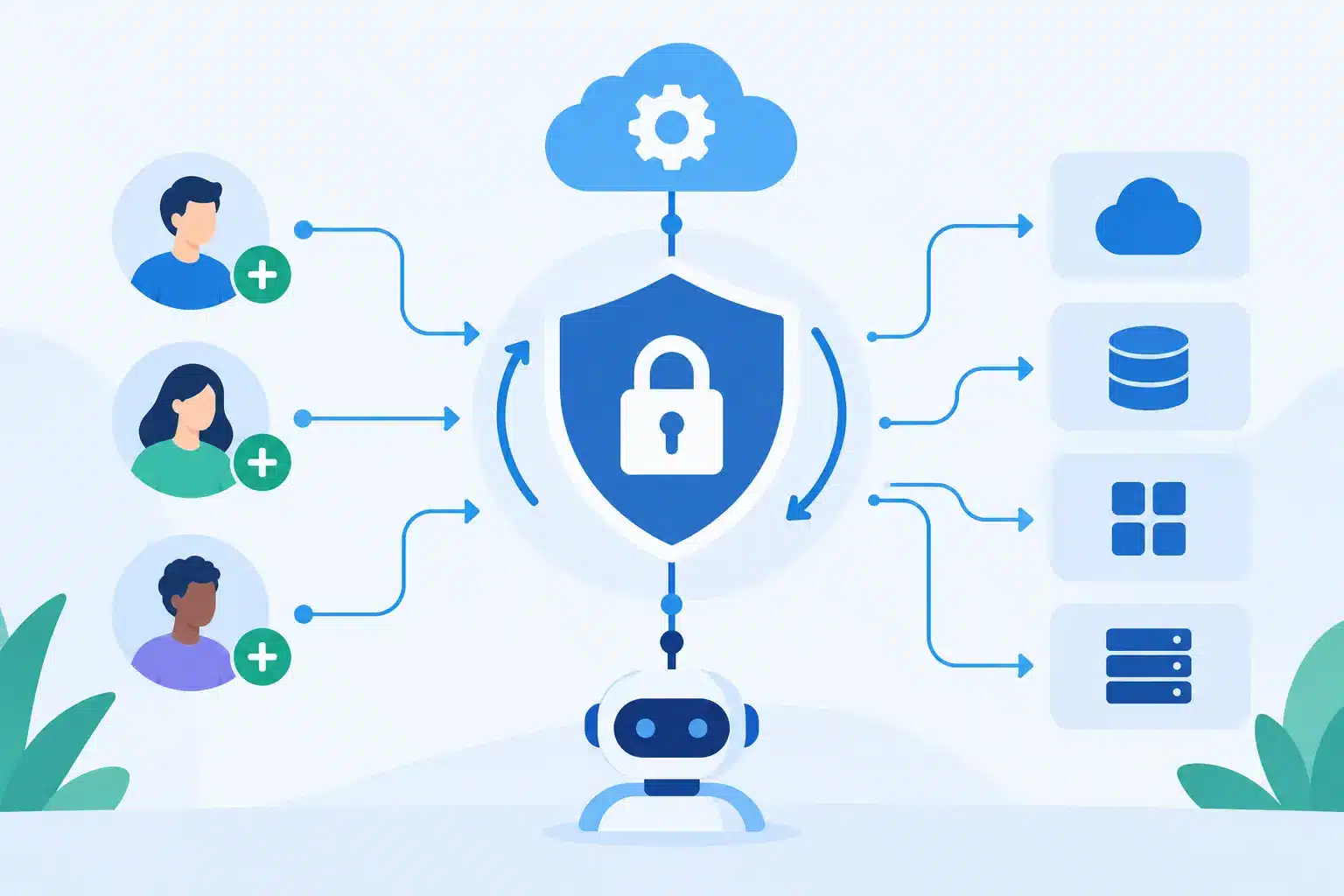
That usually means bringing core functions into a coherent architecture: identity governance and administration for lifecycle control, IAM for authentication and access, PAM for elevated access, certificate lifecycle management for machine trust, and security controls for AI identities and agents. These functions may be delivered by one strategic platform, integrated best-of-breed products, or a combination of both. The correct model depends on risk, existing investments, technical debt, and operational maturity.
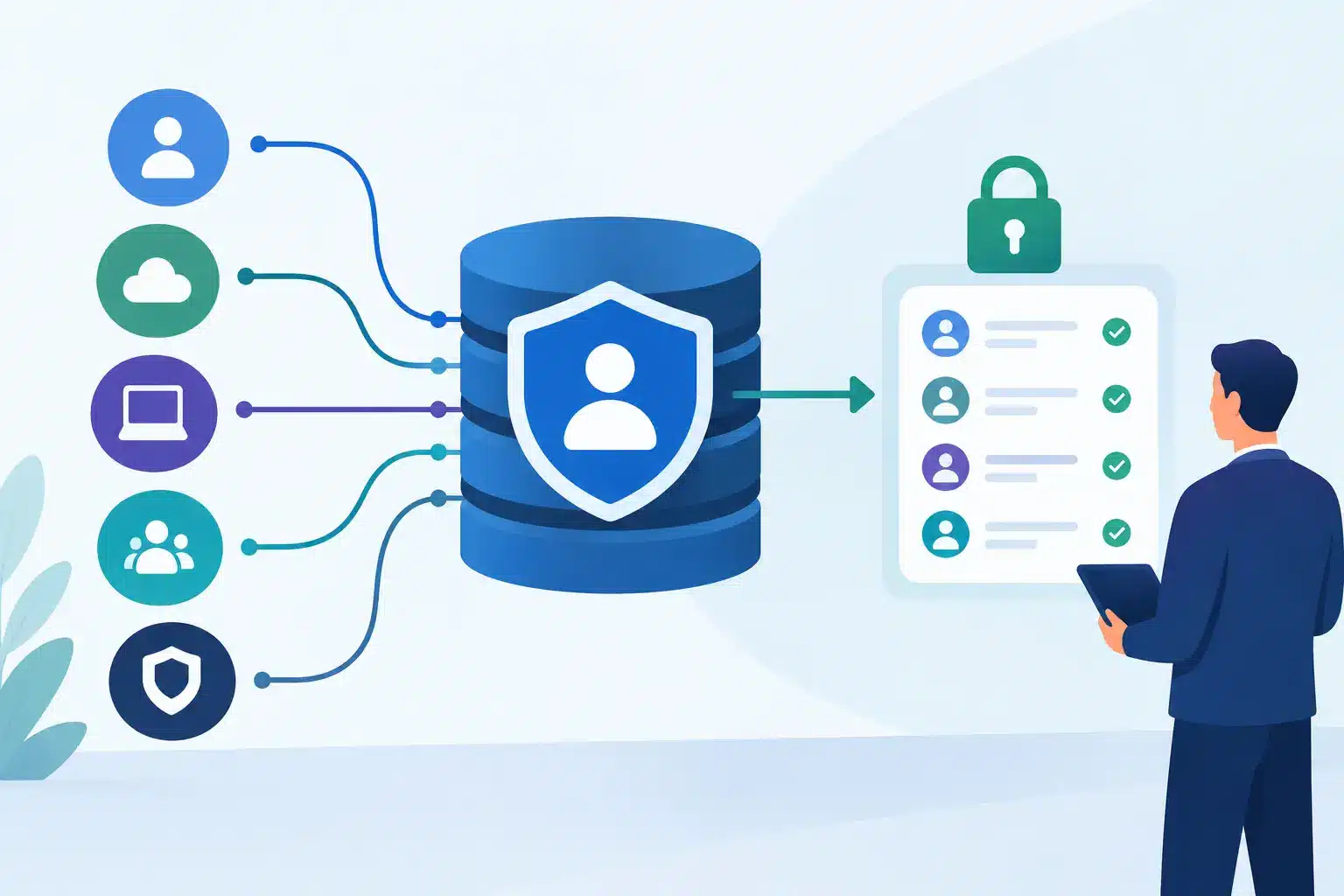
A consolidated environment should produce measurable improvements. Provisioning and deprovisioning become more consistent. Access certifications have reliable ownership and evidence. Privileged sessions are governed under defined policy. Certificate expiration risk is visible before it becomes an outage. AI agents receive scoped, monitored access rather than standing credentials with unclear ownership.
The goal is not fewer dashboards for their own sake. The goal is fewer unmanaged decisions.
Start with the access estate, not the tool inventory
A tool inventory is useful, but it does not reveal the full identity attack surface. Begin by mapping the access estate: identity populations, authoritative sources, target systems, authentication methods, privileged workflows, machine identities, certificates, and service accounts. Include cloud platforms, SaaS applications, legacy systems, OT environments where applicable, and externally managed services.
For each domain, establish who owns the identity data, who approves access, who operates the control, and what evidence is available for audit and incident response. This exposes the common fault lines in mature enterprises. A system may have strong authentication but no dependable joiner-mover-leaver process. A PAM deployment may vault credentials but lack complete discovery of privileged accounts. An IGA program may certify employee access while ignoring non-human accounts and API credentials.
This assessment should also identify integrations that create hidden dependency risk. Consolidating around a central identity provider can simplify authentication, for example, but an outage plan is still required for critical administration, emergency access, and essential business applications. Centralization without resilience simply moves the failure domain.
Define the control architecture before selecting platforms
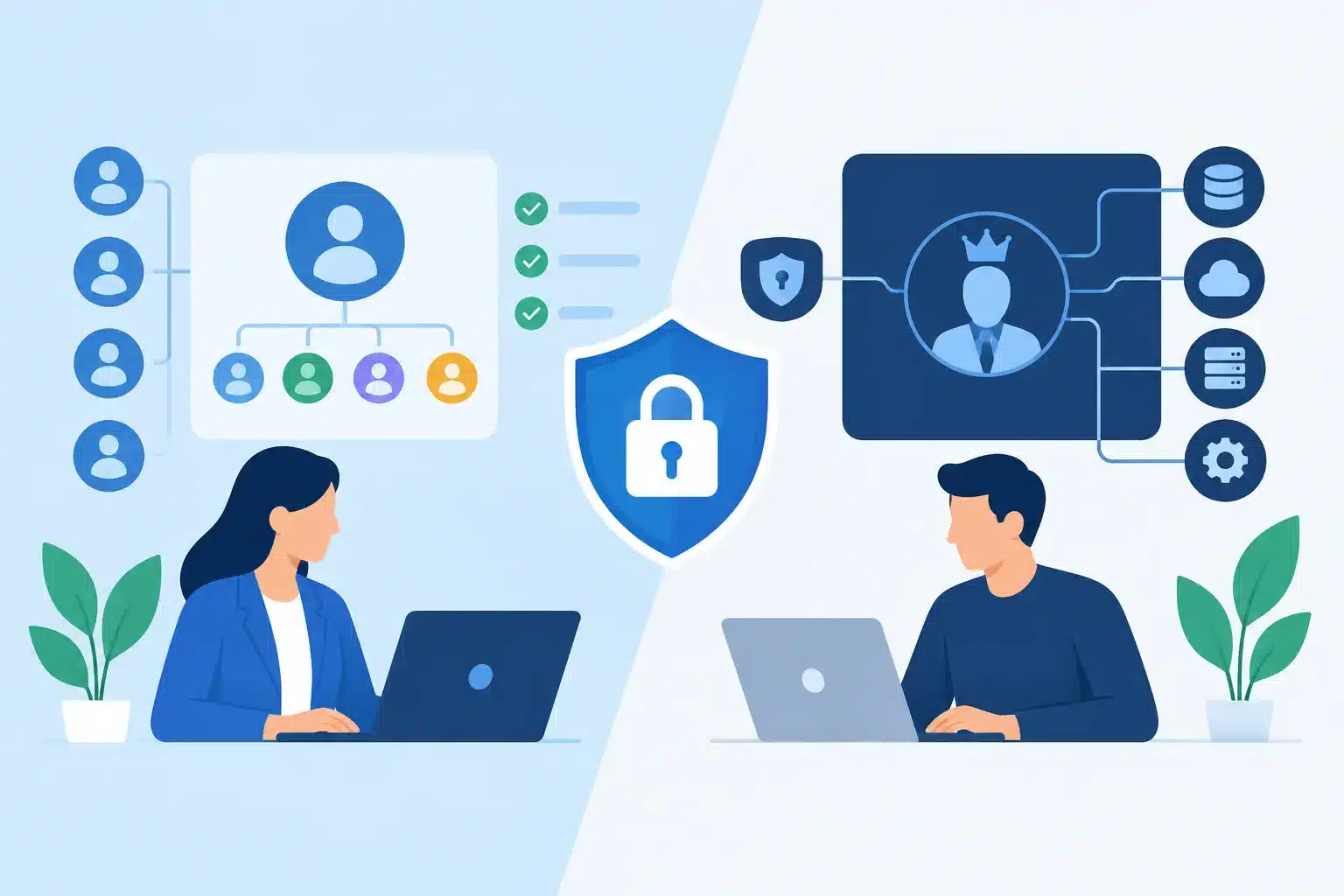
Platform decisions become clearer when the organization first defines its target control architecture. This architecture should state where identity attributes originate, how accounts are provisioned, how access is requested and approved, where authentication policy is enforced, and how privileged access is separated from standard workforce access.
It should also define boundaries. Customer identities may require different availability, privacy, and scale considerations than workforce identities. Highly regulated administrative access may need stronger session controls than standard SaaS access. Certificate lifecycle management has different operational patterns from employee onboarding, even when both depend on common asset and ownership data.
A single suite can reduce integration overhead and simplify support. It can also create compromise if a platform is weaker in a control area that is critical to the business. Best-of-breed tools can provide deeper capability, but they require stronger integration engineering, monitoring, and ownership. There is no universal answer. The architecture must reflect the organization’s highest-risk access paths and the team’s capacity to operate the resulting environment.
Consolidate in risk-based waves
Large identity transformations fail when they attempt to migrate every application and identity population at once. A phased approach reduces disruption and gives the program room to validate controls in production.
Prioritize the first wave around high-value risk reduction. This often includes centralizing authentication for critical applications, bringing privileged accounts into governed workflows, automating deprovisioning from an authoritative HR source, and discovering unmanaged certificates or service accounts. These moves produce visible control gains while establishing the integration patterns needed for later work.
Subsequent waves can address application onboarding, access governance expansion, legacy directory rationalization, machine identity automation, and AI agent governance. Each wave should have defined entry criteria, control objectives, migration ownership, rollback procedures, and post-deployment support requirements.
Do not measure progress only by applications migrated. Measure whether access is actually governed after migration. An application connected to single sign-on but still using shared local administrator accounts has not reached a controlled state.
Treat non-human and AI identities as first-class scope
Many consolidation programs still focus almost entirely on employees and contractors. That is no longer sufficient. Service accounts, workload identities, API keys, certificates, bots, and AI agents often hold persistent access to sensitive systems. Their growth can outpace workforce identities by a wide margin.
A consolidated identity model must assign ownership, purpose, lifecycle policy, credential rotation requirements, and access boundaries to these identities. For AI agents, this means more than issuing a token. Teams need to identify what data an agent can access, what actions it can execute, which human or business function sponsors it, and how its activity will be monitored.
The same governance principle applies across identity types: no access should exist without a defined owner, business purpose, policy boundary, and review path. This is where IGA, PAM, CLM, and AI identity controls must operate as connected disciplines rather than isolated programs.
Build the operating model alongside the technology
Technology consolidation without operating consolidation creates a cleaner architecture with the same old execution problems. Establish a clear service model for identity operations, including request fulfillment, incident response, access review support, connector maintenance, privileged access onboarding, certificate renewal, and exception management.
Define decision rights early. Security should set control standards and monitor risk. Application owners must validate access models and approve business access. Infrastructure teams need accountable procedures for directories, cloud platforms, and emergency access. Internal audit and compliance teams should receive evidence from the process, not manually assembled reports after the fact.
Managed services can be valuable where internal teams lack specialist capacity or require continuous monitoring and platform administration. But outsourcing does not remove accountability. The organization still needs service-level expectations, escalation paths, control metrics, and executive ownership of identity risk.
Measure control, not just consolidation
The strongest programs use a limited set of operational measures that leadership can understand and security teams can act on. Track deprovisioning completion times, percentage of privileged accounts under management, dormant account volume, certification completion and remediation rates, certificate inventory coverage, and the number of non-human identities with assigned owners.
Also measure exceptions. A growing number of policy bypasses, manual provisioning requests, or unsupported applications may indicate that the target architecture does not yet meet business requirements. Exceptions are not always failures. They are signals that deserve governance, time limits, compensating controls, and a defined remediation path.
Make consolidation a sustained security capability
Identity consolidation is complete only when the organization can operate its controls consistently through acquisitions, new cloud services, workforce changes, and emerging AI use cases. That requires architecture discipline, tested processes, and teams that understand the production realities behind every access policy.
IDENT1TY approaches this work as an identity security operating discipline: assess the access estate, design the control model, integrate the right platforms, and support the environment after deployment. The practical test is simple: when access risk changes, can the organization see it, govern it, and respond without relying on disconnected tools and manual workarounds? That is the control a consolidation program should deliver.