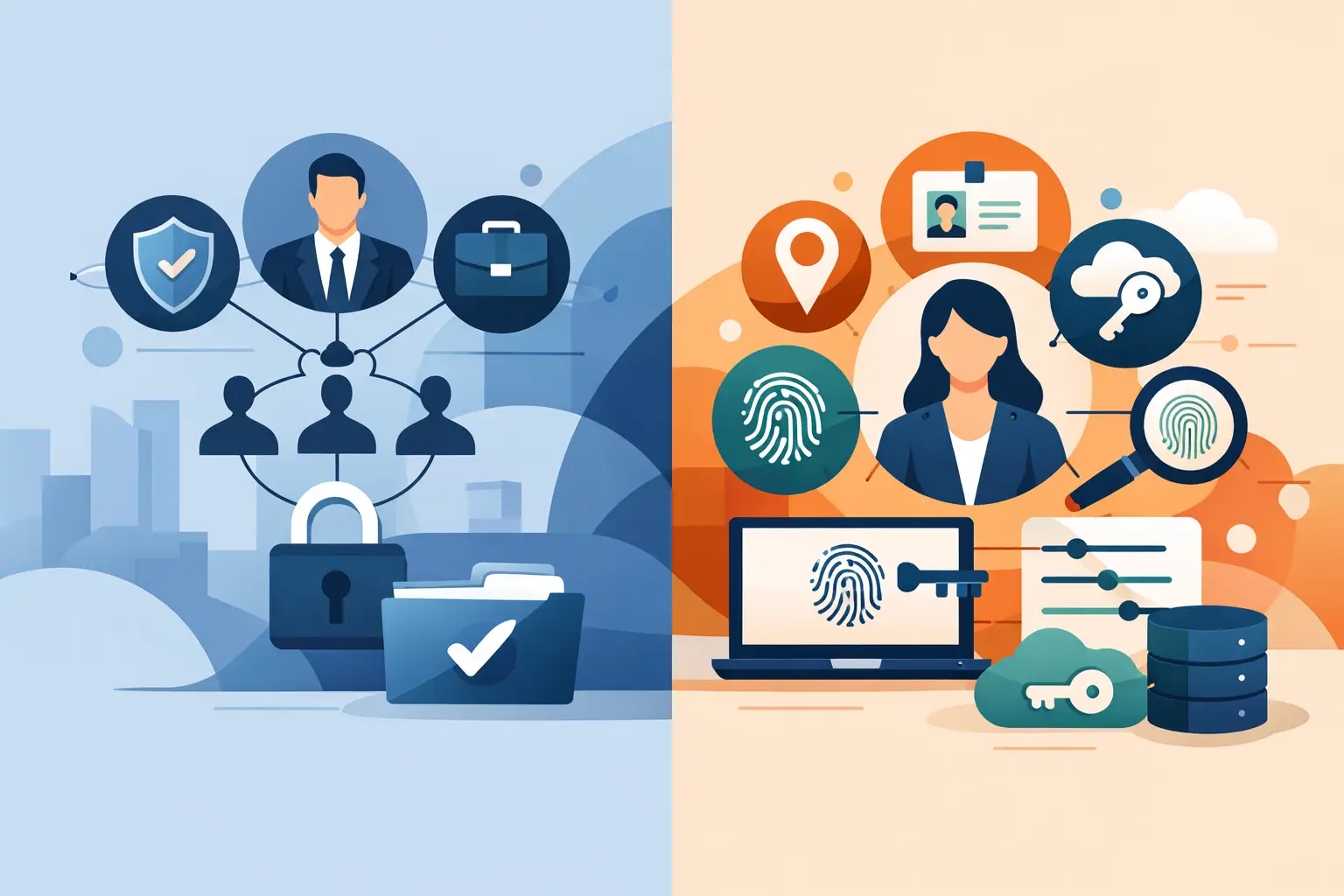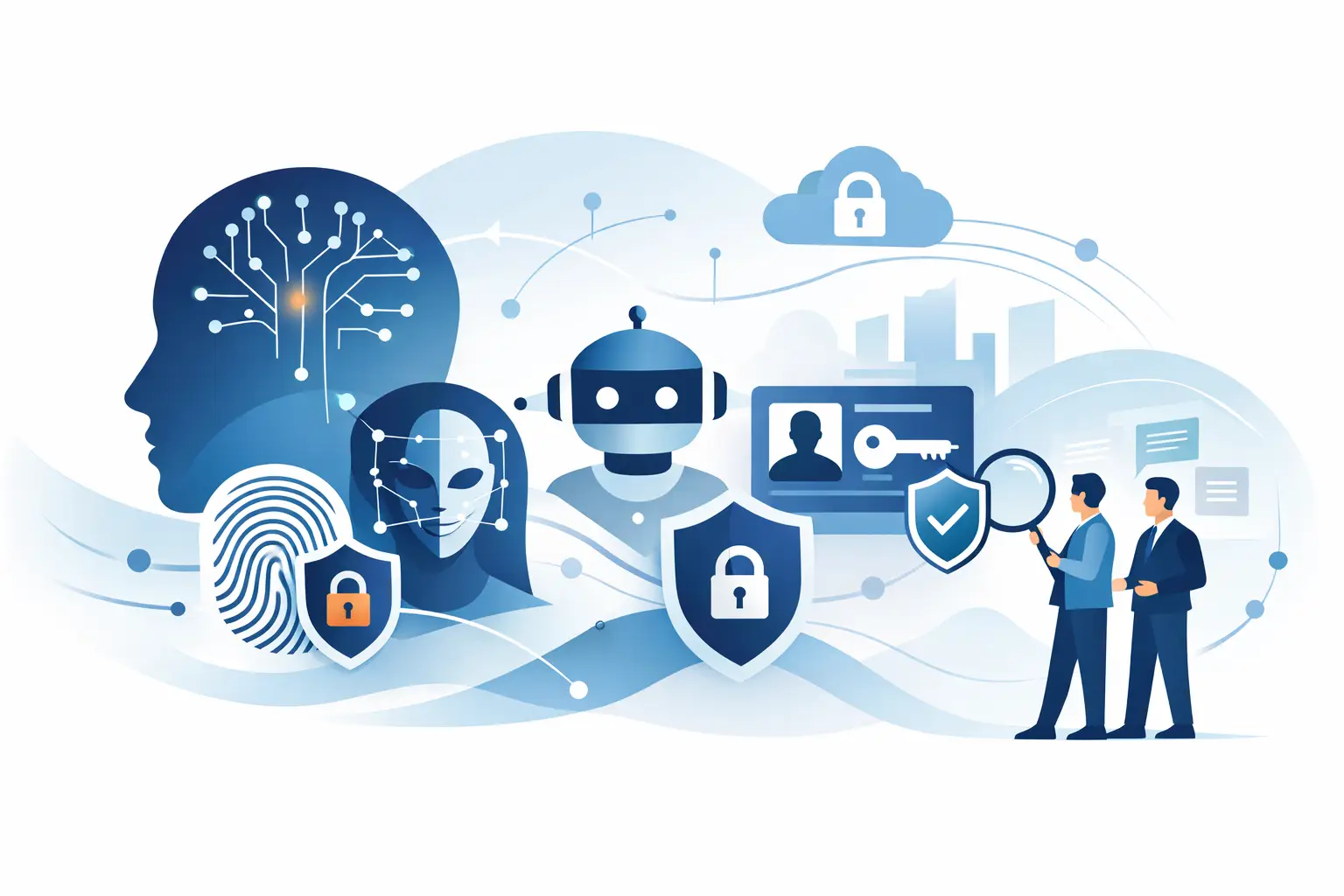
A new identity is entering enterprise environments faster than most governance models can account for it: the AI agent. It can read documents, call APIs, query databases, initiate workflows, and act through service accounts. The defining AI identity security trends are therefore not limited to better authentication for people. They center on controlling non-human identities that can make decisions, access sensitive systems, and operate at machine speed.
For CISOs and IAM leaders, the issue is operational. Every AI capability requires an answer to familiar but increasingly difficult questions: Who owns this identity? What authority does it hold? Which data can it access? How is activity monitored? And how quickly can access be changed or revoked when risk appears?
AI Identity Security Trends Reshaping Enterprise Risk
AI agents are becoming governed identities
Organizations have spent years managing workforce identities, privileged users, application accounts, and service principals. AI agents add another category, but treating them as ordinary application accounts is not sufficient. An agent may use several credentials, invoke multiple tools, inherit a user’s context, and take actions that affect production systems.
The security requirement is clear: every agent needs a distinct, attributable identity with a defined owner, approved purpose, scoped permissions, and an auditable lifecycle. Shared API keys and long-lived service credentials create immediate control gaps because they make it difficult to determine which agent acted, under what instruction, and with which effective permissions.
This trend will push identity programs toward formal agent onboarding and offboarding processes. Before an agent reaches production, teams should document its business function, data sources, connected systems, authorization model, credential storage, and emergency shutdown process. If those controls cannot be demonstrated, the agent is not ready for critical access.
Least privilege must account for actions, not only data
Traditional least privilege often focuses on whether an identity can read, write, or administer a system. AI agents require a more granular model. The relevant question is not only whether an agent can access a database, but whether it can export records, alter configurations, approve transactions, trigger payments, or create new accounts.
Permissions should be constrained by action, environment, time, and context. An agent that summarizes support cases may require read access to a defined dataset. It does not require rights to modify customer profiles or access unrelated production systems. An infrastructure agent may be allowed to collect configuration data, while changes to firewall rules or cloud roles require a separate approval path.
This is where policy-based authorization becomes more valuable than broad role assignment. Static entitlements remain necessary, but they should be supplemented with real-time decisions based on the agent’s task, the sensitivity of the target resource, the initiating user, and the risk level of the requested action.
Human delegation is becoming a critical control point
Many AI systems act on behalf of employees. That delegation model can improve productivity, but it can also extend a user’s access far beyond the original session or intended task. A user with legitimate access to financial reports may instruct an agent to collect, transform, and distribute information across systems. Without controls, the agent can become an unmonitored extension of the user’s authority.
Enterprises need clear delegation boundaries. The system should record who initiated the request, which agent executed it, what permissions were used, and whether the action was within the user’s approved authority. High-risk actions should require step-up authentication, human approval, or both.
Delegation also raises separation-of-duties concerns. If an employee can ask an agent to prepare, approve, and submit a transaction through connected workflows, controls that previously existed across separate systems may be bypassed. IGA policies must evolve to evaluate effective access across the person, the agent, and the downstream applications involved.
Machine Identity Sprawl Is Now an AI Problem
AI deployments depend on machine identities: service accounts, workload identities, API tokens, certificates, secrets, OAuth clients, and cloud roles. These identities already outnumber human accounts in most enterprise environments. AI adoption increases both their volume and their rate of change.
The practical risk is credential sprawl. Development teams may create tokens to connect an agent to a model provider, data store, collaboration platform, ticketing tool, or cloud service. If those credentials are unmanaged, overprivileged, or never rotated, the AI initiative becomes another path into sensitive systems.
Certificate and secrets management must be included at the start of AI architecture reviews. Teams need a complete inventory of machine identities supporting each agent, with accountable owners and automated expiration or rotation where possible. Hard-coded secrets, shared keys, and manually maintained certificates are operational debt that attackers can exploit.
Short-lived credentials reduce exposure
One of the more consequential AI identity security trends is the shift toward short-lived, dynamically issued credentials. Instead of giving an agent a persistent credential with broad access, organizations can issue a narrowly scoped token for a specific task and duration.
This approach reduces the impact of credential theft and makes access more responsive to changing conditions. It does require mature integration between identity providers, secrets platforms, cloud environments, and target applications. Not every legacy system supports modern token-based access, so organizations will often need a phased architecture that isolates high-risk credentials while modernization continues.
The trade-off is operational complexity. Dynamic access models require dependable policy design, logging, exception handling, and support processes. But the alternative is permanent access that no one can confidently explain or revoke.
Privileged Access Management Moves Closer to AI Workflows
AI agents are increasingly used in IT operations, security operations, development, and cloud administration. These are privileged use cases, even when the agent itself does not hold a standing administrator role. If it can invoke privileged commands through an automation platform or request actions from an admin API, it belongs within PAM control.
A practical model separates observation from execution. An agent can analyze logs, identify anomalies, and recommend remediation with limited access. When a remediation requires privileged action, the workflow should use just-in-time elevation, approval rules appropriate to the risk, session recording where applicable, and a complete audit trail.
This division preserves speed without granting an autonomous system unrestricted administrative authority. It also makes accountability clearer during incident response. Security teams can distinguish between an AI-generated recommendation, a human-approved decision, and the actual privileged command executed in the environment.
Identity Detection Must Correlate Agent Activity
Traditional identity monitoring looks for abnormal user behavior: impossible travel, unusual login times, excessive entitlement changes, or suspicious privilege elevation. AI agents require additional signals. Security teams need to see unusual tool use, sudden changes in call volume, access to unexpected data domains, repeated authorization failures, and behavior outside the agent’s approved purpose.
Logs must preserve identity context across the full chain of activity. A useful audit record connects the initiating user or process, the agent identity, the model or workflow version, the credentials used, target systems, authorization decisions, and resulting actions. Without this correlation, investigations become fragmented across application logs, identity platforms, cloud services, and model tooling.
Detection alone is not enough. The response path should be defined before deployment. When an agent behaves outside policy, teams need to know whether to terminate the session, revoke its token, disable the agent, rotate associated credentials, or require human review before further actions occur.
Governance Cannot Be Deferred Until Scale
AI projects often begin as pilots owned by business units or development teams. That is understandable, but identity governance cannot wait until the project becomes enterprise-wide. Once an agent connects to regulated data, production applications, or privileged workflows, it creates audit and control obligations.
Governance should establish a minimum control baseline: named ownership, business justification, identity inventory, access certification, data classification, logging requirements, and an approved decommissioning process. Higher-risk agents should receive more frequent reviews and stronger authorization controls.
The level of control depends on the use case. A public-facing knowledge assistant has a different risk profile than an agent that can modify ERP records or administer cloud infrastructure. The mistake is applying the same lightweight governance model to both. Risk-based classification keeps controls proportionate while ensuring critical access receives the scrutiny it requires.
What Enterprise Teams Should Do Now
The immediate priority is not to block AI adoption. It is to prevent uncontrolled access from becoming embedded in the architecture. Start by identifying AI agents already in use, including internal pilots, SaaS features with agentic capabilities, and automation workflows that call models or external tools.
Then assess the identities behind them. Determine which service accounts, API keys, certificates, roles, and user delegations each agent relies on. Map privileged paths and identify credentials that are shared, static, unowned, or broader than the task requires.
From there, establish a repeatable onboarding pattern rather than approving each deployment as an exception. The pattern should integrate IAM, PAM, IGA, secrets management, certificate lifecycle management, security monitoring, and incident response. This is where specialized identity engineering matters: controls must work in production, not just appear in an architecture diagram.
AI will make identity environments more dynamic, not less. Organizations that establish ownership, least privilege, lifecycle controls, and measurable oversight now will be able to adopt new capabilities without surrendering control of critical access. IDENT1TY helps turn that requirement into an operating model that security and technology teams can sustain.