Last updated: July 2026
A stolen privileged identity gives an attacker the same power as a trusted administrator, often without triggering a single alert. Privileged identity management is the discipline built to prevent that. This guide explains what PIM is, which accounts it covers, how just-in-time access works, the best practices that define it in 2026, and how it relates to PAM and IAM.
What is privileged identity management (PIM)?
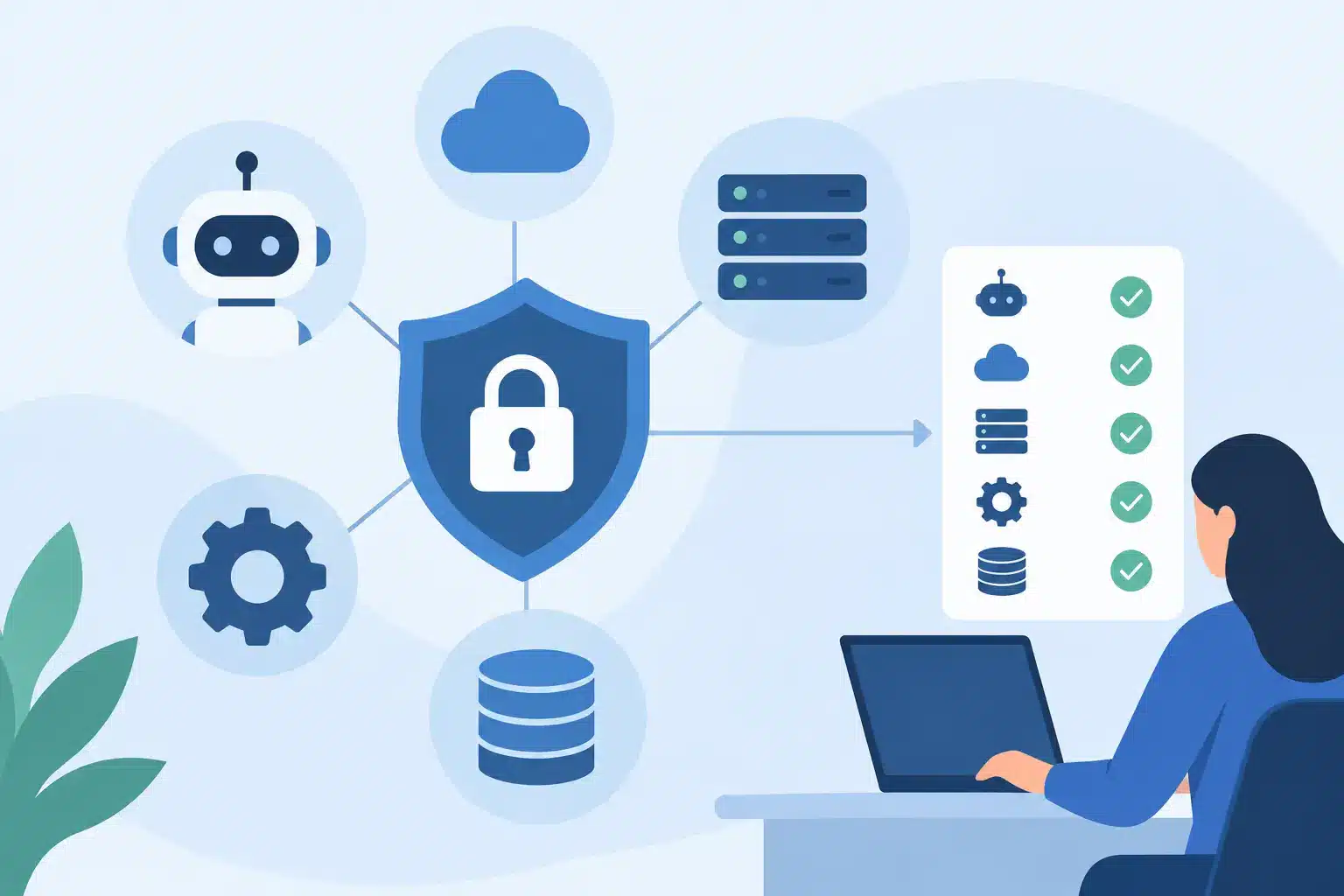
Privileged identity management (PIM) is the cybersecurity practice of securing, controlling, and monitoring the accounts that hold elevated access to an organization’s most critical systems and data. These are not ordinary user accounts. They are administrator accounts, root accounts, service accounts, and API credentials that can modify system configurations, reach confidential data, bypass security controls, and in the worst case bring down entire infrastructure.
PIM is identity-centric: it manages the full lifecycle of privileged identities, ensuring they are properly authenticated, authorized, and audited from creation through deactivation. The goal is to remove permanent, always-on privilege and replace it with access that is granted only when needed, justified, time-limited, and fully recorded. Without PIM, privileged accounts are an organization’s single biggest attack surface. With it, breach risk drops sharply.
PIM is a specialized layer of identity and access management, closely tied to privileged access management. The urgency is not theoretical: more than 86% of breaches involve privileged credential abuse, and the PAM/PIM market is projected to grow from $4 billion in 2025 to $42 billion by 2037, driven by Zero Trust mandates and the proliferation of AI agents.
What accounts does PIM cover?
A complete PIM program covers far more than a handful of human administrators. In a modern enterprise it spans:
- Domain admin accounts, Active Directory admins with organization-wide rights.
- Local admin accounts, per-device credentials on servers and workstations.
- Service accounts, non-human accounts running background processes, scheduled tasks, and application services.
- Database admin accounts, DBA credentials with full read and write access to production data.
- Cloud IAM roles, AWS IAM roles, Azure service principals, and GCP service accounts with infrastructure access.
- Emergency or break-glass accounts, high-privilege accounts used only during critical incidents.
- SSH keys, API tokens, and Kubernetes service accounts, machine-to-machine credentials with root or admin-level access.
This breadth matters because machine identities now outnumber human ones in most enterprises, and each unmanaged privileged credential is a potential entry point.
How just-in-time privileged access works
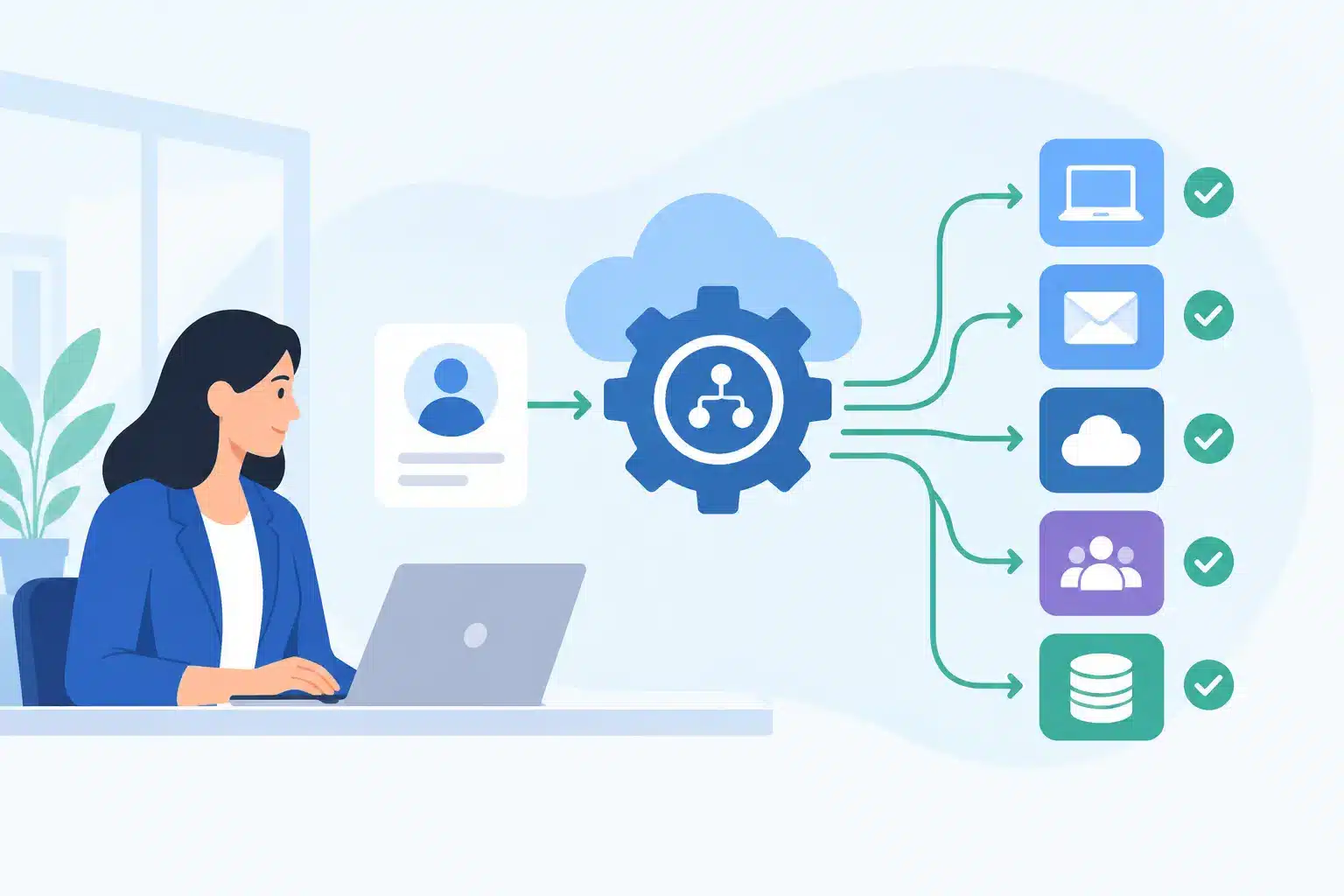
The defining mechanism of modern PIM is just-in-time (JIT) access, and Microsoft Entra PIM offers the clearest model of how it works in practice. Instead of holding a privileged role permanently (active), a user is made eligible for it. When they need it, they activate the role for a limited time, subject to conditions.
A standard best-practice pattern looks like this: make all administrative roles eligible rather than active, and require activation on demand with MFA, a written justification, and manager approval. Activated access lasts a bounded period, commonly one to eight hours, then automatically reverts to eligible. Permanent active assignment is reserved only for a small number of break-glass emergency accounts. Every activation is recorded in the audit log, satisfying SOC 2 and ISO 27001 requirements. The effect is powerful: privileged access exists only for the minutes or hours it is actually used, so an admin account that is not currently active cannot be stolen and reused.
The core capabilities of PIM
Beyond JIT activation, a mature PIM program combines several capabilities into one workflow.
- Privileged account discovery. Automatically scanning on-premises servers, cloud accounts, Active Directory, databases, and network devices to find every privileged account, including orphaned and forgotten ones.
- Least privilege enforcement. Assigning each identity the minimum role needed, and minimizing high-power roles like Global Administrator.
- Strong authentication. Requiring MFA for every privileged role activation, which alone makes an account far less likely to be compromised.
- Approval workflows. Requiring justification and manager or security approval for sensitive roles, with no self-approval.
- Access reviews. Periodically recertifying that each identity still needs its privileged access, and removing those that do not.
- Audit and monitoring. Recording every activation, assignment change, and privileged action for compliance and forensics.
PIM best practices for 2026
Effective PIM rests on a consistent set of disciplines drawn from real deployments. Keep the number of standing administrators tiny; a common benchmark is fewer than five Global Administrators, all protected by MFA. Make privileged roles eligible by default and activate on demand, reserving permanent assignment for break-glass accounts only. Scope access to the lowest necessary level, granting privilege at the specific subscription, resource group, or resource rather than broadly. Require MFA, justification, and approval for high-risk role activation, and never allow users to approve their own elevation.
Run access reviews on a regular cadence, monthly for the most sensitive roles like Global Administrator, and quarterly for lower-risk ones, and remove anyone who no longer needs access. Avoid using on-premises synced accounts for cloud privileged roles, since a compromise on-premises would then reach the cloud. Underpinning all of it, start with a complete inventory of privileged identities, because you cannot govern what you have not discovered.
PIM vs PAM vs IAM
These three acronyms appear together constantly, and the distinction is worth keeping clear. IAM is the broad framework for managing all digital identities across an organization. PIM focuses specifically on the identities that hold elevated privileges, governing their eligibility and lifecycle. PAM goes a level deeper into the runtime controls, how privileged access is actually requested, brokered, used, and recorded during a session.
In practice, PIM and PAM overlap heavily and are increasingly delivered together, with PIM deciding who is eligible for privilege and when, and PAM controlling and monitoring how that privilege is exercised. The strongest programs treat them as complementary parts of one privileged access lifecycle rather than competing tools. Building that integrated capability across a real, hybrid environment is where expertise matters, and where a dedicated privileged access management solution combined with expert integration turns a set of features into a working defense.
Frequently asked questions
What is privileged identity management?
PIM is the practice of securing, controlling, and monitoring accounts with elevated access, such as administrator, service, and root accounts. It manages the privileged identity lifecycle and enforces just-in-time access so privilege exists only when needed.
What accounts does PIM manage?
PIM covers domain and local admin accounts, service accounts, database admin accounts, cloud IAM roles, break-glass accounts, and machine credentials like SSH keys, API tokens, and Kubernetes service accounts, human and non-human alike.
What is just-in-time access in PIM?
Just-in-time access makes users eligible for a privileged role rather than holding it permanently. They activate it on demand, with MFA and approval, for a limited time (often one to eight hours), after which it reverts automatically. This removes standing privilege attackers could exploit.
What is the difference between eligible and active assignments?
An active assignment means a user holds the privileged role permanently. An eligible assignment means they can activate it when needed, subject to conditions, and it expires afterward. Best practice is to make roles eligible and reserve active assignment for break-glass accounts.
Is PIM the same as PAM?
They are closely related and often delivered together but not identical. PIM is identity-centric and governs who is eligible for privilege and when. PAM is access-centric and controls how privileged access is used during a session. Most organizations need both.
Key takeaways
- PIM secures, controls, and monitors accounts with elevated access, managing the privileged identity lifecycle from creation to deactivation.
- Its defining mechanism is just-in-time access: roles are made eligible and activated on demand with MFA and approval, so standing privilege, and the risk of stolen admin accounts, is minimized.
- With over 86% of breaches involving privileged credential abuse, PIM is essential, and it works best integrated with PAM and IAM as one privileged access lifecycle.