A domain administrator account still works six months after its named owner left the company. A local administrator credential is embedded in a deployment script no one maintains. A cloud subscription owner belongs to a contractor whose engagement ended years ago. These are not inventory issues. They are active paths to critical systems. Organizations that can detect orphaned privileged accounts early reduce the likelihood that unmanaged access becomes the starting point for a breach.
Privileged accounts deserve a different control standard from ordinary user identities. They can change configurations, disable security controls, access regulated data, create new accounts, and establish persistence. When their ownership is unclear, the organization cannot make a defensible decision about whether access remains necessary.
What makes a privileged account orphaned?
An orphaned privileged account is an account with elevated access that no longer has a valid, accountable owner. The account may still be enabled and actively used, or it may appear dormant while retaining the ability to be reactivated or abused.
The obvious case is a user account linked to a terminated employee. In enterprise environments, the harder cases sit between systems and teams. A service account may have been created for a retired application. A shared emergency account may lack a designated custodian. A cloud role assignment may persist after a project team dissolves. A managed service provider account may remain after a contract changes.
The key distinction is not whether an account has a name in a directory. It is whether a current business owner can attest to its purpose, privilege level, operational dependency, and approved duration. If nobody can do that, the account should be treated as orphaned until proven otherwise.
Why standard offboarding does not solve the problem
Most organizations have a process to disable an employee’s primary account after termination. That process is necessary, but it rarely reaches every privileged identity.
Privileged access is distributed across Active Directory, cloud platforms, SaaS administration consoles, PAM vaults, databases, network devices, CI/CD pipelines, and endpoints. Account names are inconsistent. Ownership data may live in HR systems, ticketing platforms, CMDBs, and spreadsheets. Some elevated access is assigned directly, while other access is inherited through groups, roles, service principals, or federated relationships.
As a result, a clean HR termination record can coexist with lingering administrative privileges. The problem expands during acquisitions, cloud migrations, application retirements, and outsourcing transitions, when technical change moves faster than governance data.
A mature program treats offboarding as one control signal, not as the full detection mechanism.
How to detect orphaned privileged accounts across the estate
Detection begins by creating a reliable scope of what counts as privileged. Do not limit the review to accounts with “admin” in the name. Include direct and inherited permissions that can materially affect systems, identities, data, and security controls.
Build a consolidated privileged identity inventory
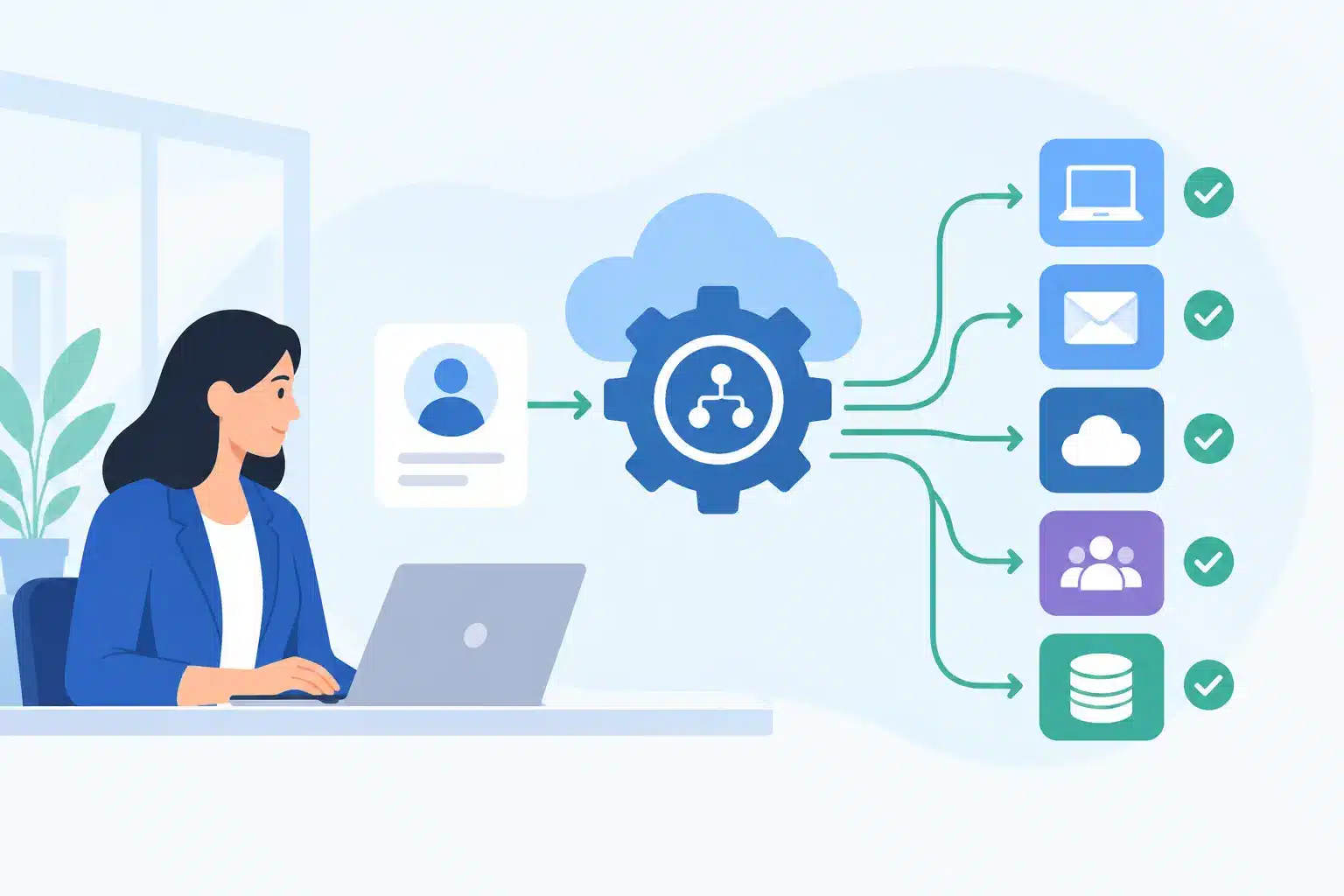
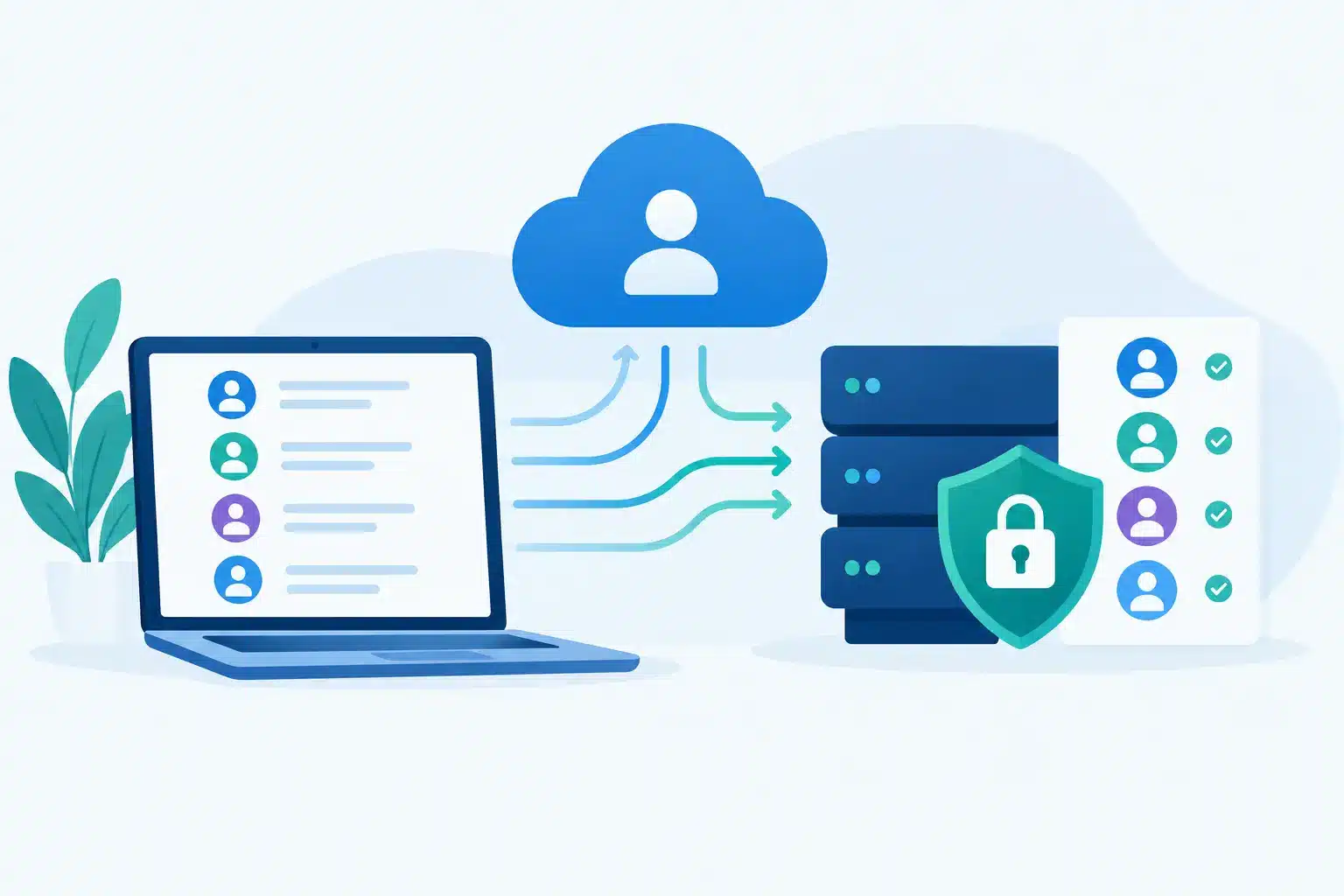
Start with authoritative feeds from each environment: identity directories, PAM platforms, cloud identity providers, infrastructure management tools, databases, enterprise applications, and security platforms. Capture human accounts, shared accounts, service accounts, API credentials, service principals, break-glass identities, and privileged groups.
For each record, normalize enough data to make comparison possible: account identifier, account type, target system, assigned roles or entitlements, privilege tier, creation date, last authentication, credential rotation status, owner, manager, department, and source system.
This is where many programs stall. A complete inventory is not a one-time spreadsheet exercise. It requires connectors, defined data ownership, and a process for exceptions. The goal is not perfect data on day one. The goal is a controlled inventory that becomes more accurate every review cycle.
Correlate accounts with authoritative ownership data
Compare each privileged account against HR records, contractor records, vendor rosters, application ownership records, and approved service catalogs. Look for accounts where the named owner is terminated, inactive, transferred, unrecognized, or missing altogether.
Do not assume a manager field establishes accountability. Managers change roles, departments reorganize, and automated provisioning often copies outdated attributes. Require a named technical owner and a business owner when the account supports a business application. For high-impact accounts, add a designated backup custodian.
Service accounts require a different correlation model. They may not map to a person, but they must map to an active application, service, or automation process with an accountable owner. A service account without a current dependency record should move immediately into investigation.
Analyze privilege paths, not only account status
An account can be disabled in one system and still retain an active privilege path elsewhere. A former administrator may no longer sign into the corporate directory but may hold a cloud role through an external identity, possess a valid API token, or retain access to a PAM safe.
Analyze group nesting, role inheritance, standing versus just-in-time elevation, cross-tenant relationships, and delegated administration. The account itself may look ordinary while the path it inherits leads to domain-level or subscription-level control.
Prioritize paths that combine high privilege with weak attribution. Shared credentials, standing global administrator roles, unmanaged local administrator accounts, and long-lived machine credentials should receive immediate scrutiny because incident responders cannot easily establish who used them.
Use activity as evidence, not proof
Last login and last password change dates help focus the review, but inactivity does not mean safety. A dormant privileged account is often attractive to an attacker because it receives less attention. Conversely, activity does not prove that the legitimate owner is using it, particularly for shared or automated accounts.
Use activity data alongside ownership validation. Examine authentication source, typical access time, target systems, credential checkout records, secret rotation logs, and recent privilege changes. An administrative account authenticating from an unfamiliar network or after its owner left the organization requires incident-level investigation, not a routine cleanup ticket.
Establish a risk-based remediation process
Not every uncertain account should be deleted immediately. Disabling an account that supports a production integration can interrupt a critical service. The right response depends on the account’s privilege, business dependency, and evidence of compromise.
A disciplined workflow separates containment from final disposition. First, restrict or suspend high-risk access where operationally safe. Next, identify the application or process dependency, validate an accountable owner, and review recent activity. Then either reassign ownership and reduce privileges, convert the access to a managed model, or retire the identity and remove associated credentials.
For accounts with no confirmed owner, set a short remediation deadline and escalate to the system owner. Exceptions should be time-bound, formally approved, and visible to security and audit teams. An exception without an expiry date is simply an orphaned account documented in a different system.
Make orphan detection an operating control
Quarterly access reviews alone are not sufficient for high-risk privileges. Ownership changes continuously, and elevated access can be created outside standard processes. Effective programs combine event-driven controls with recurring certification.
Trigger reassessment when an employee leaves, a contractor engagement expires, an application is retired, a cloud subscription changes ownership, or a privileged role is assigned. Run scheduled correlation checks to identify accounts with missing owners, mismatched employment status, stale credentials, or inactive linked applications. Route findings to accountable teams with evidence and deadlines.
PAM, IGA, and IAM capabilities each play a role. PAM can vault credentials, enforce checkout, rotate secrets, and record privileged sessions. IGA can drive identity lifecycle events, ownership certification, and access review workflows. IAM and cloud identity controls can reduce standing permissions through role-based access and just-in-time elevation. The technology matters, but control design and operating discipline determine whether gaps stay closed.
IDENT1TY approaches this work as an operational identity security function: establish the inventory, define ownership, integrate lifecycle signals, and measure remediation performance over time.
Measure whether control is improving
Track more than the number of accounts removed. Useful measures include the percentage of privileged accounts with verified owners, the number of accounts associated with inactive personnel, time to revoke privileges after termination, exception aging, and the percentage of service accounts tied to active applications.
Also measure coverage. If one cloud platform, database estate, or acquisition environment is absent from the inventory, a favorable orphan-account metric can create false confidence. Visibility must be measured against the systems where privileged access actually exists.
The practical objective is clear: every privileged identity should have a known purpose, a current owner, controlled credentials, and a review path. When an organization cannot answer those questions quickly, access is not under control. Start with the highest-impact privilege tiers, resolve unclear ownership decisively, and make that discipline part of daily identity operations.