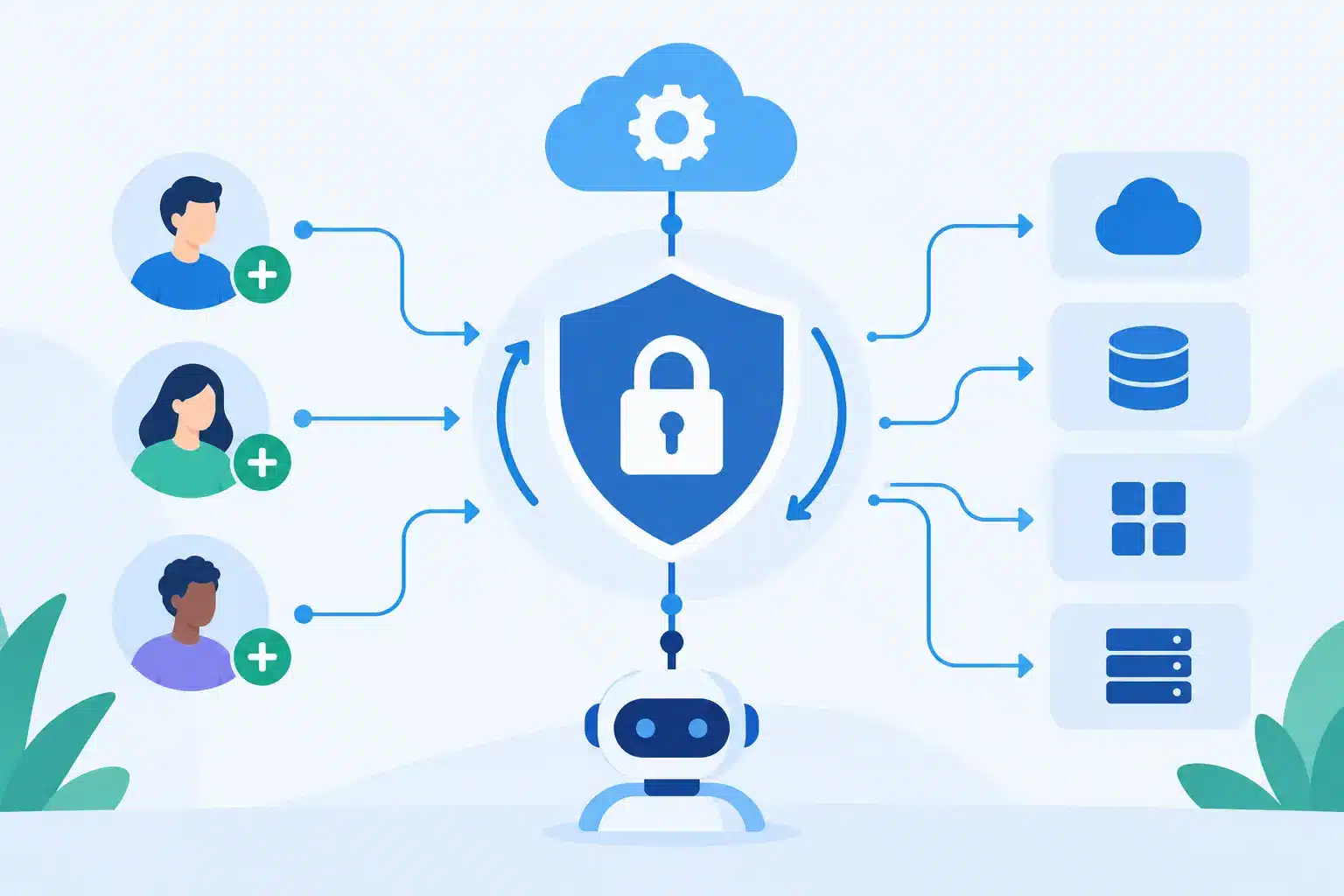
A new employee starts Monday, but their manager has already requested access to five business systems, a shared drive, a cloud console, and a finance application. If each request moves through a separate queue, the organization creates two risks at once: delayed productivity and access decisions made outside policy. To automate IAM provisioning is to replace that improvised process with controlled, traceable identity workflows.
For enterprise IAM teams, the objective is not simply to create accounts faster. It is to ensure every account, entitlement, privileged role, and access change is tied to a verified identity, an approved business need, and a clear lifecycle event. Automation without governance can distribute excessive access at machine speed. Governed automation reduces exposure while improving operations.
Why Manual Provisioning Fails Under Enterprise Scale
Manual provisioning often begins as a manageable service desk process. An administrator receives a ticket, creates an account, assigns group membership, and closes the request. That approach breaks down when an organization adds cloud applications, contractors, acquisitions, remote workforces, privileged platforms, machine identities, and AI agents.
The problem is not only volume. It is inconsistency. One administrator may assign access based on a prior request. Another may rely on a manager’s email approval. A third may create a local account because the target application is not connected to the identity platform. Over time, the organization loses a reliable answer to basic control questions: who has access, why do they have it, who approved it, and whether they still need it.
Manual processes also create offboarding gaps. When HR marks a worker as terminated, the identity team may disable a primary account quickly while separate SaaS accounts, shared credentials, cloud roles, and elevated entitlements remain active. In regulated environments, that gap can become an audit finding. In a security incident, it can become an entry point.
Automate IAM Provisioning Around Authoritative Events
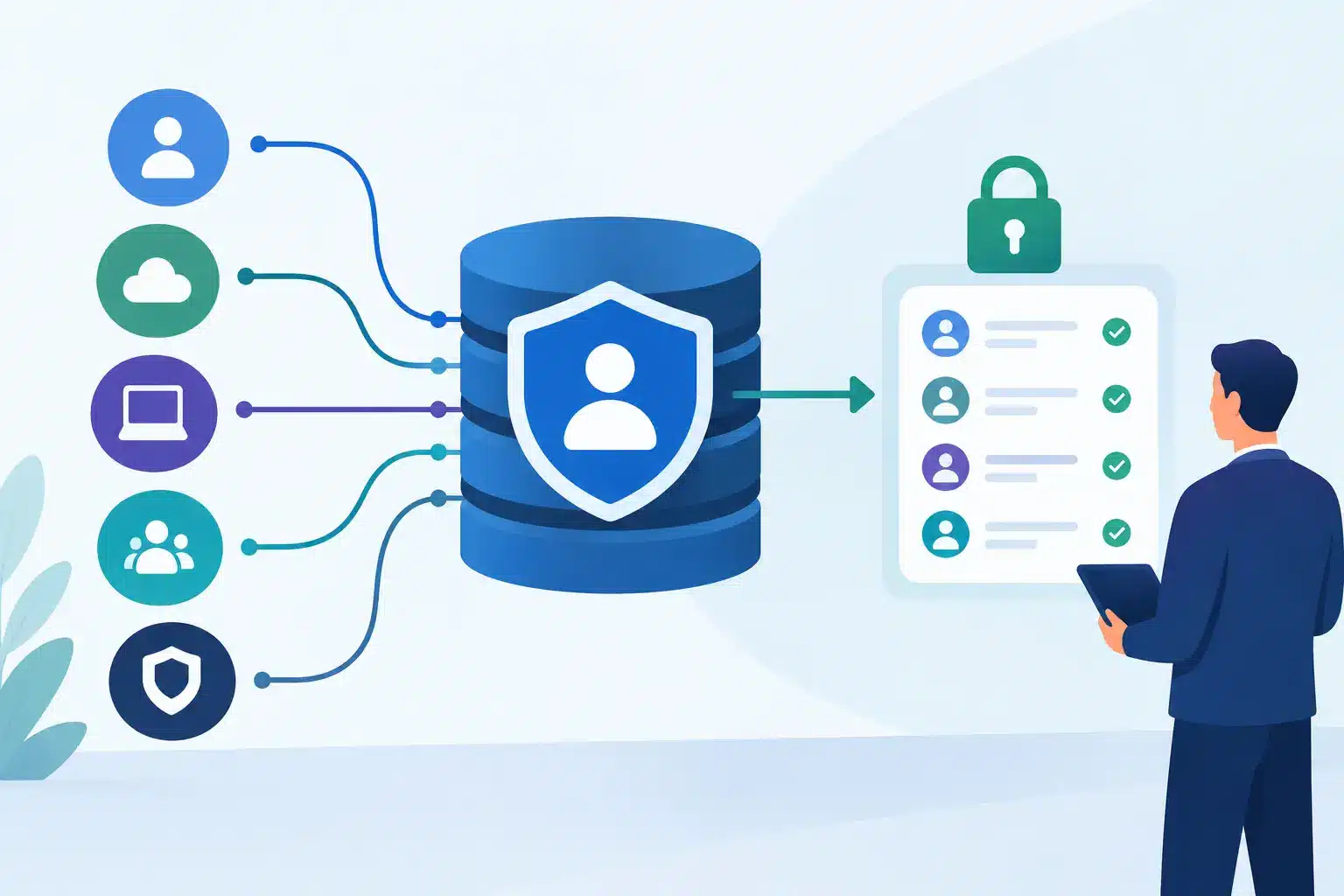
Effective provisioning starts with authoritative identity data. For employees, that is usually the HR system. For contractors, it may be a vendor management platform or a controlled identity registration process. For service accounts, workloads, and AI agents, the authoritative source may be a CMDB, workload platform, or application ownership registry.
The key is to define which source can initiate which lifecycle action. A hire event can create a workforce identity. A department change can trigger an access review or role recalculation. A termination event should initiate suspension, session revocation where supported, removal of entitlements, and a controlled record of any exceptions.
Not every event should result in immediate, unrestricted provisioning. A future-dated hire may need a staged identity that cannot authenticate until the start date. A contractor extension may require sponsor confirmation. A high-risk role change may need segregation-of-duties validation before access is granted. Automation should execute policy, not bypass it.
Build a Reliable Identity Data Model
Provisioning quality depends on the attributes driving decisions. Job code, department, legal entity, location, manager, employment type, cost center, and application ownership can all influence access. If these attributes are incomplete or inconsistent, role-based rules will produce unreliable outcomes.
Identity teams should resist building broad access models from vague fields such as department alone. Two employees in the same department may have very different responsibilities and risk profiles. Use business attributes where they are stable and meaningful, then apply targeted approvals for exceptions. A smaller set of accurate rules is safer than a large library of brittle automation logic.
Design Access Policies Before Connecting Applications
A common failure pattern is to connect applications first and define policy later. This creates a technically integrated environment with no consistent model for who should receive access. The result is automated account creation paired with manual entitlement decisions, which preserves much of the original risk.
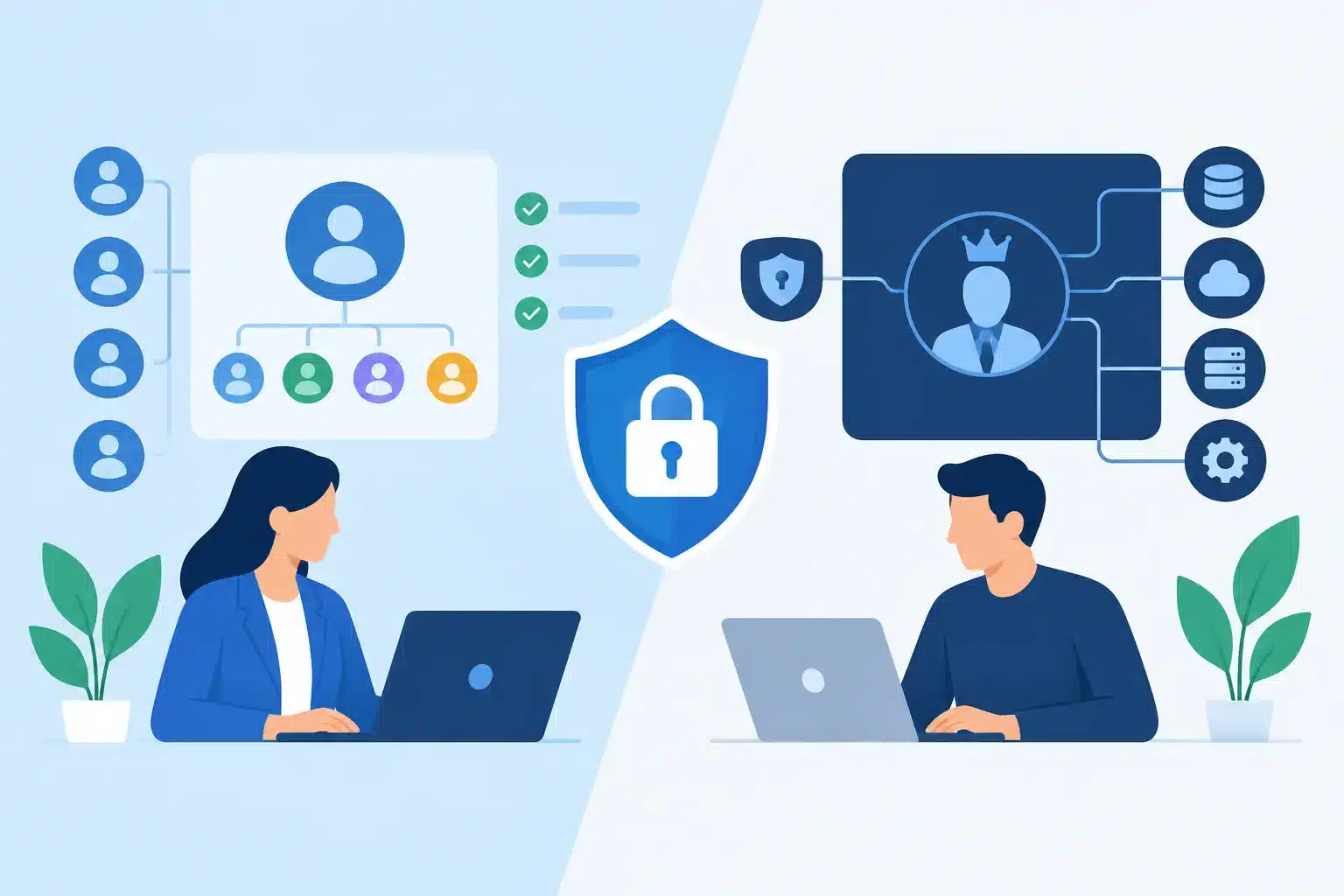
Start by separating access into clear categories: baseline access required for every worker, birthright access for a defined population, requestable access that requires approval, and privileged access that requires stronger controls. The distinctions matter because each category should have different workflow, review, and removal requirements.
Baseline access may include email, collaboration tools, and security training. Birthright access may include a business application for a specific job family. Requestable access should route to an accountable application owner or data owner. Privileged access should be time-bound when possible, protected by PAM controls, and reviewed more frequently than standard user access.
For high-impact systems, do not treat a group assignment as sufficient evidence of governance. Record the request reason, approver, policy evaluation, start date, expiration date, and fulfillment result. That evidence turns an access change into a defensible control.
Use Roles Carefully, Not Religiously
Role-based access control is valuable when roles reflect real business patterns. It is less effective when teams attempt to model every variation of every job into a single enterprise role catalog. Excessive role granularity creates maintenance overhead and makes access decisions harder to understand.
A practical model often combines a limited number of business roles with application-level roles, policy rules, and access packages. Business roles can establish common access for stable populations. Application roles can define permissions within specific systems. Policies can account for attributes such as region, worker type, and risk. Access packages can bundle requestable access with owners, approvals, and expiration controls.
The right balance depends on the organization. A bank with strict duty separation may need more detailed controls than a distributed manufacturer. In both cases, the design must be understandable to application owners and maintainable by the IAM operations team.
Connect Provisioning to Least Privilege and PAM
Automated provisioning should not create standing administrative access by default. Administrative entitlements require distinct treatment because their misuse can affect systems, data, and other identities at scale.
Use the IAM workflow to establish eligibility for privileged access, then use PAM to control elevation, credential handling, session oversight, and time limits. A developer may be eligible to request production support access, but that does not mean they should retain a permanent administrator account. The workflow should enforce the difference between eligibility and active privilege.
The same principle applies to nonhuman identities. Service accounts, API credentials, certificates, workload identities, and AI agents need named owners, defined purposes, scoped permissions, and lifecycle controls. Provisioning automation that focuses only on employees leaves a significant identity attack surface unmanaged.
Make Exception Handling a First-Class Control
Every mature environment has exceptions. An acquired business may use an application that cannot support standard provisioning. A legacy platform may require a local account. A critical incident may require emergency access outside normal approval timing.
The answer is not to ignore these cases or move them permanently to email. Build exception workflows with compensating controls. Require a named owner, a documented reason, an expiration date, and a review schedule. Route emergency access through a controlled process that captures who requested it, who approved it, and what was granted.
Exceptions should be measurable. If a particular application generates repeated exceptions, that is a signal to improve integration, revise the access model, or address an ownership gap. Exception data is operational intelligence, not administrative noise.
Measure Whether Provisioning Is Actually Controlled
Provisioning automation should be monitored as a security service, not treated as a completed implementation. Teams need evidence that workflows are completing, policy decisions are correct, connectors are healthy, and removals occur within required timeframes.
Useful measures include joiner completion time, mover access adjustment time, termination deprovisioning time, failed provisioning events, orphaned accounts, overdue access requests, exceptions approaching expiration, and privileged access granted outside standard policy. Track these by application and business unit, not only as enterprise averages. A strong overall average can hide a critical control failure in one high-risk platform.
Regular access certifications remain necessary even with high-quality automation. Automation applies expected policy based on available data. Certification confirms that the expected policy still reflects real business need. These are complementary controls.
Deliver Automation as an Operating Model
Technology alone will not sustain automated IAM provisioning. Application owners must understand their approval responsibilities. HR and vendor management teams must maintain reliable identity data. Security must define risk requirements. IAM operations must own workflow health, connector failures, and service-level performance.
This is where a disciplined delivery model matters. IDENT1TY approaches identity automation as an operational capability: assess the current state, define control objectives, integrate the required platforms, test failure scenarios, and establish ongoing governance. The work continues after go-live because applications, job structures, regulations, and threats continue to change.
Start with the systems that carry the highest business and security impact, then expand using repeatable patterns. A controlled first phase creates the policy model, integration standards, ownership structure, and operational evidence needed to scale without recreating the same access problem in every new application.
The practical goal is simple: every identity should receive only the access required, for only as long as required, with a clear owner and an auditable record. When provisioning operates on that standard, speed becomes a security advantage rather than a source of uncontrolled access.