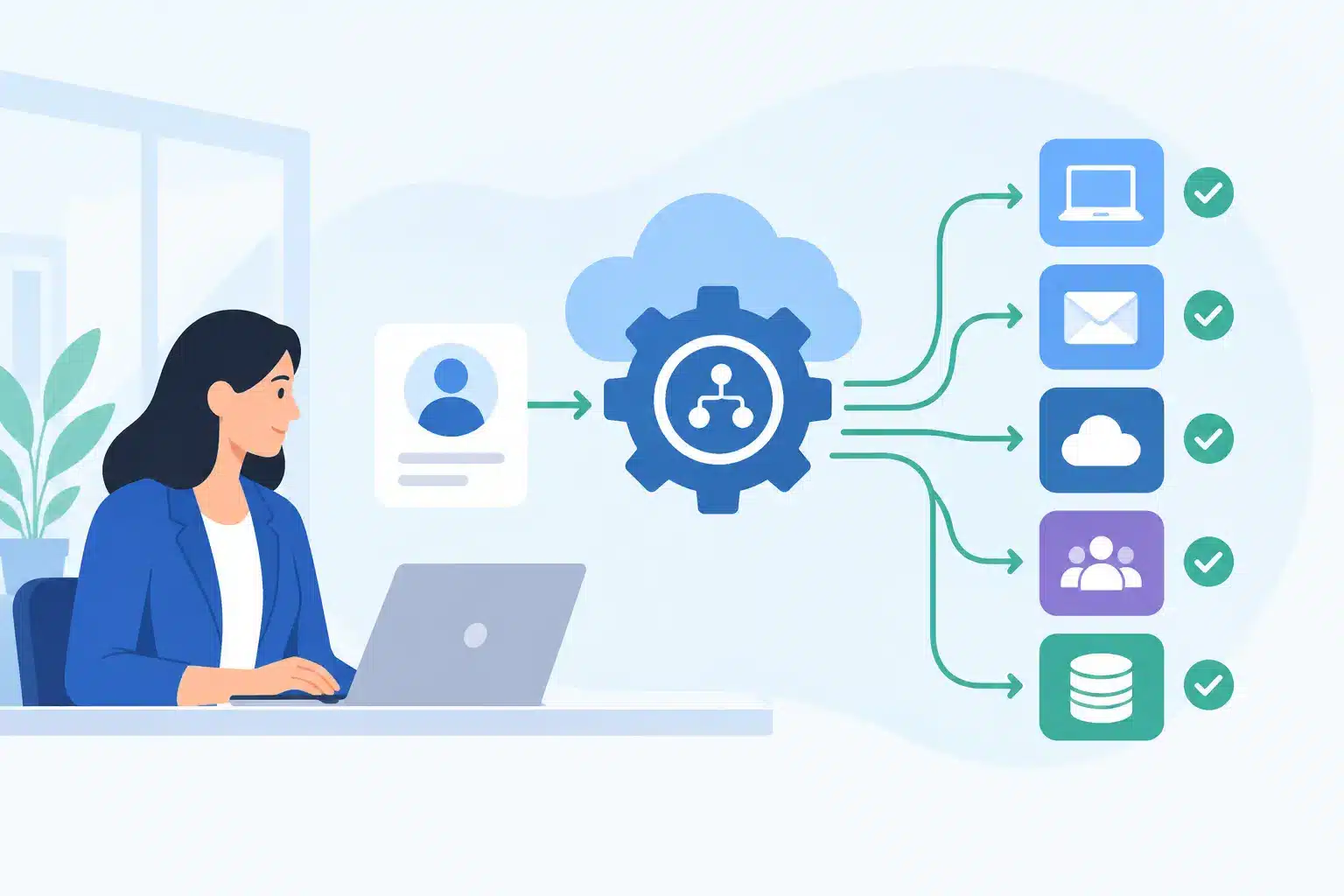
A production outage caused by an expired certificate is not a certificate problem alone. It is evidence that a machine identity operated outside accountable control. The machine identity trends shaping enterprise security now point to the same conclusion: organizations can no longer manage certificates, keys, service accounts, workloads, and AI agents as disconnected technical artifacts.
Machine identities already outnumber human identities by a wide margin in most enterprises. They authorize application-to-application traffic, establish encrypted sessions, sign software, access cloud services, and allow automated processes to act at speed. Each identity may be short-lived, long-lived, privileged, externally exposed, or embedded in infrastructure that no single team fully owns. That scale changes the security model. Manual tracking and isolated renewal processes do not provide control.
Machine Identity Trends That Change the Operating Model
The central shift is from certificate administration to machine identity security. Certificate Lifecycle Management remains essential, but certificates are only one expression of identity. The operating model must cover how a non-human entity is issued an identity, authenticated, authorized, monitored, rotated, revoked, and retired.
Certificate lifetimes are forcing automation
Shorter certificate validity periods are accelerating a transition that many enterprises have delayed. Frequent renewal reduces the window in which a compromised credential can be misused, but it also exposes brittle processes. A team that depends on spreadsheets, calendar reminders, and individual administrator knowledge cannot safely renew certificates across a large and changing environment.
Automation is not simply a renewal tool. It requires an authoritative inventory, ownership records, policy-based issuance, deployment integration, renewal testing, and alerting that reaches the team responsible for the affected service. Without those elements, automated renewal can move failure from an expiration event to an unplanned application or load balancer outage.
The practical objective is controlled automation. High-volume, standardized certificate use cases can be automated aggressively. Legacy systems, regulated workloads, and business-critical external services may require staged deployment, approval gates, or specific maintenance windows. The policy should reflect the risk and operational dependency of each use case.
Cloud-native workloads are making identity ephemeral
Containers, serverless functions, managed Kubernetes platforms, and elastic workloads are designed to appear and disappear quickly. Static secrets and copied certificates do not fit this model. They create credentials that can outlive the workload, move across environments, and become difficult to attribute.
The stronger pattern is workload identity based on short-lived, automatically issued credentials. A workload should prove what it is through trusted runtime signals, then receive only the access required for its current function. This limits credential reuse and improves the ability to revoke access when a workload changes or is compromised.
That approach depends on architecture. Security teams need to define trust boundaries between cloud accounts, clusters, development environments, and third parties. Platform engineering teams need identity services that work within deployment pipelines rather than outside them. If identity controls add friction at release time, developers will create workarounds. If controls are absent, machine-to-machine access expands without governance.
AI agents are becoming machine identities with agency
AI agents introduce a more demanding identity problem. A conventional service account generally performs a predictable function against known systems. An agent may select tools, retrieve data, trigger workflows, and act through delegated permissions. The risk is not only whether the agent can authenticate. It is whether its authority is bounded, attributable, and continuously enforceable.
Every agent should have a distinct identity rather than operating through a shared human account or a broad integration credential. Its permissions should be purpose-specific, time-bound where possible, and separated from the permissions of the platform that hosts it. Sensitive actions – such as changing payment details, creating privileged accounts, or accessing regulated data – should require explicit policy checks and, where warranted, human approval.
Logging must capture the identity of the agent, the service or tool it invoked, the authorization decision, and the originating workflow. This is essential for incident investigation and compliance. It also helps organizations determine whether an agent is operating within its intended role as use cases evolve.
Cryptographic agility is moving from future concern to current planning
Machine identity programs are increasingly tied to cryptographic agility. Enterprises are evaluating where certificates, keys, signing algorithms, and trust stores are used because changing them later can be difficult and disruptive. Post-quantum cryptography planning is part of this discussion, but the immediate requirement is broader: know where cryptographic dependencies exist and be able to change them in a controlled manner.
An inventory that only records a certificate expiration date is not enough. Teams need visibility into the issuing authority, algorithm, key length, owner, application dependency, deployment location, and business criticality. This information supports migration planning, policy enforcement, and a faster response when a weakness is identified in a cryptographic component.
The Visibility Gap Is Still the Primary Exposure
Most machine identity failures begin with incomplete discovery. Certificates may exist on web servers, network devices, APIs, message brokers, databases, code-signing systems, cloud services, SaaS integrations, and developer workstations. Keys may be stored in approved vaults, embedded in configuration files, copied into build systems, or left behind after an application migration.
Ownership is often less clear than location. Infrastructure teams may operate the platform, application teams may own the service, and security teams may define the policy. When an identity expires or is suspected of compromise, uncertainty over who must act extends outage duration and incident response time.
A credible program establishes a continuously maintained inventory, not a one-time discovery exercise. Each machine identity should be tied to an accountable owner, an application or service, an environment, a technical location, and a defined lifecycle state. Unknown identities should be treated as a control failure, not as normal operational noise.
This visibility also exposes unnecessary privilege. A service account created for a temporary integration may retain broad access years later. A shared certificate may authenticate multiple systems, making revocation costly. A development credential may appear in a production workflow. These are not edge cases in complex enterprises. They are common consequences of growth without lifecycle discipline.
Build Control Around the Full Lifecycle
Effective machine identity security is an operating capability spanning security, infrastructure, cloud, application, and compliance teams. The process starts with standards: approved identity types, certificate authorities, key storage methods, naming conventions, ownership requirements, and renewal policies. Standards reduce variation, which makes automation and auditability possible.
Issuance should be integrated into the systems where workloads are created and deployed. A developer or platform team should be able to request an approved identity through a defined workflow, with policy enforced automatically where the use case is standardized. Exceptions should be visible, time-limited, and reviewed. This is more sustainable than asking security teams to manually approve every certificate request or service account change.
Protection matters as much as issuance. Private keys should be generated and stored in appropriate protected locations, with exportability restricted according to risk. High-value signing keys and privileged machine credentials need stronger controls than a low-risk internal test certificate. The right design depends on the asset, the access path, and the consequence of compromise.
Finally, lifecycle control requires revocation and retirement to work reliably. An identity that cannot be disabled quickly is an incident response liability. Enterprises should test revocation paths, validate application behavior after credential rotation, and remove identities when services, integrations, or agents are decommissioned.
Measure What Is Actually Controlled
Machine identity programs need operational measures that reveal risk, not just activity. Total certificates discovered is useful, but it does not show whether the environment is under control. Better measures include the percentage of identities with accountable owners, the percentage enrolled in automated renewal, identities approaching expiration without a tested renewal path, unmanaged privileged service accounts, and time required to revoke a compromised credential.
These measures should be segmented by business criticality. An expired internal development certificate and an expired certificate supporting customer transactions do not carry the same exposure. A single control score can hide this difference. Risk-based reporting gives security leaders a clearer basis for funding remediation and assigning accountability.
For many organizations, the limiting factor is not the absence of a certificate management platform or a secrets vault. It is fragmented ownership, inconsistent implementation, and insufficient operational support after deployment. IDENT1TY approaches machine identity security as a controlled service discipline: assess the estate, define the target operating model, integrate the required controls, and maintain them as the environment changes.
The most useful next step is to select one critical business service and trace every machine identity that allows it to operate. Identify who owns each identity, how it is issued, where its key is stored, what access it grants, and how it will be renewed or revoked. That exercise turns a broad trend into an actionable control boundary.