Last updated: July 2026
Identity and access management sits behind almost every secure login you make, yet the term itself is often used loosely. This guide gives a clear, complete answer: what IAM is, how it works step by step, its core components, the difference between authentication and authorization, and why it has become foundational to modern security.
What is IAM (identity and access management)?
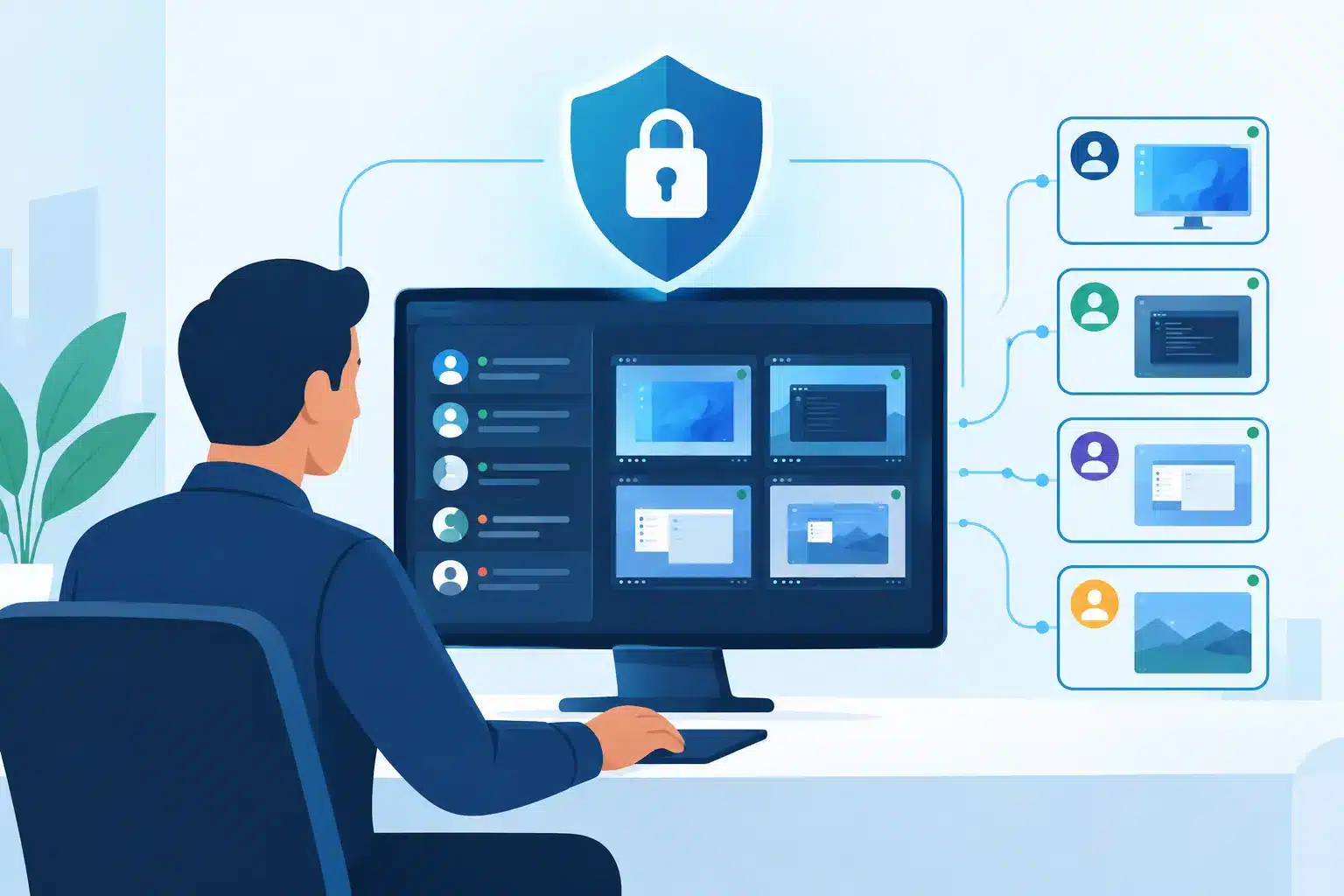
Identity and access management (IAM) is the framework of policies, processes, and technologies that ensures the right identities have access to the right resources, at the right time, and for the right reasons. In the simplest terms, IAM controls who can log in to your systems and what they are allowed to do once they are in.
IAM answers three core questions about every identity: who is this user or system, what are they allowed to access, and under what conditions should that access be granted or denied. It covers both halves of the problem: identity management, which is creating, storing, and verifying digital identities, and access management, which is defining and enforcing what each identity can reach. These identities are not only employees; they include contractors, partners, customers, applications, devices, and increasingly AI agents, across both cloud and on-premises environments. IAM is the foundation of the broader discipline of identity and access management.
How does IAM work?
IAM works by creating a digital identity for each user, device, or system, then managing what that identity can do through two linked steps every time access is requested: authentication, then authorization.
A simple analogy makes the flow clear. Checking into a hotel, you first go to reception and show your ID, which the receptionist matches against your reservation. That is authentication: proving who you are. In return you receive a keycard programmed for specific doors. Each time you swipe it at a door, that is authorization: the system checking whether your verified identity is permitted to enter that particular room. Your keycard opens your room and the gym, but not another guest’s room. IAM works the same way: it verifies identity once, then checks permissions at every resource the identity tries to reach.
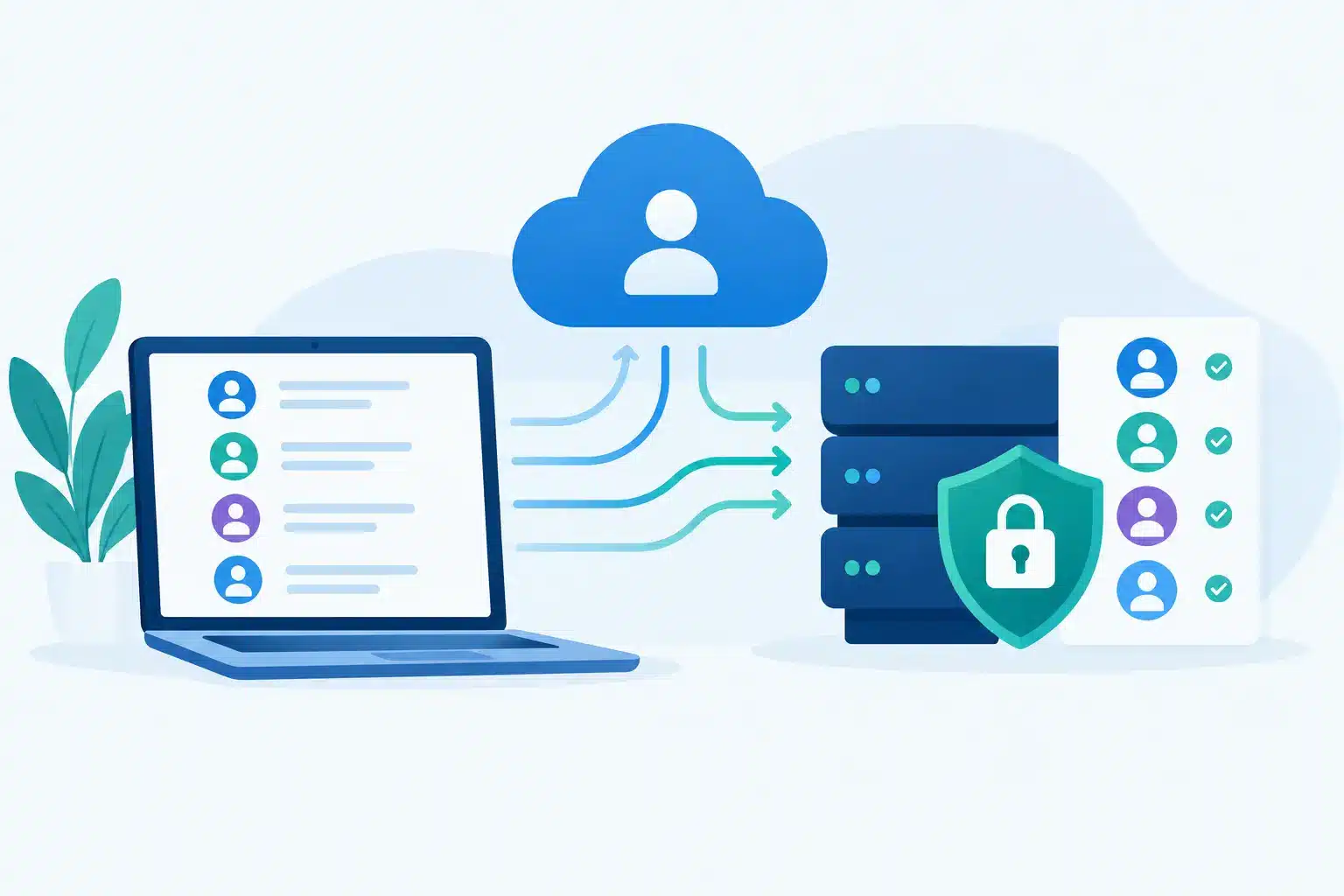
Behind the scenes, after a user proves their identity, the IAM system looks up the privileges tied to that identity in a central directory and grants access accordingly. It then logs the activity, so every access is accountable.
Authentication vs authorization
Authentication and authorization are often confused because to the user they feel like one seamless experience, but they are two distinct processes.
Authentication (sometimes shortened to AuthN) proves that an identity is who it claims to be. It is the first line of defense, and it relies on one or more factors: something you know (a password), something you have (a phone or hardware token), or something you are (a biometric like a fingerprint or face). Multi-factor authentication (MFA) combines several of these, and passwordless methods like passkeys remove the password entirely.
Authorization (AuthZ) happens after authentication and decides what the verified identity is allowed to do. It relies on policies and models such as role-based access control (RBAC), where permissions follow job function, or attribute-based access control (ABAC), which factors in details like device, location, or time of day. Authentication proves who you are; authorization decides what you can touch.
The core components of IAM
A complete IAM program is built from several capabilities that work together across the identity lifecycle.
- Authentication. Verifying identity through MFA, biometrics, passwordless methods, and adaptive risk-based checks.
- Authorization. Enforcing what each identity can access, using RBAC, ABAC, and least privilege.
- Single sign-on (SSO). Letting users authenticate once and then reach many applications without logging in repeatedly, which improves both security and user experience.
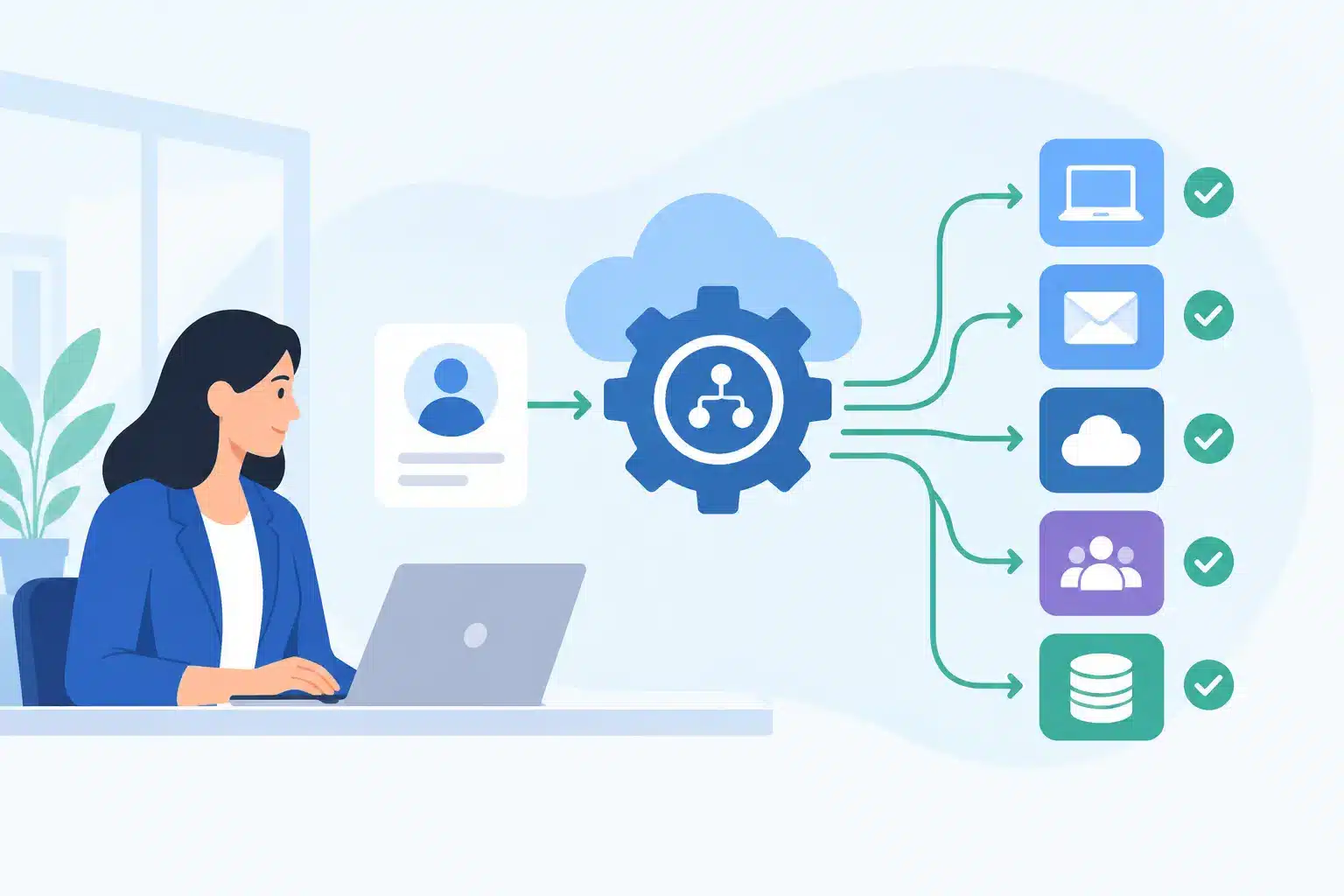
- User lifecycle management. Automating provisioning, role changes, and deprovisioning so access stays current from onboarding to departure.
- Governance and auditing. Reviewing access, enforcing policy, and logging activity to demonstrate compliance and catch misuse.
Underlying standards make these work across systems: SAML enables SSO across different platforms, OpenID Connect (OIDC) adds identity to the OAuth 2.0 authorization framework, and SCIM synchronizes identity data between applications.
The different types of identities IAM manages
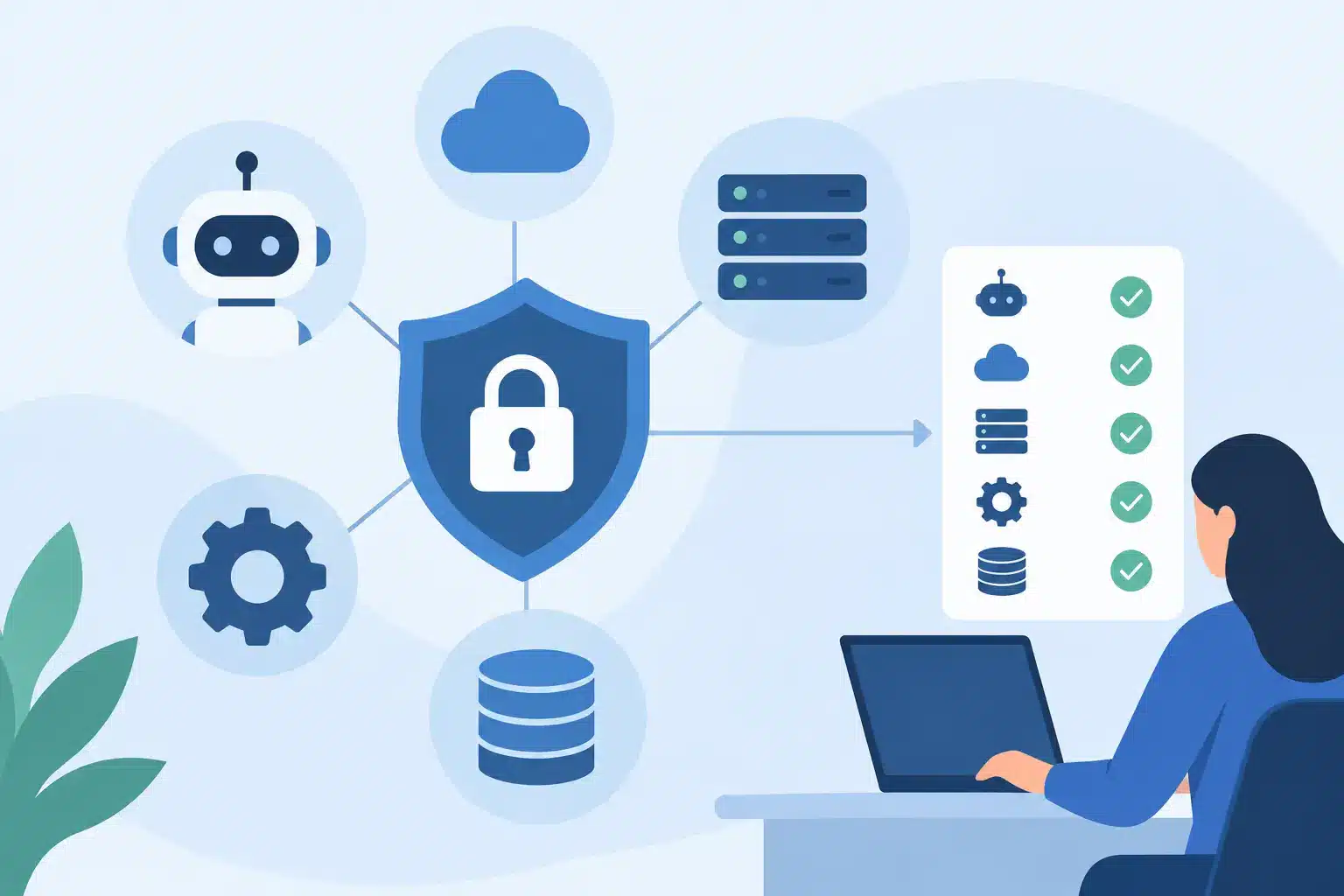
Modern IAM has expanded well beyond employees. A corporate network now hosts a growing mix of human users (employees, contractors, partners, customers) and non-human identities (applications, IoT and endpoint devices, automated workloads, and AI agents). Machine and AI agent identities increasingly outnumber human ones, and each is a potential entry point that IAM must govern with the same discipline. Managing all of these under one consistent model, rather than in disconnected silos, is a defining challenge of IAM in 2026.
Why IAM matters
IAM has become a core component of cybersecurity for a direct reason: compromised credentials are among the most common ways attackers breach organizations. According to IBM’s X-Force Threat Intelligence Index, around 30% of cyberattacks involve the theft and abuse of valid accounts. IAM counters this by strengthening authentication, so a stolen password alone is not enough, and by enforcing least privilege, so a compromised account cannot roam freely.
Beyond security, IAM delivers real operational value. It supports regulatory compliance with frameworks like GDPR, SOX, HIPAA, and PCI DSS by controlling and documenting access. It improves productivity by automating provisioning, so new hires get the access they need in minutes rather than days. And it enhances user experience through SSO and passwordless login. Effective IAM programs commonly cut provisioning time substantially while reducing security incidents through automated lifecycle management.
IAM, IGA, and PAM
IAM is the broad discipline, and it contains more specialized layers. IGA (identity governance and administration) is a subset focused on governance: access reviews, certifications, and compliance reporting. PAM (privileged access management) is the layer that secures the most powerful accounts with vaulting and session controls. IAM provides the foundation of authentication and authorization for everyone, while IGA governs whether access stays appropriate and PAM protects the privileged few. A mature program deploys all three as one connected architecture.
Building that unified architecture across real, hybrid environments is where expertise matters most. A dedicated identity and access management solution combined with expert integration turns a set of identity tools into a coherent system that secures every identity, human and machine alike.
Frequently asked questions
What is IAM in simple terms?
IAM (identity and access management) is the framework that controls who can log in to an organization’s systems and what they are allowed to do once inside. It manages digital identities and enforces the right level of access for each one.
What is the difference between authentication and authorization?
Authentication proves who an identity is, for example through a password, MFA, or passkey. Authorization then decides what that verified identity is allowed to access. Authentication always comes first; authorization follows.
What are the main components of IAM?
The core components are authentication, authorization, single sign-on (SSO), user lifecycle management (provisioning and deprovisioning), and governance and auditing. Underlying standards like SAML, OIDC, and SCIM connect them across systems.
What is the difference between IAM and IGA?
IAM is the broad discipline managing all identities and their access, including authentication and authorization. IGA is a subset of IAM focused on governance: access reviews, certifications, and compliance reporting.
Does IAM only apply to employees?
No. Modern IAM manages employees, contractors, partners, and customers, as well as non-human identities like applications, devices, automated workloads, and AI agents, which now often outnumber human users.
Key takeaways
- IAM is the framework that controls who can access what: it manages digital identities and enforces the right access at the right time through authentication and authorization.
- Authentication proves who you are; authorization decides what you can access. Core components include SSO, lifecycle management, and governance, connected by standards like SAML, OIDC, and SCIM.
- IAM now covers human and machine identities alike and is foundational to security, since compromised credentials are among the top breach vectors.