A user joins on Monday, changes roles on Wednesday, and leaves three months later. In many organizations, their access does not follow that timeline. Accounts stay active, permissions accumulate, and service credentials are rarely reviewed. That gap is exactly why the question what is identity and access management matters to security leaders. IAM is the control layer that determines who gets access, what they can use, and how that access is governed over time.
For mid-market and enterprise environments, IAM is not just a login tool. It is a security discipline that sits at the intersection of identity, infrastructure, compliance, and operations. When it is weak, attackers find easy paths through overprivileged users, unmanaged service accounts, stale entitlements, and inconsistent authentication policies. When it is well run, IAM gives the business a controlled way to grant access without losing visibility or increasing risk.
What is identity and access management in practice?
Identity and access management is the framework of policies, processes, and technologies used to manage digital identities and control access to systems, applications, data, and services. It covers the full lifecycle of access, from onboarding and authentication to authorization, review, and deprovisioning.
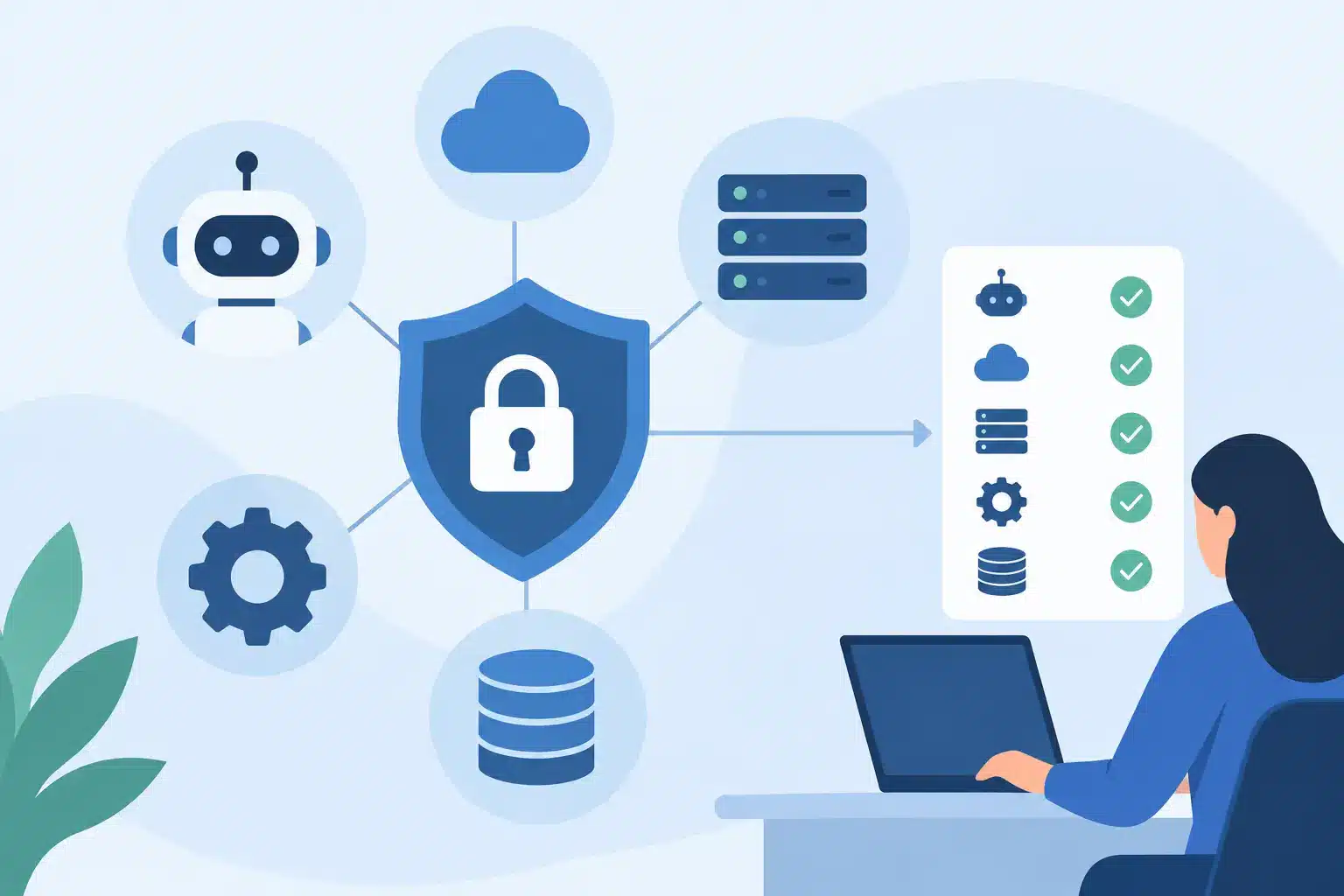
The identity side of IAM answers a basic question: who or what is requesting access? That identity may be a workforce user, contractor, partner, administrator, application, API, device, certificate, workload, or AI agent. The access side answers a second question: what should that identity be allowed to do, under which conditions, and for how long?
Those two questions sound simple. In production environments, they are not. Most organizations operate across cloud platforms, legacy systems, SaaS applications, remote workforces, and third-party relationships. Access is spread across directories, HR systems, ticketing workflows, VPNs, privileged tools, and business applications. IAM brings structure to that complexity.
The core functions of IAM
At a high level, IAM usually includes identity lifecycle management, authentication, authorization, and access governance.
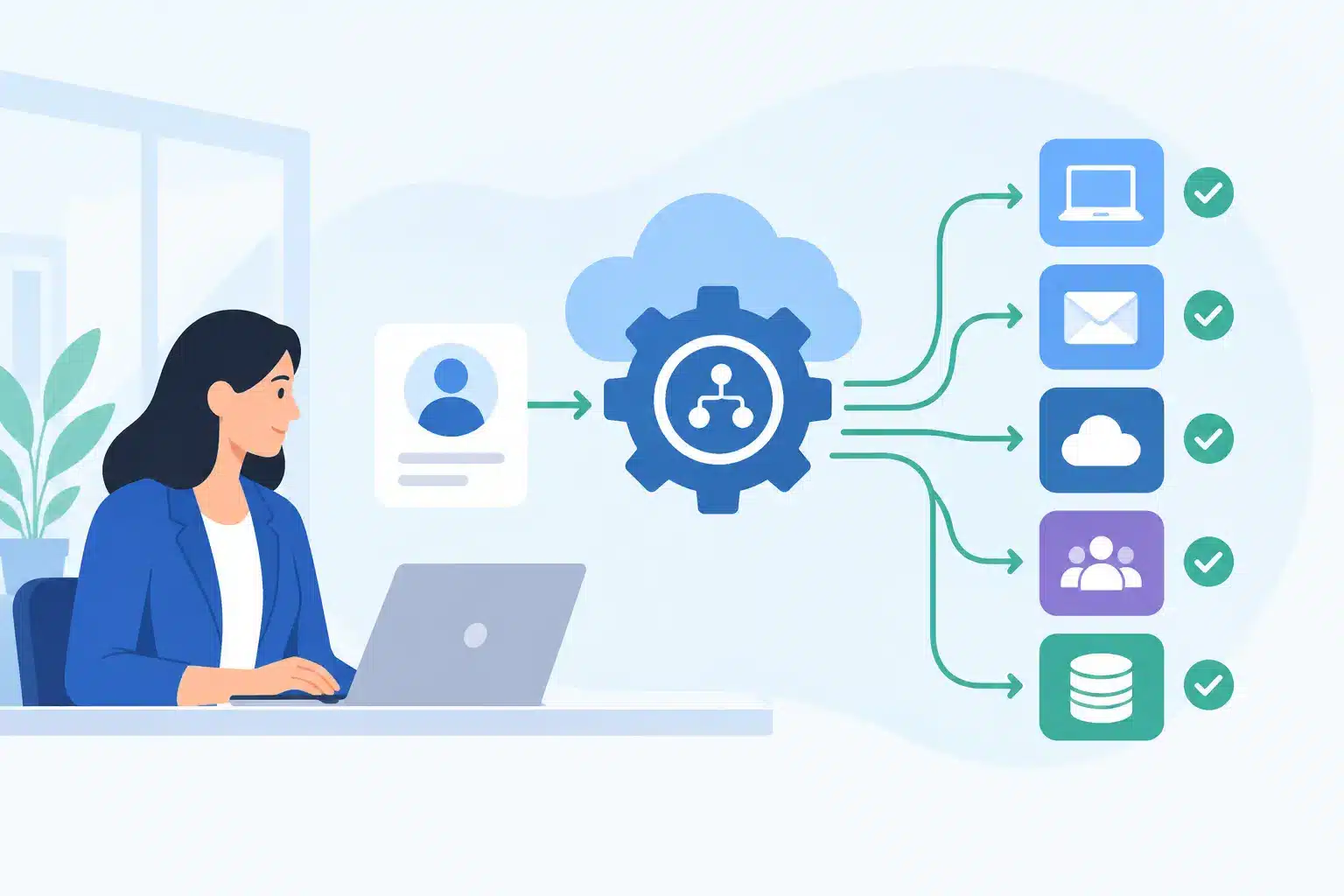
Identity lifecycle management handles how identities are created, updated, and removed. This is where organizations connect HR events, contractor onboarding, role changes, and offboarding to actual account provisioning. If this process is manual or fragmented, delays and errors are inevitable.
Authentication verifies that a user or system is who it claims to be. Passwords still exist, but effective IAM now depends on stronger controls such as multi-factor authentication, adaptive access policies, device trust, and risk-based login decisions.
Authorization determines what an identity can access after it has authenticated. This often relies on roles, group membership, attributes, policies, or combinations of all three. Good authorization design is not just about granting access quickly. It is about limiting unnecessary privilege and making access decisions consistent.
Access governance provides oversight. It includes access reviews, separation of duties controls, policy enforcement, reporting, and evidence for audits. Governance is often the difference between an IAM deployment that looks good on paper and one that stands up under regulatory or incident pressure.
Why IAM matters to enterprise security
Most significant breaches involve identity in some form. Attackers do not always need malware or an infrastructure exploit if they can log in with valid credentials, elevate privileges, or abuse forgotten accounts. Identity has become one of the most practical attack paths because access is distributed and often poorly governed.
That makes IAM foundational to modern security programs. It reduces risk by limiting who has access, enforcing stronger authentication, and making privilege visible. It also supports faster response when something goes wrong. If a suspicious login appears or a privileged account behaves unexpectedly, security teams need centralized policies and clear ownership, not a patchwork of local accounts and undocumented exceptions.
IAM also has an operational value that is easy to underestimate. When access is requested, approved, provisioned, and reviewed through repeatable controls, IT teams spend less time fixing access errors and more time managing exceptions that actually matter. The result is not just tighter security. It is better operational discipline.
What IAM is not
A common mistake is to treat IAM as a single product, often centered on single sign-on. SSO is useful, but it is only one component. An organization can give users a clean login experience and still have serious exposure from orphaned accounts, excessive privilege, weak joiner-mover-leaver processes, or unmanaged machine identities.
IAM is also not a one-time implementation. Roles change, applications change, infrastructure changes, and threat patterns change. Identity control has to be maintained as an operational capability. That includes policy tuning, integration updates, governance cycles, and ongoing support for business changes.
This is where many programs stall. The software may be live, but the process maturity is not there. Access requests bypass workflow. Roles are too broad. Application owners do not certify access. Privileged accounts are left outside governance because they are considered too difficult to integrate. The technology matters, but operating model matters just as much.
The most common IAM components
Organizations use different architectures, but most mature IAM programs include several shared components.
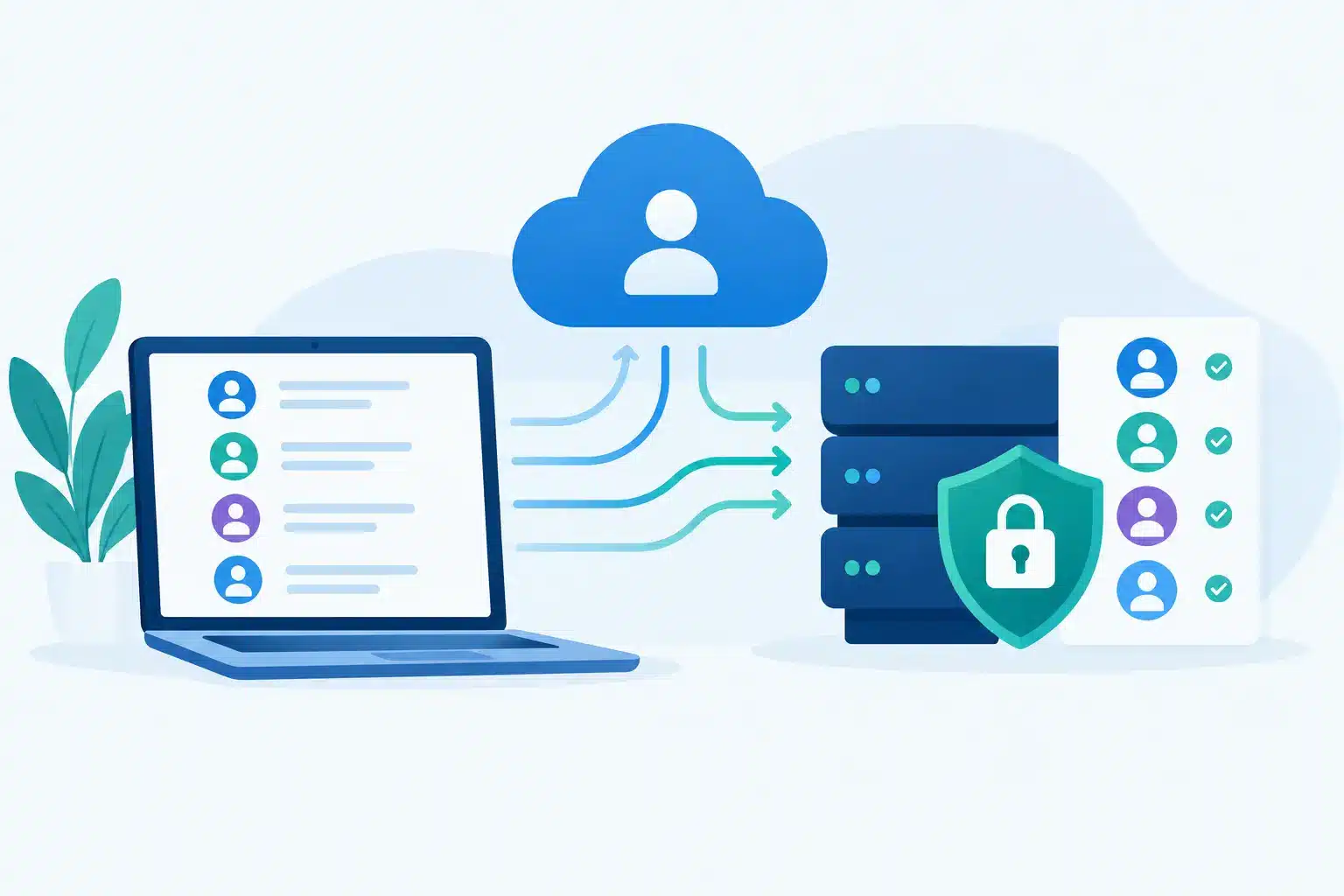
A central directory or identity provider acts as the source for authentication and policy enforcement. Provisioning tools create and update accounts across target systems. Single sign-on reduces password sprawl and improves user access to approved applications. Multi-factor authentication adds another layer of verification. Identity governance tools support access certification, policy controls, and role management. Privileged access management addresses administrator access, shared credentials, session control, and elevation. Increasingly, certificate and machine identity controls are also part of the broader identity security picture.
The exact mix depends on environment and risk. A healthcare provider may focus heavily on auditability and clinical access continuity. A manufacturer may need to account for plant systems and legacy infrastructure. A financial firm may prioritize privileged access segregation and stronger control over third-party users. The architecture should reflect the business, not the other way around.
What good IAM looks like
Good IAM is visible in outcomes. New users get the right access quickly. Departing users lose access on time. Privileged access is tightly controlled and monitored. Authentication policies are strong but workable. Access reviews are meaningful, not checkbox exercises. Application onboarding follows a standard integration pattern. Audit evidence is available without weeks of manual collection.
Just as important, ownership is clear. Security, IT, HR, application owners, and business leaders each have a defined role in the access model. Without that accountability, IAM becomes a technical tool with no policy force behind it.
A mature program also accepts trade-offs. Overly strict controls can slow operations if they are not designed around real workflows. On the other hand, convenience-led exceptions tend to accumulate until governance breaks down. Effective IAM balances control with business execution. It does not promise zero friction. It aims for controlled friction in the places where risk is highest.
Why IAM projects become difficult
IAM is difficult because it exposes organizational inconsistency. Role definitions are often vague. Approval chains are unclear. Identity data is incomplete. Legacy applications do not support modern standards. Business units want flexibility, while security teams need control.
That is why IAM projects fail when they are framed only as software deployments. The real work includes architecture, process design, integration sequencing, control definition, and long-term operations. In regulated environments, the pressure is even higher because access decisions must be defensible, not just functional.
Experienced delivery teams approach IAM in phases. They assess identity sources, define access models, prioritize critical systems, and establish governance before trying to automate everything at once. That staged approach is slower at the beginning, but it usually creates more durable control.
What is identity and access management for modern enterprises?
For modern enterprises, IAM is no longer limited to employee logins. It now extends to privileged users, external partners, service accounts, APIs, cloud workloads, certificates, and non-human identities. That expansion changes the scope of the problem. The question is no longer whether users can sign in. The question is whether the organization can account for all meaningful identities and control their access with consistency.
That is especially relevant as AI agents and automation gain broader access to systems and data. If those identities are created quickly without policy guardrails, the same old IAM failures will simply appear in a new form. Identity security has to evolve with the environment it protects.
For organizations trying to reduce risk without adding operational chaos, IAM is one of the few security investments that touches both control and continuity. It helps prevent unauthorized access, supports audit and compliance requirements, and gives the business a reliable way to manage change. Firms like IDENT1TY focus on that reality: IAM works best when it is treated as an operational security program, not a one-time platform rollout.
If your environment still cannot answer who has access, why they have it, and whether it is still appropriate, the issue is not visibility alone. It is control. That is where IAM earns its value.