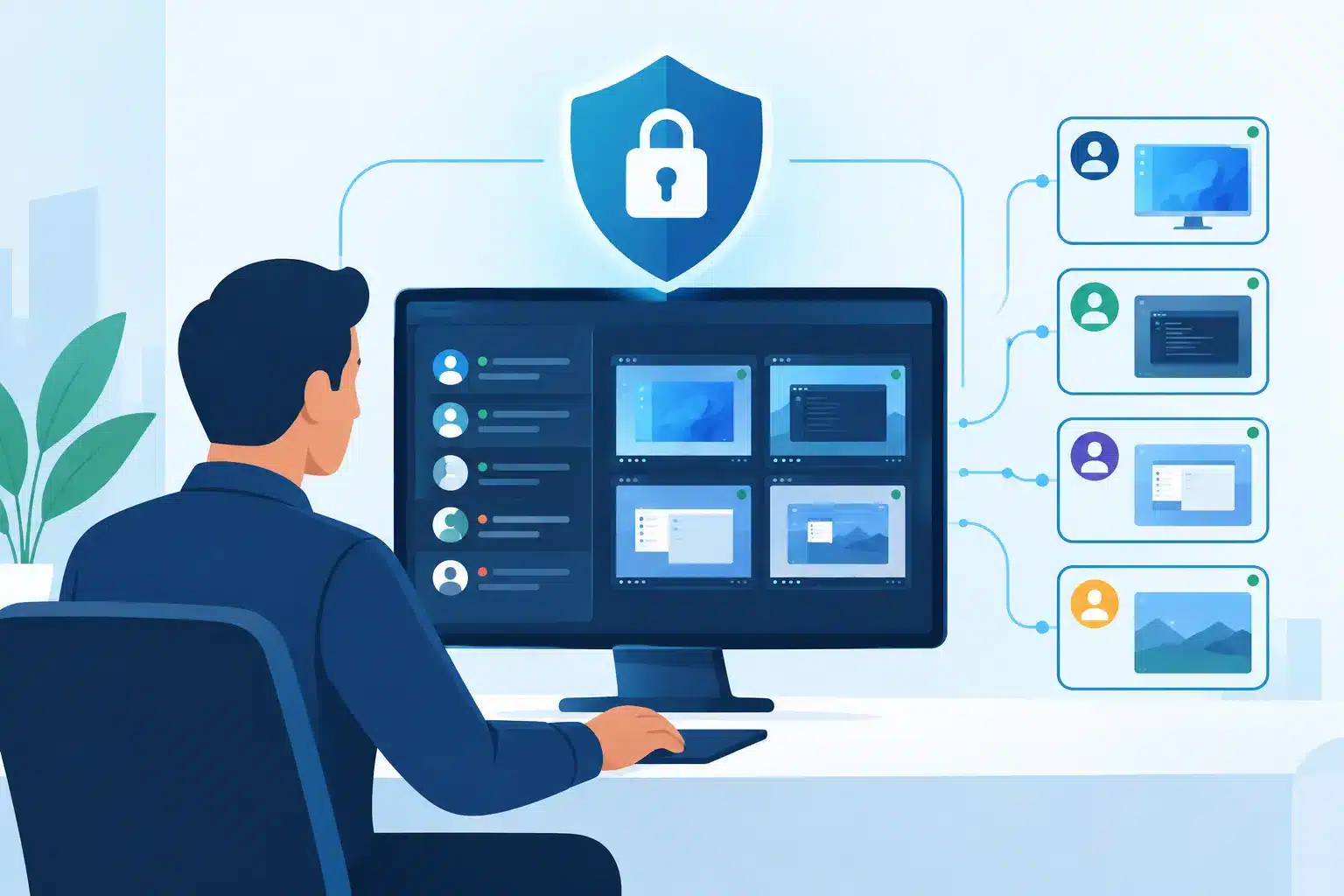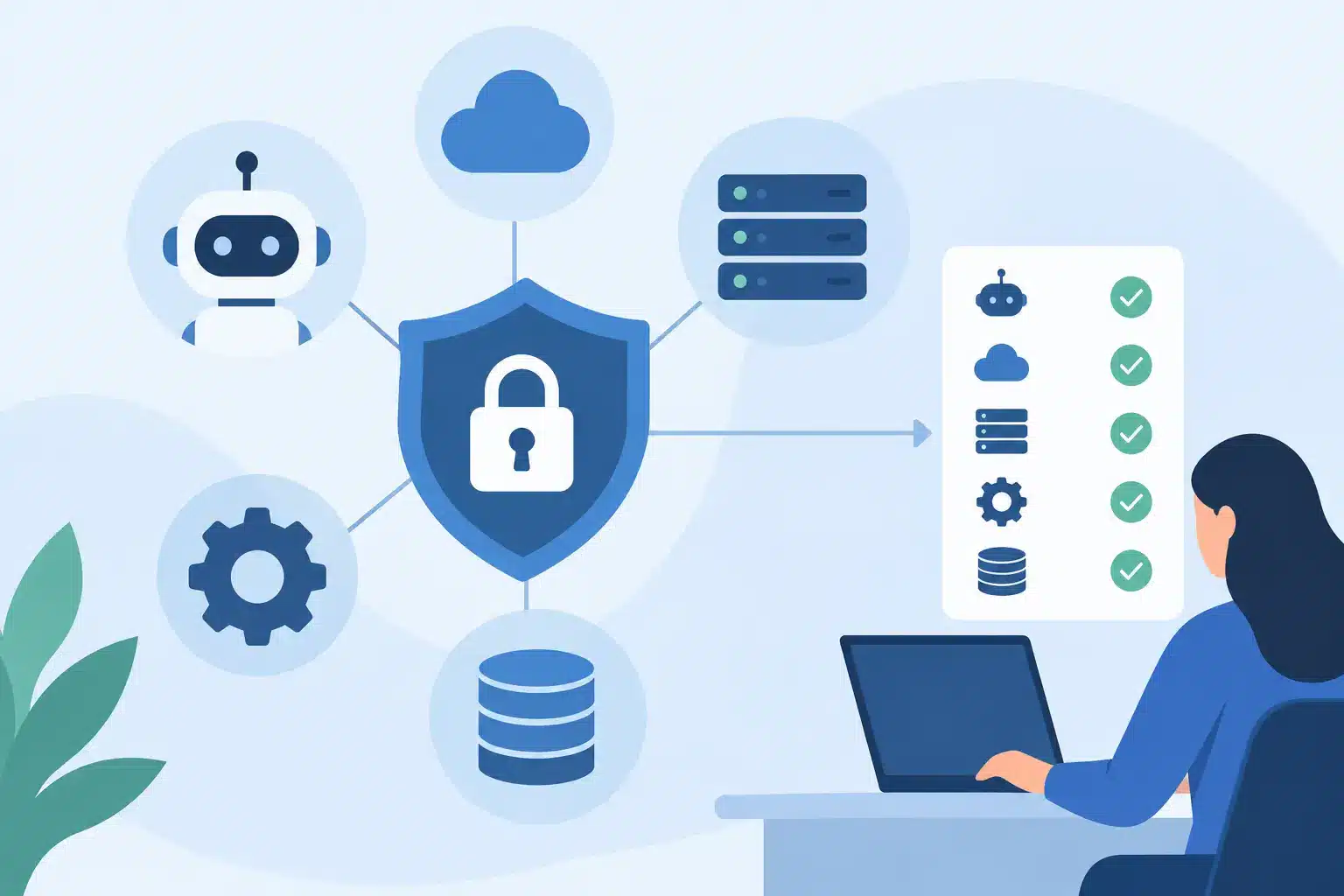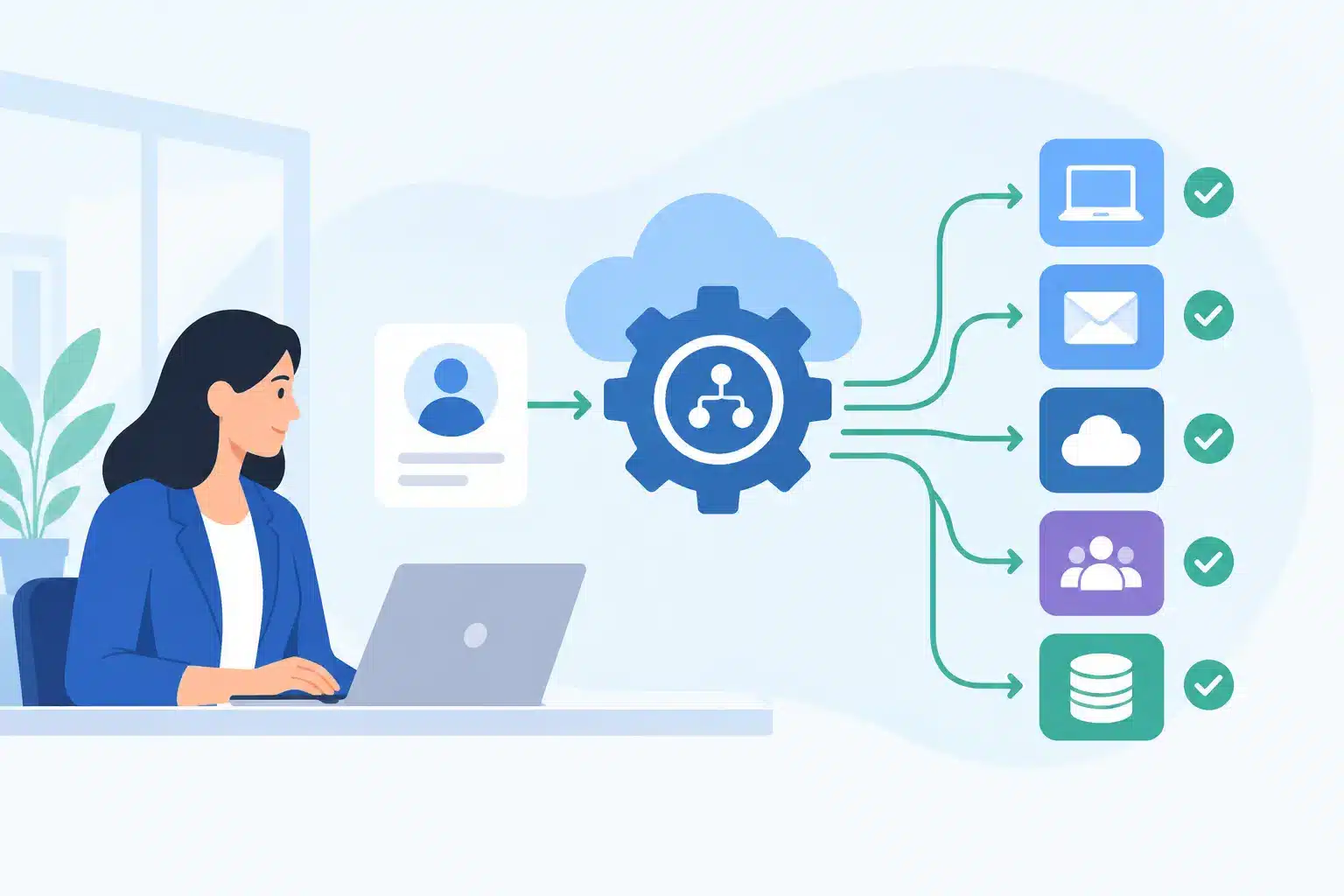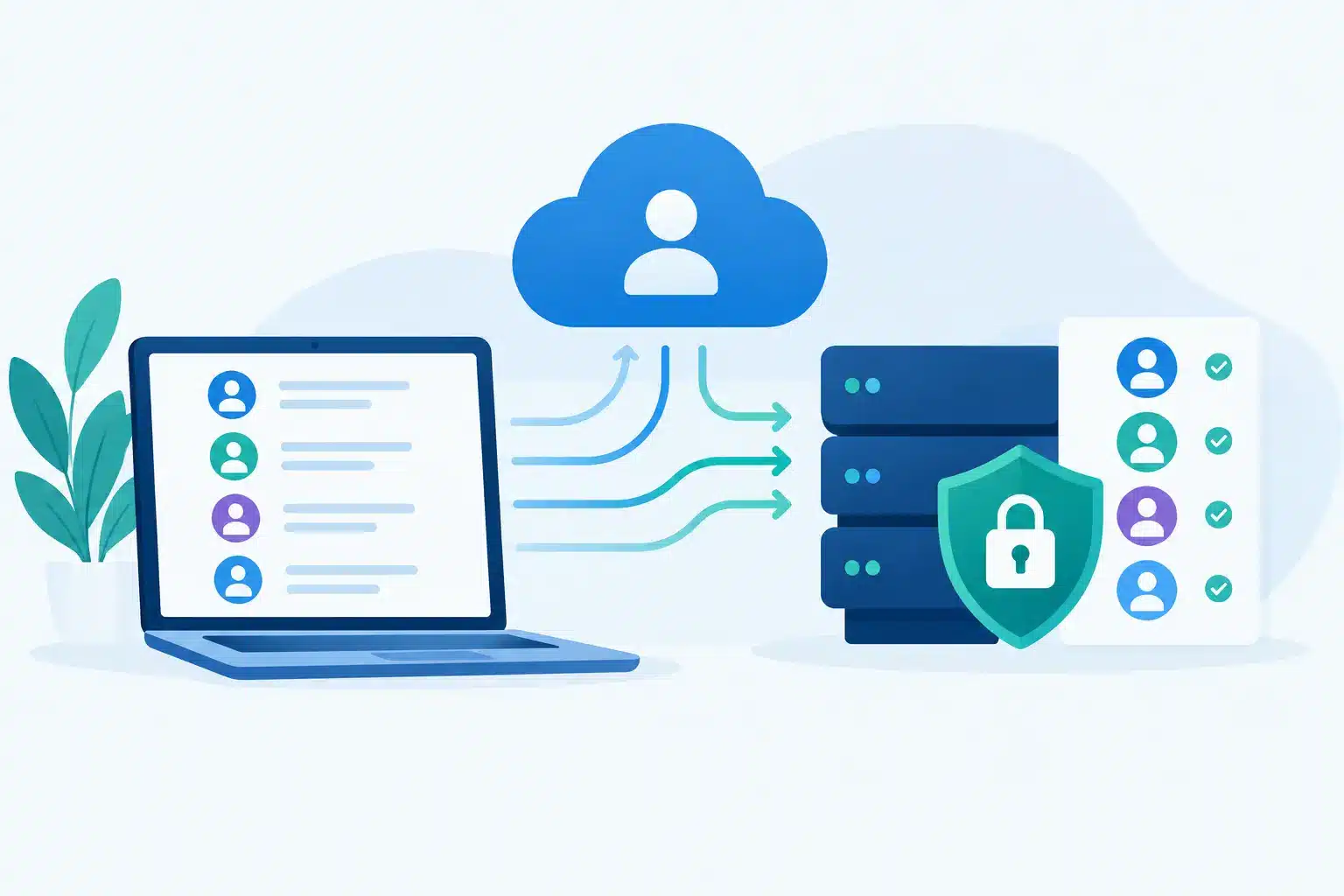
Agentic AI is fundamentally reshaping your organization’s attack surface. Autonomous agents authenticate themselves, access critical systems and execute actions without human intervention, all without your traditional IAM tools detecting them. Agentic AI security is no longer a forward-looking topic. It is an operational challenge that CISOs must address right now.
What Changes with Agentic AI in 2026
For two years, security teams managed assistive AI tools, copilots that a human validates at each step. Agentic AI reverses this model entirely. An AI agent acts autonomously: it plans a sequence of actions, selects its tools, authenticates with third-party services, reads and writes data, then moves on to the next task without human approval at each step.
This paradigm shift creates a new category of digital identities: non-human identities. An AI agent deployed in production has credentials, access rights and an exposure surface. It can be compromised, hijacked or simply misconfigured with excessive privileges.
The numbers confirm the acceleration. In 2025, large European organizations deployed an average of 3 to 10 autonomous AI agents in production. In 2026, that number exceeds 30 in the finance, healthcare and industrial sectors. Your current IAM was not designed to manage them.
Concrete Security Risks for Your Organization
Agentic AI security starts from a simple reality: an AI agent is a digital identity like any other, but with characteristics that amplify every known attack vector.
Agentic Privilege Escalation
An agent receives broad rights to be able to do its job. Without the principle of least privilege applied to non-human identities, it accumulates access that it uses only once but that remains open indefinitely. If the pipeline executing it is compromised, the attacker inherits the full set of those privileges.
Prompt Injection and Mission Hijacking
This is the attack vector most specific to agentic AI. A malicious actor inserts instructions into the data the agent processes, an email, a document or an API response. The agent follows these instructions as if it had just received them from its legitimate orchestrator. The result is data exfiltration, destructive actions or lateral escalation toward other systems.
Lack of Traceability and Non-Repudiation
Your SIEM and SOC tools are calibrated for human behavior. An AI agent generates abnormally high volumes of authentication events, often during atypical time windows. Without specific governance, these events fly under the radar or overwhelm alert teams without actionable context.
Agentic Supply Chain Dependencies
An AI agent is never isolated. It calls external APIs, uses open source frameworks and relies on third-party models. Every dependency is a potential attack vector. The compromise of a single package in the execution chain can grant access to the agent’s entire set of credentials and rights.
| Attack Vector | Mechanism | Potential Impact | Priority |
|---|---|---|---|
| Privilege escalation | Accumulation of excessive rights never revoked | Broad access to critical systems | Critical |
| Prompt injection | Malicious instructions embedded in processed data | Data exfiltration, destructive actions | Critical |
| Lack of traceability | Uninterpretable volume of events | Attack invisible in logs | High |
| Supply chain compromise | Third-party dependency compromised | Full takeover of the agent | High |
What the Most Advanced Organizations Are Doing
CISOs who addressed this topic in 2025 are converging on a four-axis framework. This is not a normative standard, it is a synthesis of practices observed at Fortune 500 companies, financial institutions operating under DORA and critical infrastructure operators that already have AI agents running in production.
Axis 1: Inventory and Govern All Non-Human Identities
Before securing, you need to know what exists. This means extending your IGA perimeter to service accounts, API tokens, agent credentials and long-lived access keys. Advanced organizations integrate this inventory directly into their IGA platform (SailPoint, Saviynt) with recertification policies specific to non-human identities.
- Map all AI agents deployed in production
- Identify associated credentials and their lifetime
- Integrate non-human identities into the IGA recertification cycle
- Enforce automated secret rotation policies
Axis 2: Apply Dynamic Least Privilege
Just-in-Time (JIT) access is no longer reserved for humans. Mature architectures provision an agent’s rights only for the duration of a specific task execution, then revoke them automatically. CyberArk, BeyondTrust and Delinea have each developed specific modules for JIT applied to non-human identities.
- Provision rights on demand, task by task
- Automatically revoke access at the end of execution
- Eliminate all permanent credentials from agents
- Audit access attempts outside the defined perimeter
Axis 3: Monitor Agentic Behaviors in Real Time
Behavioral analytics (UEBA) must be extended to agents. An agent accessing an unusual volume of documents outside its normal execution window, or calling an API it has never used before, must trigger an immediate alert. The AI agents to PAM to SIEM integration is the central architecture initiative of 2026.
- Define behavioral baselines per agent
- Feed agentic events into the SIEM
- Configure alerts on access anomalies
- Automate revocation upon detection of suspicious behavior
Axis 4: Secure Execution Pipelines
Agent security starts before deployment. Advanced organizations apply DevSecOps principles to orchestration pipelines: dependency scanning, system instruction validation, execution environment isolation and automated credential rotation.
- Scan all pipeline dependencies before deployment
- Validate and filter system instructions at ingestion
- Isolate execution environments between agents
- Automate secret rotation within CI/CD pipelines
How IDENT1TY Supports You
IDENT1TY is a pure-play cybersecurity integrator, certified across all platforms that structure the technical response to agentic AI: CyberArk (EMEA Delivery Partner of the Year 2023 and 2024), BeyondTrust, SailPoint, Saviynt, Okta and Delinea. Our approach is built around three concrete missions.
- Audit and inventory of existing non-human identities. Most organizations do not know how many agents, service accounts and active tokens are circulating in their environment. We start by mapping what exists, the prerequisite for any effective governance.
- Architecture design and control deployment. We design and deploy architectures that address all four axes: IGA extension to non-human identities, JIT PAM for agents, SIEM/UEBA integration and CI/CD pipeline hardening.
- Operations and managed services. Our managed services keep your non-human identity security posture current, with SLAs adapted to critical environments.
Conclusion
Agentic AI security is the new frontier of digital identity management. Organizations waiting for a consolidated normative standard before acting are taking a real risk. The four axes described in this article, inventory, dynamic least privilege, behavioral monitoring and pipeline hardening, provide an operational starting point that is actionable today.
Want to assess your exposure to non-human identity risks? Our experts are available for a 30-minute diagnostic, with no commitment. Talk to an IDENT1TY expert.
Also visit our solution page to deploy your agentic AI security architecture.