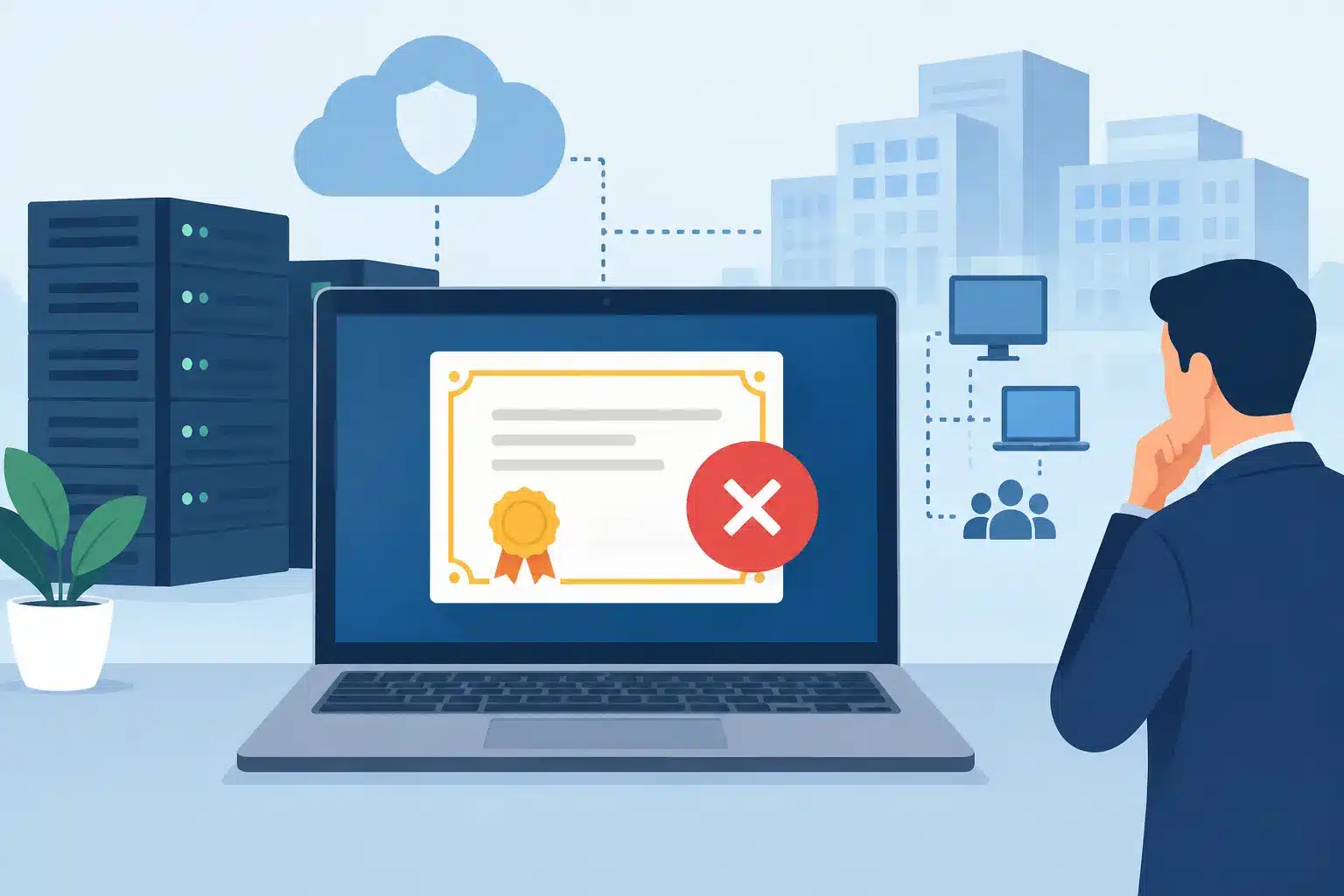
A production certificate expires at 2:00 a.m., a deployment pipeline loses access, and the application owner insists the credential belongs to infrastructure. Infrastructure points to security. Security discovers that no one can identify the service owner. This is the operational failure that machine identity ownership is designed to prevent.
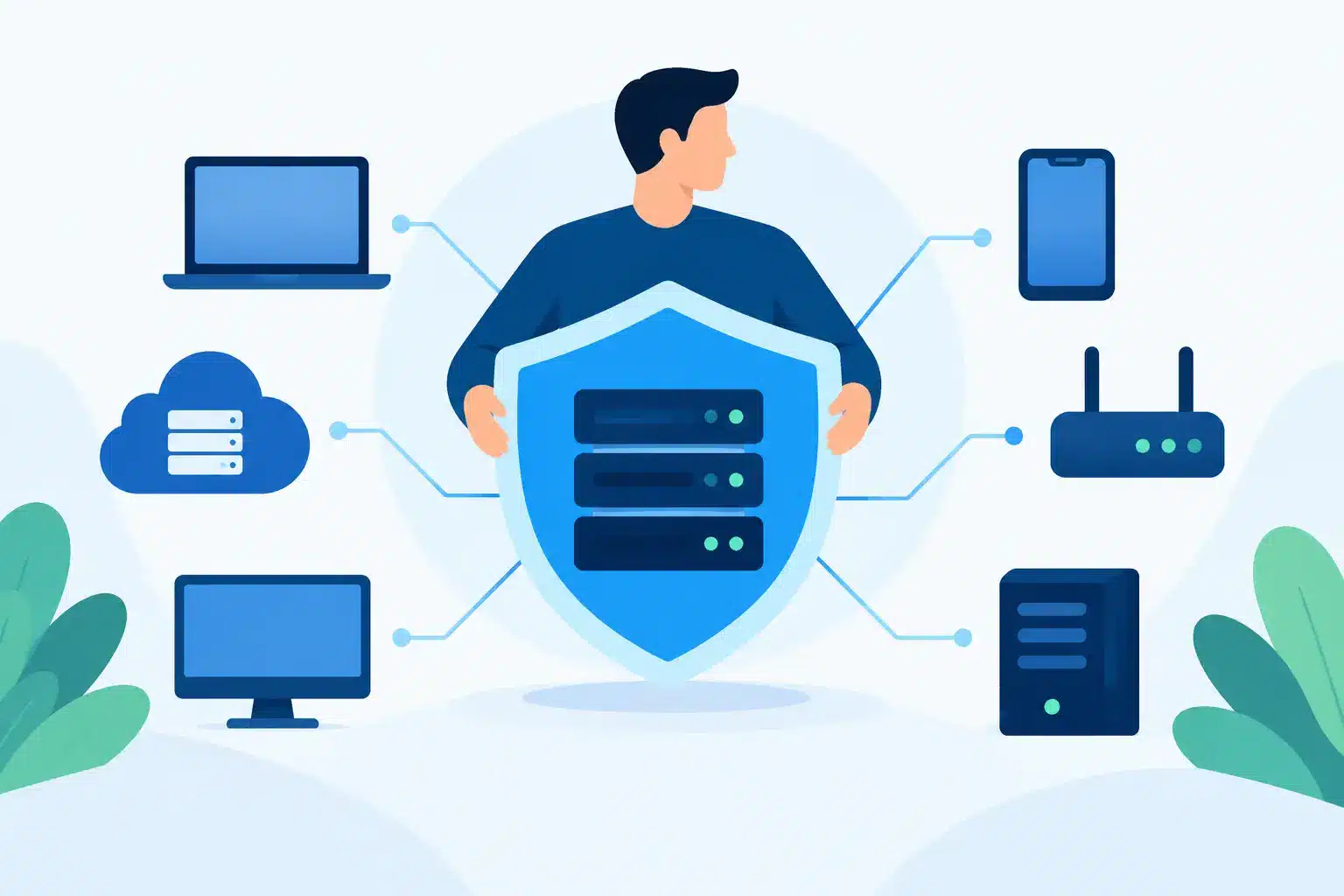
Machine identities now outnumber human identities in most enterprise environments. Service accounts, workload identities, API keys, SSH keys, certificates, secrets, containers, cloud roles, and AI agents all authenticate to something. Each one represents access, often with broad permissions and limited human visibility. If ownership is unclear, risk is not theoretical. It becomes an outage, an audit finding, or a path for lateral movement.
Why Machine Identity Ownership Fails
Most organizations did not intentionally create an ownership gap. The gap emerged as applications moved faster than governance. Development teams adopted cloud services, platform teams automated deployments, security teams introduced certificate and secrets tooling, and business systems accumulated integrations. Credentials were created to solve immediate technical problems. Their lifecycle was rarely designed as a controlled business process.
The result is a familiar pattern: a machine identity has a technical administrator, but no accountable owner. Or it has an application owner, but no team responsible for rotation, monitoring, or access review. In other cases, ownership is assigned to a shared mailbox, a project team that no longer exists, or an individual employee who has changed roles.
These gaps create two forms of exposure. The first is security exposure. Unmanaged credentials can remain active long after an application, server, vendor relationship, or employee has left the environment. The second is operational exposure. A certificate or secret cannot be renewed safely when no one can validate its purpose, dependencies, and required permissions.
Ownership is not a label in a CMDB. It is the ability to make and execute accountable decisions throughout the identity lifecycle.
Machine Identity Ownership Requires More Than a Name
A complete ownership model separates accountability from administration. The person or team that operates an identity platform should not automatically be accountable for every credential created on it. Likewise, an application owner may understand the business service but lack the authority to approve privileged access or accept residual risk.
For each material machine identity, enterprises need clear answers to practical questions: Who owns the business service? Who owns the application or workload? Who can approve creation and privilege changes? Who operates rotation and renewal? Who investigates anomalous activity? Who authorizes retirement when the service is decommissioned?
The answers will vary by identity type. A TLS certificate for a public-facing application may involve an application owner, a platform engineering team, and a certificate management service. A cloud workload identity may be owned by a product team but governed by cloud security. A shared service account used by a legacy financial platform may require formal control ownership from the business function and technical administration from infrastructure.
That variation is not a weakness. Forcing every machine identity into one generic owner field creates false certainty. The control objective is consistent accountability, with responsibilities that fit the operating model.
Define an accountable owner and an operational custodian
The accountable owner accepts responsibility for the identity’s purpose, business justification, and continued access. This role should be close enough to the service to know whether the identity is still required and whether its privileges remain appropriate.
The operational custodian performs lifecycle tasks: provisioning, vaulting, rotation, certificate renewal, emergency recovery, and technical decommissioning. In mature environments, the custodian may be a platform team, managed service provider, or automation function rather than a named individual.
Security governance sets the policy baseline, control requirements, exception process, and reporting model. Security should retain oversight without becoming the default owner for identities it does not use or understand.
Build Ownership Into the Identity Lifecycle
Ownership must be established before a credential is issued, not reconstructed after an incident. The most effective programs make owner data a required input to automated lifecycle workflows.
At creation, the request should capture the service name, environment, identity type, accountable owner, operational custodian, requested permissions, credential expiration or rotation policy, and decommissioning trigger. If the request cannot identify an accountable owner, it should not proceed as standard access.
During operation, ownership needs to be visible in the systems teams actually use. An inventory that exists only in a governance report will not help an engineer handling a failed rotation. Ownership attributes should be connected to certificate lifecycle management, secrets management, privileged access workflows, cloud identity controls, service catalogs, and incident procedures where possible.
Changes matter as much as creation. A workload moved from a data center to cloud infrastructure may receive new identities, new trust relationships, and new permissions. A merger may transfer ownership of a business application. A vendor integration may end while its API credential remains active. Lifecycle workflows need events that trigger owner validation rather than relying solely on annual certification campaigns.
Retirement is where ownership discipline proves its value. Before disabling a machine identity, the organization must understand dependencies and obtain the right approval. But once a service is confirmed retired, credential revocation, secret deletion, certificate replacement, and access removal should be prompt and measurable. Dormant identities are not harmless inventory. They are unverified access paths.
Make Ownership Measurable
Organizations often measure machine identity volume, certificate expiry, or secret rotation rates. Those are useful metrics, but they do not prove ownership. A credential can rotate successfully for years while remaining tied to an application with no accountable team.
A stronger control model tracks ownership coverage and quality. Security leaders should be able to see what percentage of active machine identities have a valid accountable owner, a current operational custodian, a documented service relationship, and a defined lifecycle policy. They should also see identities with privileged access, long-lived credentials, missing expiration dates, or owners associated with inactive teams.
The most valuable reports are risk-based. A missing owner on a low-impact development certificate should not receive the same response as a missing owner on a production service account with access to payment data. Prioritize remediation based on privilege, environment, data sensitivity, external exposure, credential longevity, and business criticality.
This is also where policy exceptions need discipline. Some legacy platforms cannot support frequent credential rotation. Some industrial systems require carefully scheduled certificate changes. The correct response is not to ignore the control. It is to document the exception, assign a risk owner, implement compensating controls, and set a review date.
Ownership Must Work Across Identity Domains
Machine identity ownership cannot sit in isolation from IAM, PAM, IGA, cloud security, and application delivery. It depends on shared data and coordinated controls.
IGA can help govern the people and teams eligible to own or administer identities. PAM can secure the privileged accounts and sessions used to manage systems that issue machine credentials. Certificate Lifecycle Management can provide discovery, renewal, and expiry visibility. Secrets management and workload identity platforms can automate authentication without embedding static credentials in code. Cloud-native controls can enforce least privilege for roles and service principals.
The trade-off is integration complexity. A centralized program can deliver consistent policy and reporting, but it may slow teams if every workflow requires manual security intervention. A fully decentralized model can support engineering speed, but it often produces fragmented inventories and inconsistent accountability. The practical answer is a common ownership standard with automation that fits each platform and application pattern.
For organizations managing multiple identity tools and vendors, this requires an operating model, not another dashboard. IDENT1TY approaches machine identity security as a lifecycle discipline: define the controls, integrate them into delivery processes, assign accountable ownership, and maintain the program after deployment.
Start With the Identities That Can Cause the Most Damage
Attempting to reconcile every machine identity at once often stalls the program. Start with identities that have production access, privileged permissions, external exposure, regulated data access, or credentials approaching expiration. These are the places where unclear ownership creates immediate security and continuity risk.
Then establish a repeatable pattern: discover the identity, identify its service relationship, assign the accountable owner and custodian, validate privilege, apply lifecycle policy, and record the result in a system of control. Automation can accelerate the work, but it cannot determine whether an identity still serves a legitimate business purpose. That decision requires accountable ownership.
The goal is not perfect documentation for its own sake. The goal is an environment where every critical machine identity has someone responsible for its purpose, someone equipped to operate it, and a controlled path to remove it when it is no longer needed. That is how machine identity ownership becomes a security control rather than an unresolved inventory problem.