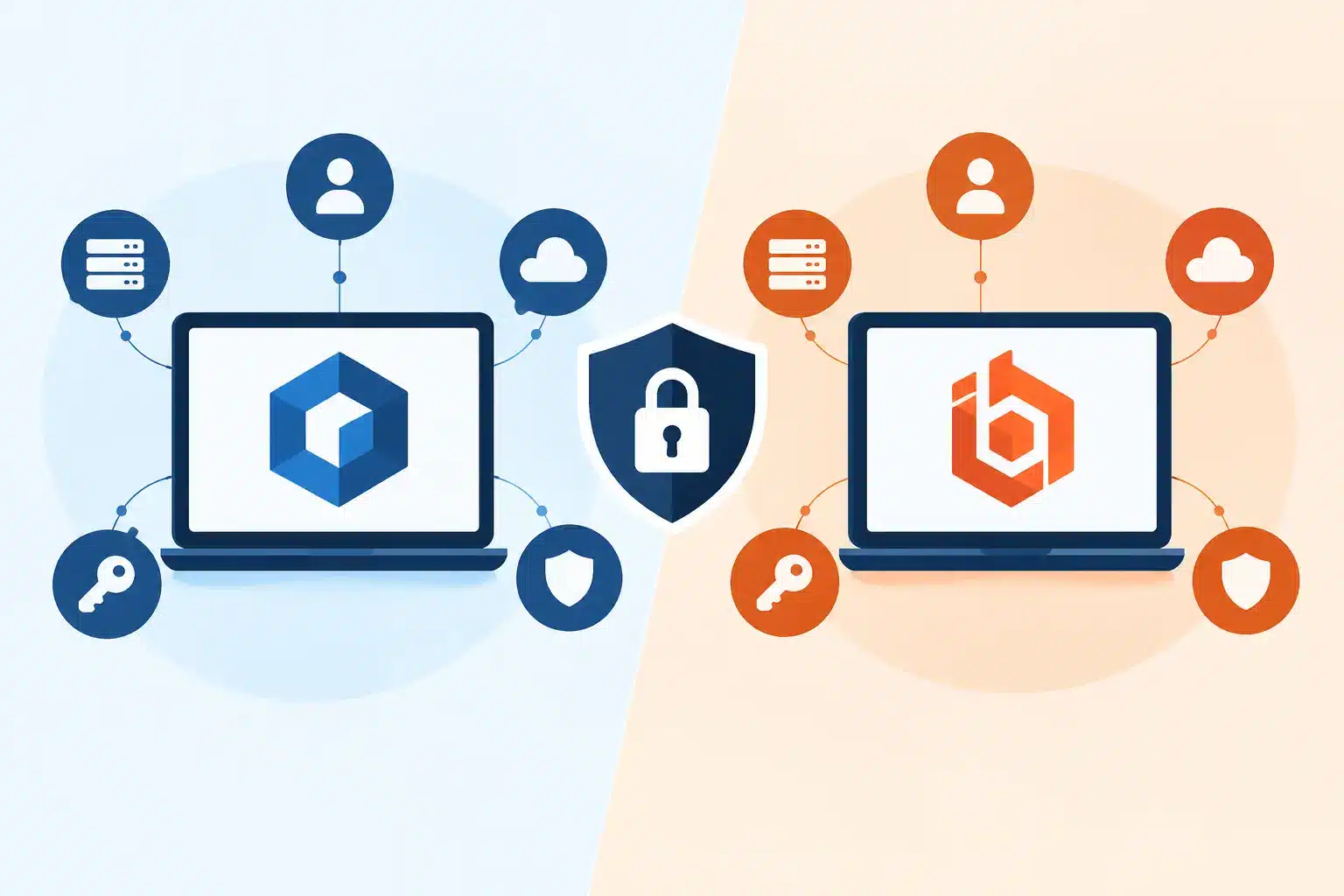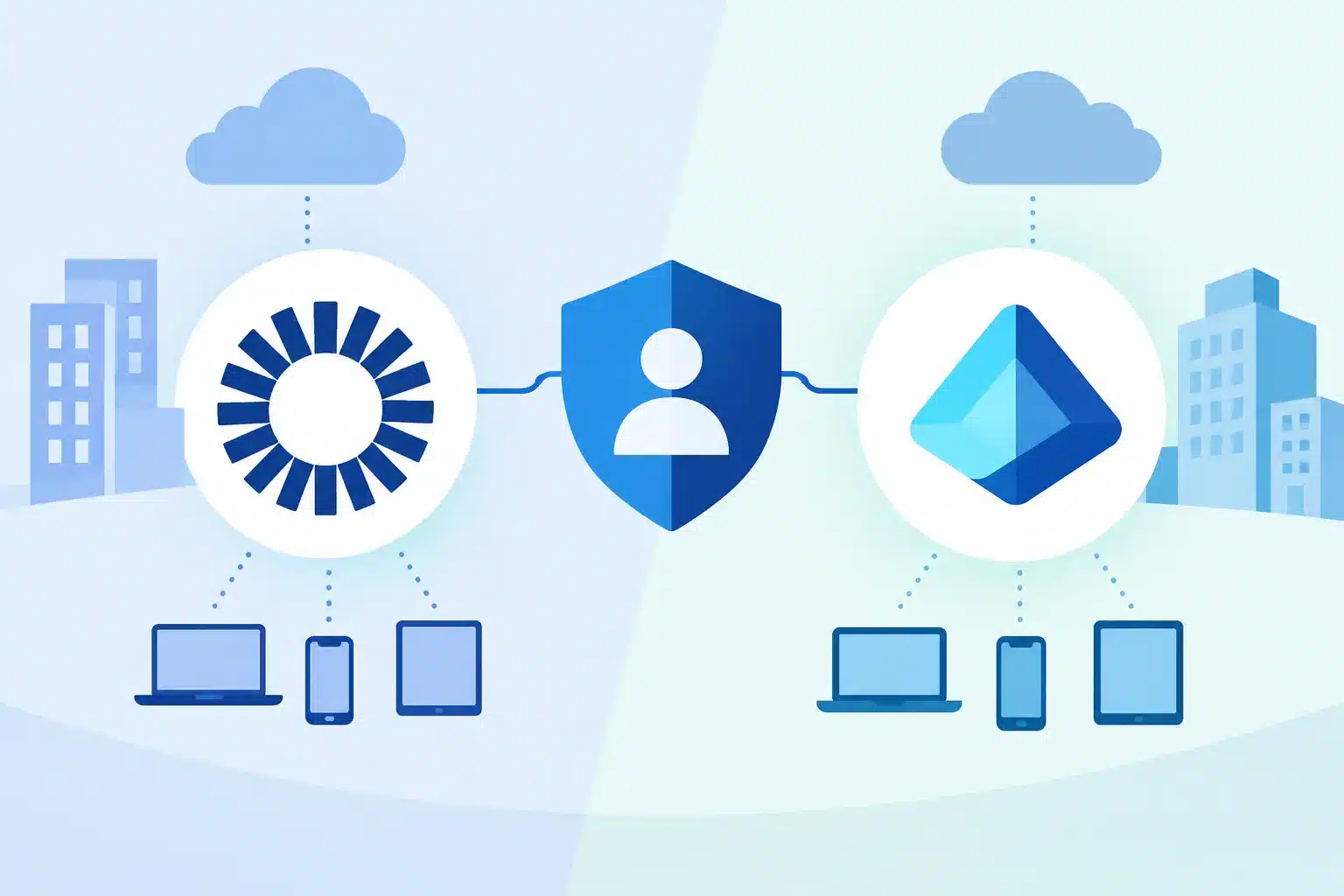
A workforce user signs in successfully, completes multifactor authentication, and reaches a business application. That is access management working as intended. But a different question remains: should this person still have that access, who approved it, and can the organization prove it? That is where IGA versus access management becomes a critical architecture and operating-model discussion.
For regulated enterprises, the distinction is not academic. Access management helps enforce access at the moment of use. Identity Governance and Administration, or IGA, controls the decisions, lifecycle processes, and evidence behind that access. Treating either capability as a substitute for the other creates gaps that attackers, auditors, and overburdened administrators eventually expose.
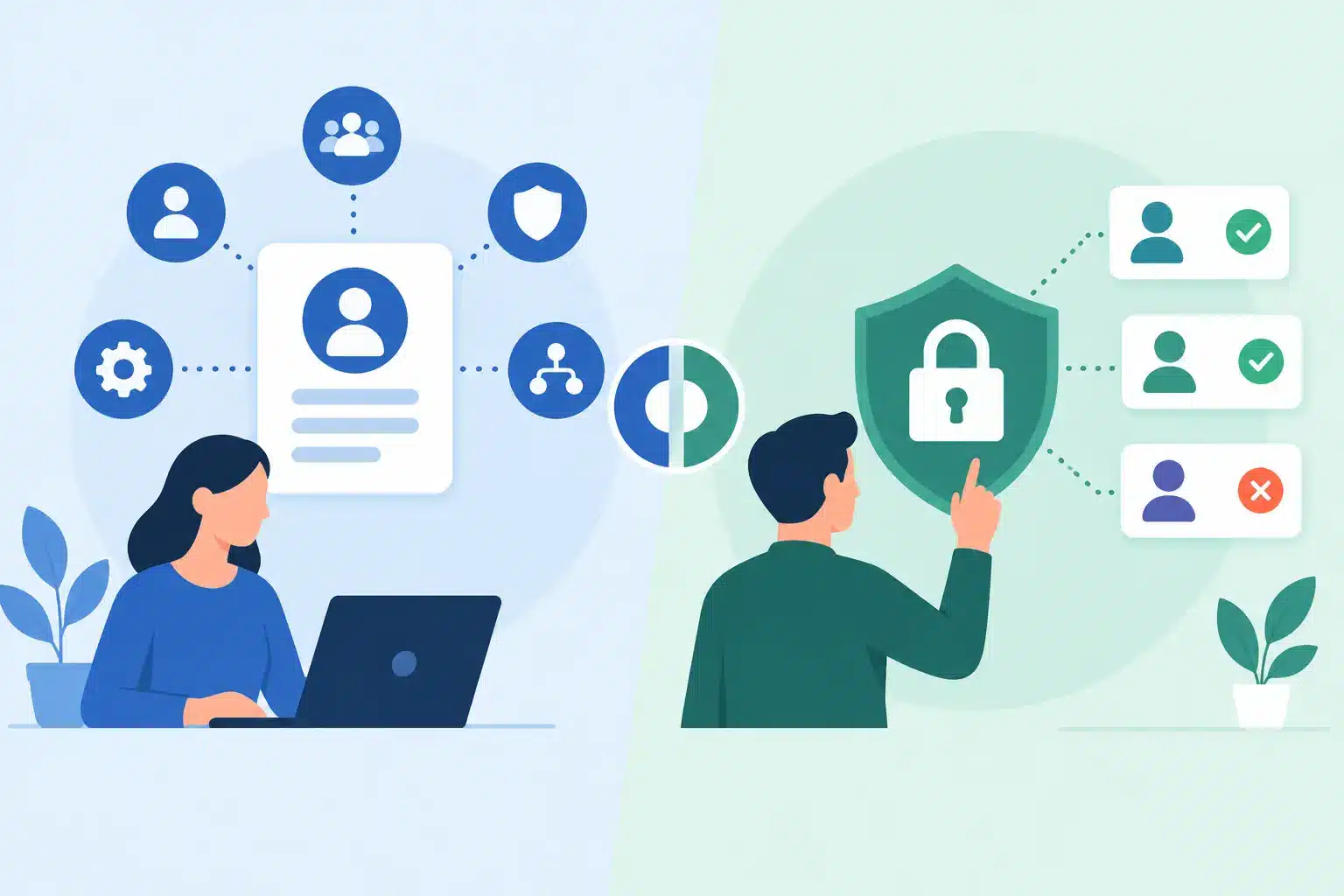
IGA versus access management: different control layers
Access management is the enforcement layer. It authenticates identities, applies sign-on policy, and determines whether a user or workload can access a resource at a specific time. Typical capabilities include single sign-on, multifactor authentication, adaptive access policies, federation, session controls, and conditional access.
Its purpose is immediate and protective. If an employee attempts to access a financial system from an unmanaged device, access management can require stronger verification or block the request. If a contractor signs in outside an approved geography or risk threshold, policy can trigger a challenge or deny the session. These controls reduce the chance that a compromised credential becomes a successful intrusion.
IGA operates across the identity lifecycle. It determines how access is requested, approved, provisioned, reviewed, modified, and removed. It establishes access models such as roles, birthright access, and entitlement policies. It also produces the evidence required to demonstrate that access decisions follow business and regulatory requirements.
The simplest distinction is this: access management answers, “Can this identity enter now?” IGA answers, “Why does this identity have this access, who authorized it, and is it still appropriate?” Both are necessary, but they solve different control problems.
Where access management stops
A mature access management platform can authenticate users reliably and still be enforcing poor entitlement decisions. It may grant efficient access to accounts that should have been deprovisioned months ago. It may authenticate a former project contractor whose directory record remains active. It may apply strong MFA to a user with conflicting financial permissions that no one has reviewed.
This is not a failure of authentication technology. It is a governance failure upstream.
Access management usually depends on authoritative identity data and group or entitlement assignments supplied by HR systems, directories, IGA platforms, application owners, or administrators. If those inputs are inaccurate, the enforcement point can only enforce inaccurate policy. Strong login controls do not correct excessive access, orphaned accounts, or weak approval processes.
The same limitation applies to application sprawl. Enterprise environments often contain SaaS platforms, legacy applications, custom systems, infrastructure tools, and data repositories with inconsistent integration maturity. Access management can centralize sign-in for many of them, but sign-in centralization does not automatically create a complete record of who holds which permissions inside each application.
What IGA adds to the control environment
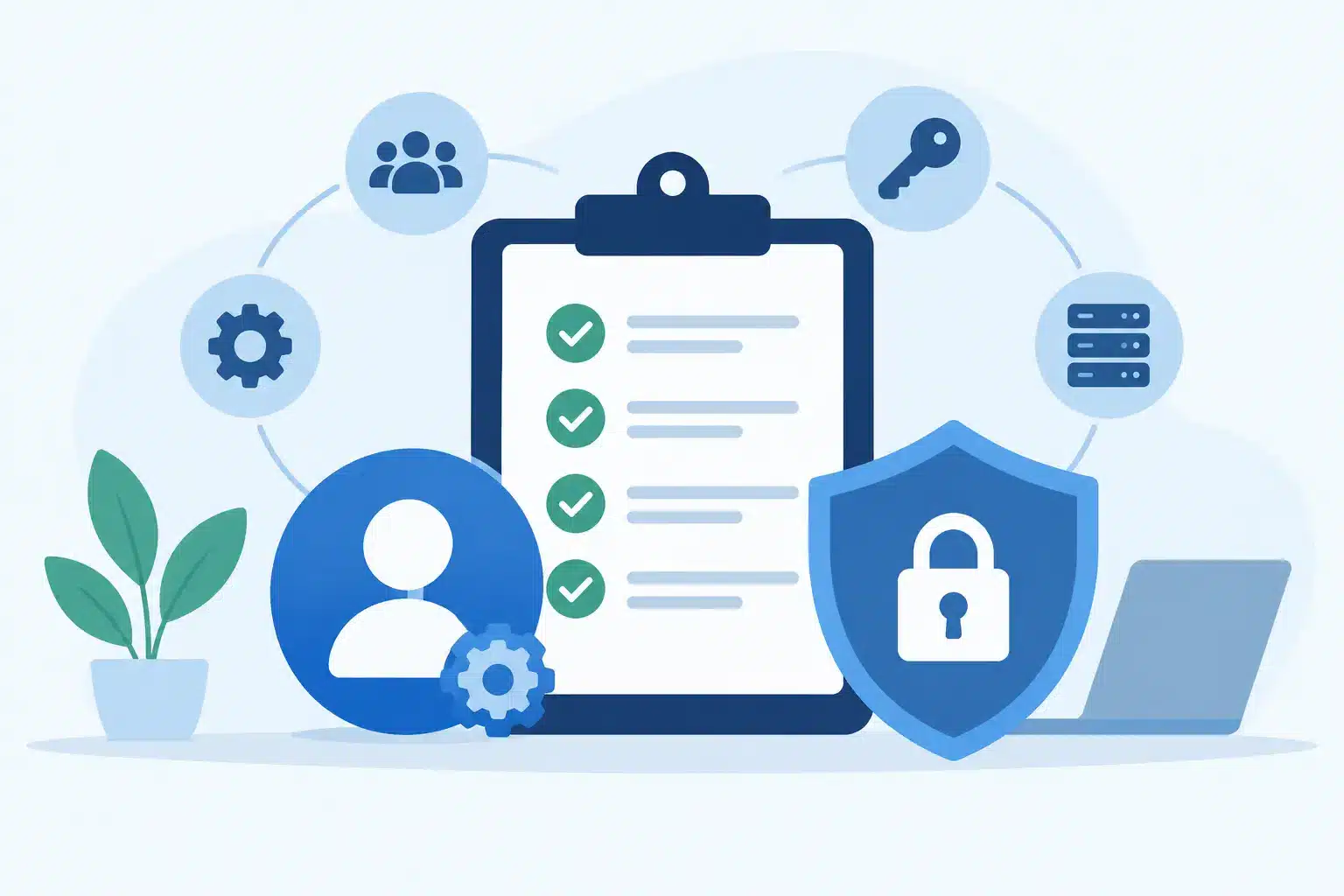
IGA creates structure around access decisions. It connects identity attributes, organizational relationships, business roles, application entitlements, approval workflows, and policy controls into a governed process.
At a practical level, a well-designed IGA program should support joiner, mover, and leaver processes. A new employee receives baseline access based on verified job attributes. When the employee changes departments or takes on a new role, obsolete access is removed and new access follows an approved process. When the employee leaves, access is revoked across connected systems within a defined control window.
IGA also addresses access that does not fit a standard role. A user may need temporary access to a sensitive reporting tool, a production support environment, or a healthcare record set for a defined business purpose. IGA can route the request to the right approver, check segregation-of-duties policy, record the justification, provision access, and establish an expiration date.
Access certification is another core capability. Managers and application owners periodically review users and entitlements, confirming that access remains appropriate or triggering revocation. These campaigns can be demanding in large enterprises, which is why certification design matters. Reviewing thousands of unexplained, low-context entitlements produces checkbox behavior rather than meaningful control. Good governance delivers decision-ready context: user role, manager, access purpose, risk level, usage data where available, and clear ownership.
The operational dependency between the two
IGA and access management are most effective when they share trusted identity data and clear ownership boundaries. IGA governs the entitlement and lifecycle decisions. Access management enforces authentication and session policy using the identities and access assignments that result.
Consider an employee transferring from finance to procurement. IGA should process the move event, identify access that is no longer justified, initiate revocation, and request or assign the new role-based access. The access management platform then enforces the updated access posture when that employee signs in. If conditional access flags elevated risk, it can impose additional authentication controls regardless of the employee’s standing in the governance process.
Neither process should wait for the other. Governance workflows must be timely enough to prevent lingering access. Access policies must be resilient enough to protect accounts while lifecycle changes are underway. This is especially relevant during mergers, rapid hiring, contractor onboarding, and application migrations, when identity data and access models change faster than manual processes can keep up.
Privileged, machine, and AI identities require a broader view
The IGA versus access management discussion becomes more complex when human users are no longer the only identities in scope.
Privileged accounts require stronger controls than standard workforce access. IGA can govern privileged access requests, approvals, ownership, and periodic review, while privileged access management enforces credential vaulting, session controls, and just-in-time elevation. Access management may authenticate the administrator, but it does not replace privileged session oversight or governance of high-risk entitlements.
Machine identities, service accounts, certificates, and API credentials introduce a similar challenge. They often outnumber human identities and may have long-lived access with unclear owners. Traditional workforce IGA may not fully address certificate lifecycle, workload authorization, secret rotation, or service account accountability without deliberate extensions and integration.
AI agents raise the control threshold again. An agent may authenticate through a service identity, invoke APIs, retrieve sensitive data, and make downstream requests at machine speed. Organizations need to govern who can deploy the agent, what permissions it receives, what data it can access, and how its actions are logged and constrained. Strong authentication alone is insufficient when authorization is broad, persistent, or poorly understood.
Common mistakes when selecting a solution
The first mistake is buying an IGA platform to fix an authentication problem. If the immediate risk is password-based sign-in, unmanaged devices, inconsistent MFA, or fragmented federation, access management should be the priority. IGA will not deliver the required login protection on its own.
The second is buying access management and assuming governance will follow. This leaves organizations with polished sign-in experiences but weak lifecycle discipline, incomplete entitlement visibility, and expensive audit preparation.
The third is treating IGA as a workflow project rather than a data and operating-model program. Automation depends on reliable source data, accountable application owners, rationalized entitlements, documented approval rules, and integration patterns that can be supported in production. A large catalog of access requests is not evidence of governance if approvals are uninformed and deprovisioning remains inconsistent.
Finally, organizations often attempt to connect every application before proving the model. A phased approach is usually stronger: start with authoritative identity sources, high-risk applications, privileged access dependencies, and systems subject to audit scrutiny. Establish measurable lifecycle controls, then expand with a repeatable integration standard.
How to set the right priority
The correct investment sequence depends on the control gap. Organizations facing credential compromise, weak MFA adoption, or unprotected external access should strengthen access management immediately. Organizations struggling with audit findings, excess access, manual onboarding, or unverified approvals need IGA capabilities and operating discipline.
Most complex enterprises need both, connected through a defined identity architecture. The goal is not simply to deploy more tools. It is to create a controlled path from identity creation and access approval through authentication, authorization, review, and removal.
IDENT1TY approaches this as an operational identity security program: assess the current control model, define target-state ownership and integrations, implement priority capabilities, and sustain them through managed operations. That approach matters because identity controls degrade when application changes, organizational shifts, and new identity types are not absorbed into the operating model.
The next useful question is not which platform has more features. It is where your organization cannot currently prove control over access – at the sign-in event, in the approval decision, during a role change, or when access should be removed. Start there, assign ownership, and build the controls that will still work under pressure.