A joiner mover leaver guide is not an HR process document with a few IT handoffs. It is a control framework for one of the most persistent identity risks in the enterprise: access that no longer reflects a person’s role, authority, or relationship with the business.
Every hire, transfer, contractor extension, acquisition, and termination creates an identity event. If that event is handled through tickets, disconnected directories, and manual approvals, access changes become slow to execute and difficult to prove. The result is familiar: excessive entitlements, dormant accounts, shared privileged credentials, failed audits, and a larger attack surface.
For security leaders, the objective is clear. Make identity lifecycle changes authoritative, timely, traceable, and enforceable across cloud applications, on-premises infrastructure, privileged systems, machine identities, and emerging AI agent environments.
Why Joiner, Mover, and Leaver Controls Matter
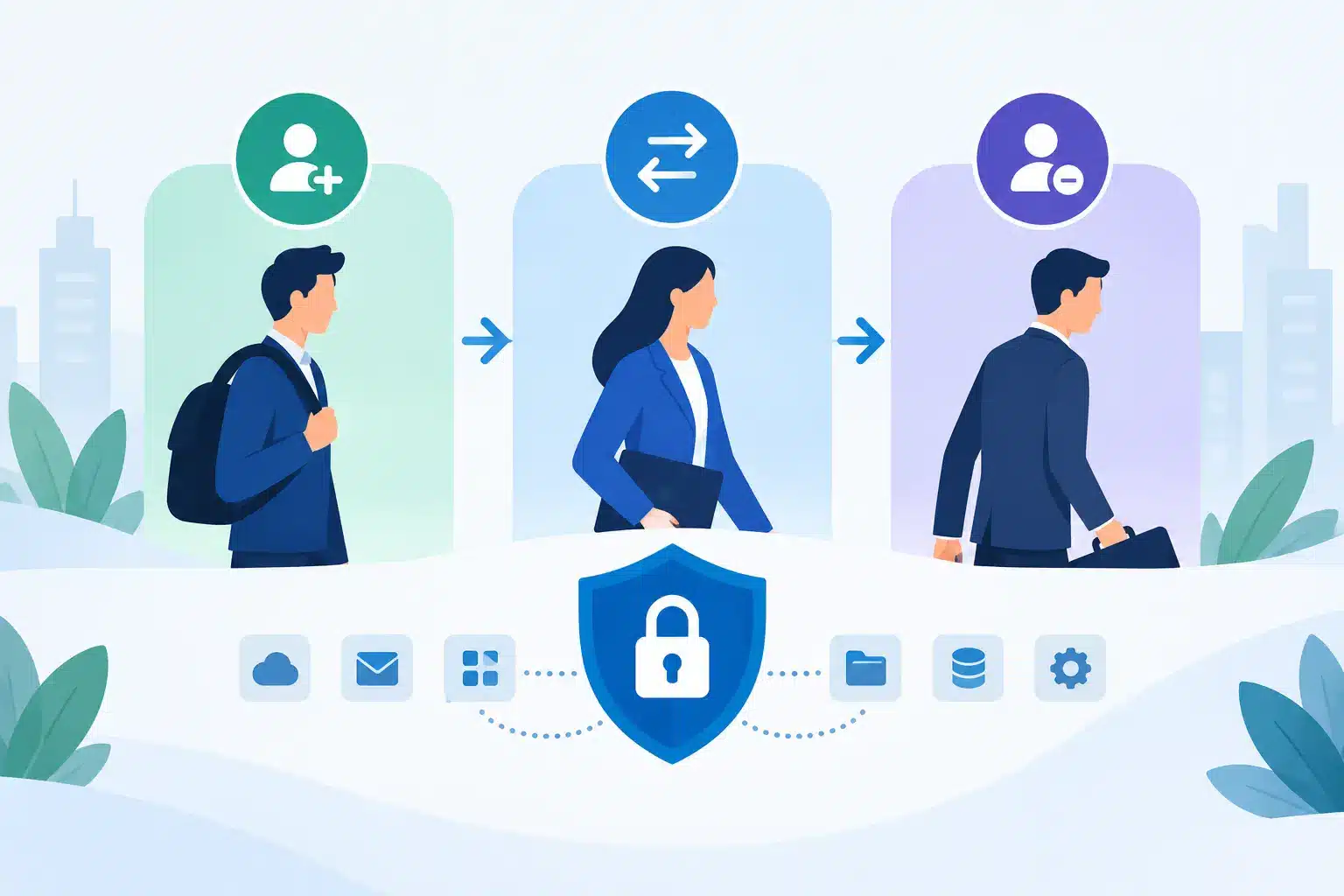
The joiner-mover-leaver, or JML, lifecycle describes three points where access must change. A joiner needs the right access to become productive. A mover needs access recalibrated when their job, department, location, or manager changes. A leaver needs access removed promptly and completely when their relationship with the organization ends.
Joiners often receive the most attention because delayed provisioning is visible to the business. Leavers receive attention because terminated accounts create an obvious security concern. Movers are frequently the weakest control point. An employee who changes roles may retain access from their former position while receiving new access for the next one. Over time, these exceptions accumulate into entitlement sprawl.
That sprawl is not merely an administrative issue. It creates paths for fraud, data exposure, privilege escalation, and unauthorized system changes. In regulated sectors, it also undermines evidence for access reviews, segregation-of-duties controls, and audit reporting.
A mature JML program treats every identity change as a governed security event. The organization does not rely on a manager remembering to submit a ticket. It uses authoritative data, defined policies, workflow automation, and evidence that controls operated as intended.
The Joiner Mover Leaver Guide: Start With Authoritative Data
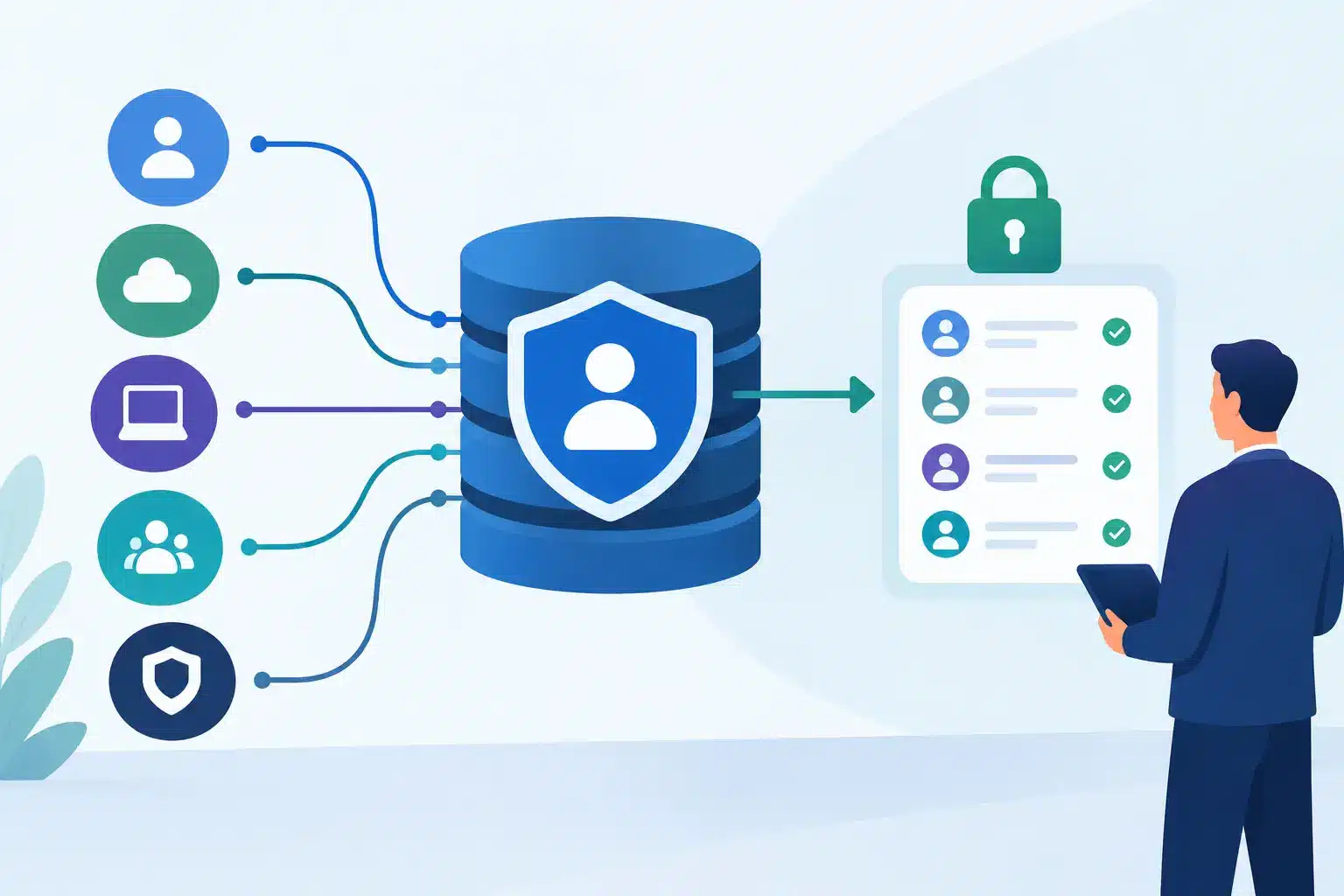
The quality of lifecycle control depends on the quality of the source data. HR systems are typically authoritative for employees, while vendor management, procurement, or contractor systems may be authoritative for nonemployees. In many enterprises, this is where the first design problem appears: there is no single reliable source for every identity type.
Define which system owns each identity population and which attributes it must provide. At a minimum, this generally includes legal name, worker ID, employment status, start and end dates, manager, department, location, worker type, and job code. For higher-risk roles, additional attributes may be required, such as cost center, clearance level, licensing status, or business unit.
The goal is not to force every identity into one system. The goal is to establish clear ownership and an identity correlation model that can reliably connect a person to their accounts. This is especially important when names change, workers return to the organization, contractors convert to employees, or acquired companies maintain separate directories during transition.
Authoritative data must be governed as carefully as access data. If a termination date is entered late, the identity platform cannot disable access on time. If job codes are inconsistent, role-based provisioning will deliver inconsistent results. IAM automation amplifies good data, but it can also propagate bad data quickly.
Build Access Around Roles, Not Individual Requests
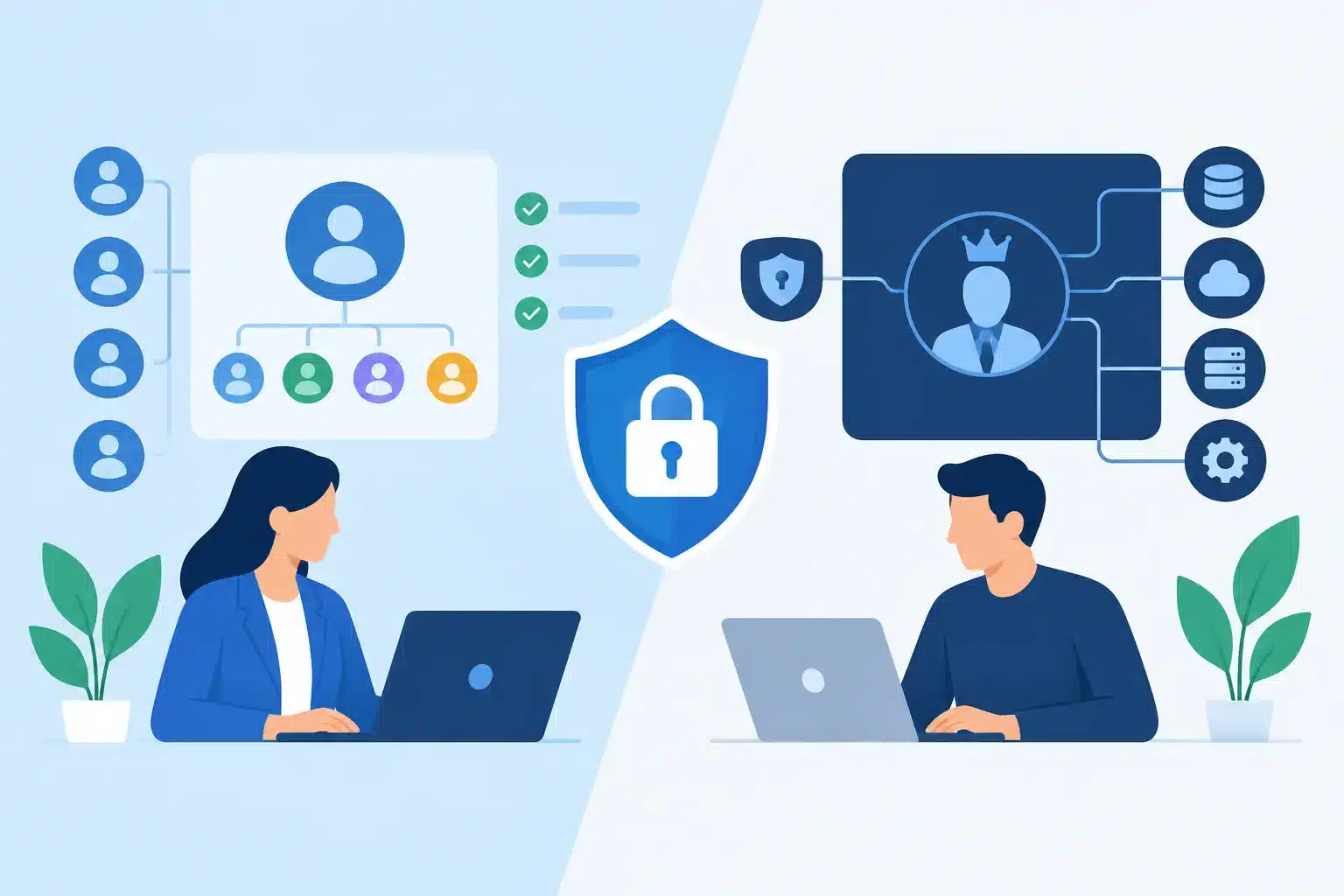
A joiner should not start with a blank access request. That creates friction for the business and forces administrators to interpret policy repeatedly. Instead, define baseline access based on attributes such as role, department, location, and worker type.
Role-based access control is useful when job structures are stable and entitlement patterns are well understood. Attribute-based rules can be more effective when access depends on dynamic conditions, such as regional restrictions, project assignment, clearance, or device posture. Most large organizations need a practical combination of both.
The important distinction is between birthright access and elevated access. Birthright access supports the ordinary work of a defined population, such as an enterprise identity, collaboration tools, standard productivity applications, and required security training. Elevated access should require explicit approval, time limits where appropriate, and stronger controls.
Privileged access deserves separate treatment. Administrator rights should not be embedded in a broad job role simply because a person works in IT. Use dedicated privileged accounts, privileged access management controls, session monitoring where required, and just-in-time elevation for sensitive tasks. This limits standing privilege and preserves accountability.
Control the Mover Event Before Entitlements Accumulate
A mover event should trigger more than new provisioning. It must evaluate what access is no longer justified.
This is where many programs fail. A transfer from finance to operations may create a request for operational systems, but no process automatically removes access to financial reporting, payment workflows, or sensitive data repositories. Managers may not know every entitlement their employee holds. Application owners may not see the organizational context behind the change.
Effective mover controls compare the identity’s current state with the access model for the new state. The workflow should remove obsolete birthright access, preserve access that remains justified, and route exceptions to the appropriate approver. For sensitive applications, a mover event can trigger a targeted recertification rather than waiting for the next quarterly or annual access review.
There are trade-offs. Fully automated removal is appropriate for clearly defined birthright roles and high-confidence data. For complex project access, shared service models, or roles that vary across business units, automation may need approval gates. The answer is not to avoid automation. It is to apply it according to risk, data quality, and the cost of an incorrect removal.
Terminate Access With Speed and Proof
Leaver processes must account for planned and unplanned departures. A planned retirement allows for orderly knowledge transfer and scheduled revocation. An involuntary termination may require immediate action across identity providers, VPNs, SaaS applications, privileged access systems, physical access platforms, and remote device management.
Disable access first. Preserve evidence and data according to legal, HR, and records-retention requirements. Deleting an account immediately may destroy audit evidence or interfere with investigation and continuity needs. A defined disable, retain, and deprovision sequence is usually more defensible than a single delete action.
For high-risk departures, establish an accelerated workflow with HR, legal, security operations, IT, and the relevant business leader. The workflow should identify privileged accounts, shared mailbox access, active sessions, API tokens, certificates, service account relationships, and delegated approvals. A terminated user may no longer log in while their active tokens or privileged pathways remain available.
Nonemployee offboarding requires the same discipline. Contractors, consultants, temporary workers, and outsourced support staff often introduce greater visibility challenges because their end dates change frequently and their identities may be created outside standard HR processes.
Design the Operating Model, Not Just the Workflow
Technology orchestrates JML controls, but ownership makes them operate. HR owns worker status and employment data. Managers own the business need for access. Application owners own application roles and entitlement definitions. Security and IAM teams own policy enforcement, integration reliability, exception management, and control evidence.
Without a clear operating model, exceptions become permanent. Define who can approve them, how long they last, what evidence is required, and how they are reviewed. A request approved by a manager should not bypass segregation-of-duties checks or privileged access policy merely because it is urgent.
Measure the lifecycle with operational metrics that expose control weakness. Useful measures include time to provision required access, time to disable terminated identities, percentage of mover events with access removal, orphaned account count, failed provisioning rate, overdue approvals, and exceptions beyond their approved expiration. Track these by application and identity population, not only as enterprise averages. A strong aggregate number can hide a critical application with poor termination coverage.
Extend JML to Non-Human Identities
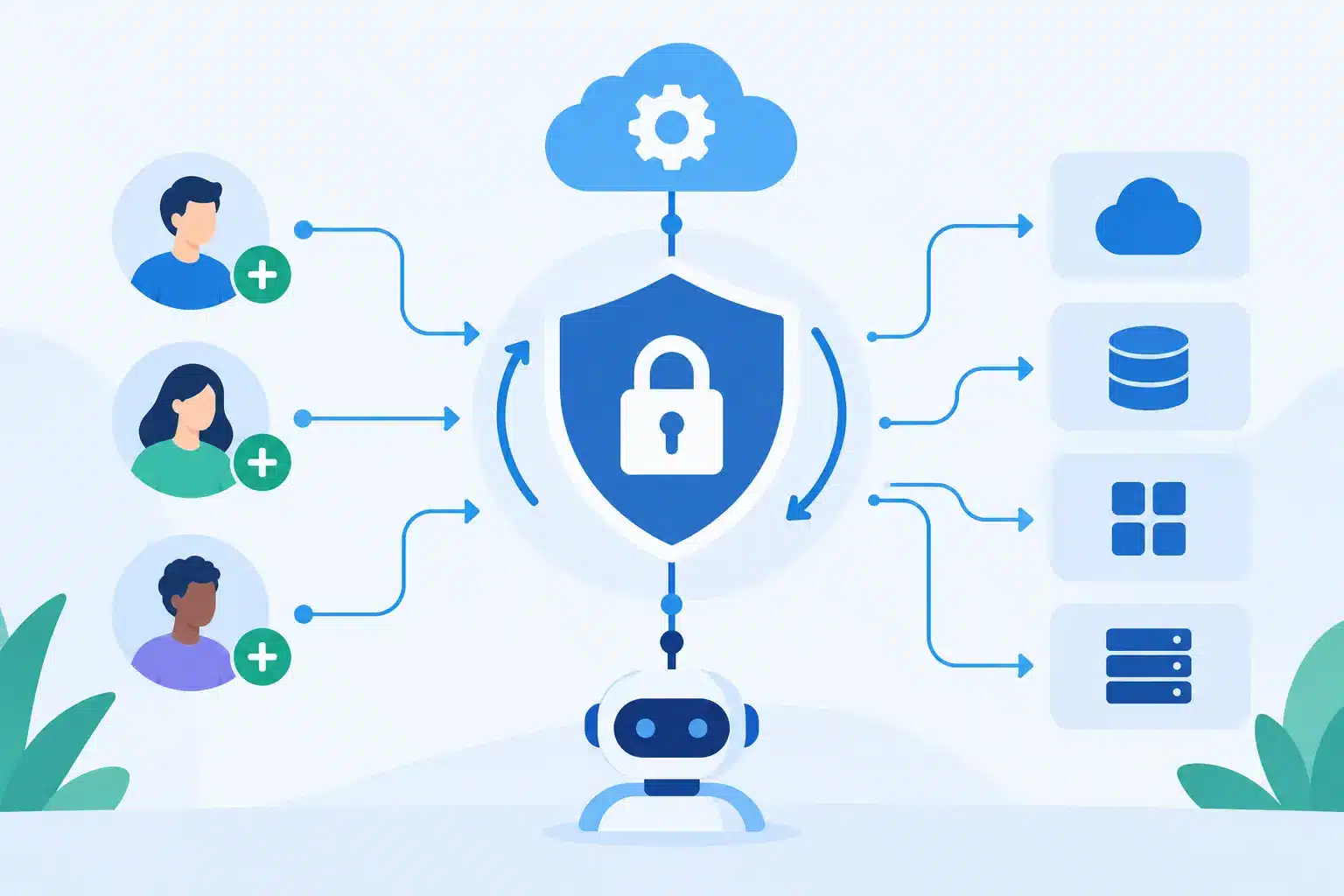
The lifecycle model now extends beyond employees. Service accounts, API credentials, certificates, workload identities, and AI agents also need owners, purpose definitions, scoped permissions, expiry controls, and decommissioning workflows.
The lifecycle is different, but the governance principle is the same: no identity should persist without a validated owner and business purpose. For machine identities, a leaver event may be an application retirement, cloud workload shutdown, vendor contract end, or certificate replacement. If those events are not tied to deprovisioning controls, unused credentials can remain active long after the service they supported has disappeared.
AI agents introduce a further concern. Their permissions, delegated authority, tool access, and data boundaries must be reviewed when the business process or underlying model changes. Treating agents as informal extensions of user accounts creates an avoidable control gap.
Make Lifecycle Control Measurable in Production
A JML program is effective when it works under normal operations and under pressure. Test termination workflows. Reconcile identity records against key applications. Investigate accounts with no matched worker record. Review failed integrations before they become access gaps. Validate that role changes remove access, not only add it.
For organizations with fragmented identity environments, the path forward is usually phased. Start with the systems that carry the highest business risk: the identity provider, email, VPN, privileged access platforms, financial systems, clinical or operational systems, and core cloud environments. Establish authoritative feeds and reliable disablement there, then expand into the broader application estate.
IDENT1TY approaches lifecycle management as an operational identity security capability, combining governance design, integration, automation, and ongoing control monitoring. The objective is not simply faster provisioning. It is controlled access that remains aligned to the business as people, roles, systems, and risks change.
The practical test is straightforward: when a person’s status changes, can the organization show what access changed, why it changed, who approved it, and whether the control completed on time? If the answer is uncertain, the next identity event is already a security exposure waiting to be measured.