An AWS environment rarely becomes risky because encryption is missing. More often, exposure starts with access that is too broad, too permanent, or too poorly governed. That is why the question what is identity access management in AWS matters far beyond administration. It sits at the center of cloud control, security posture, and operational accountability.
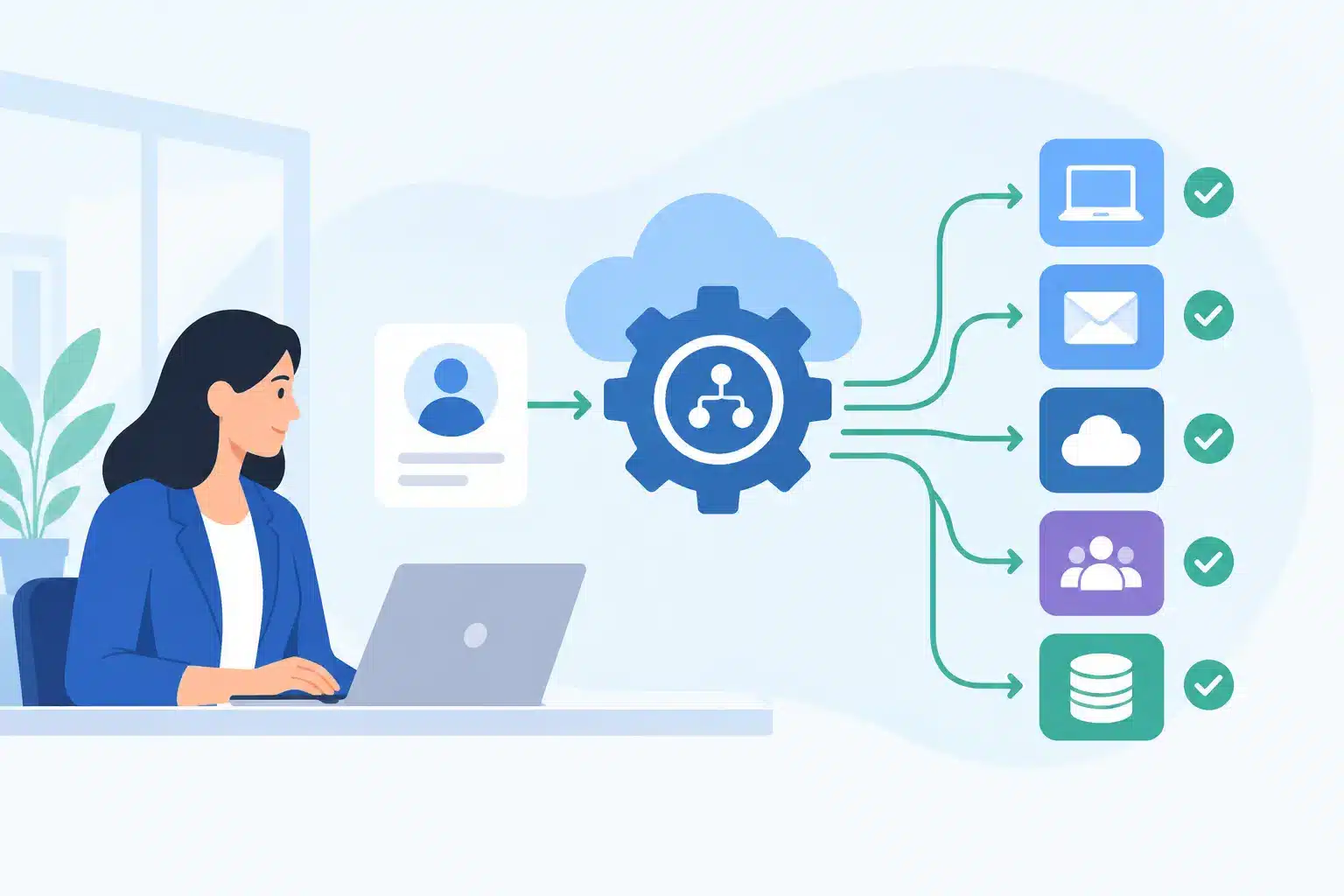
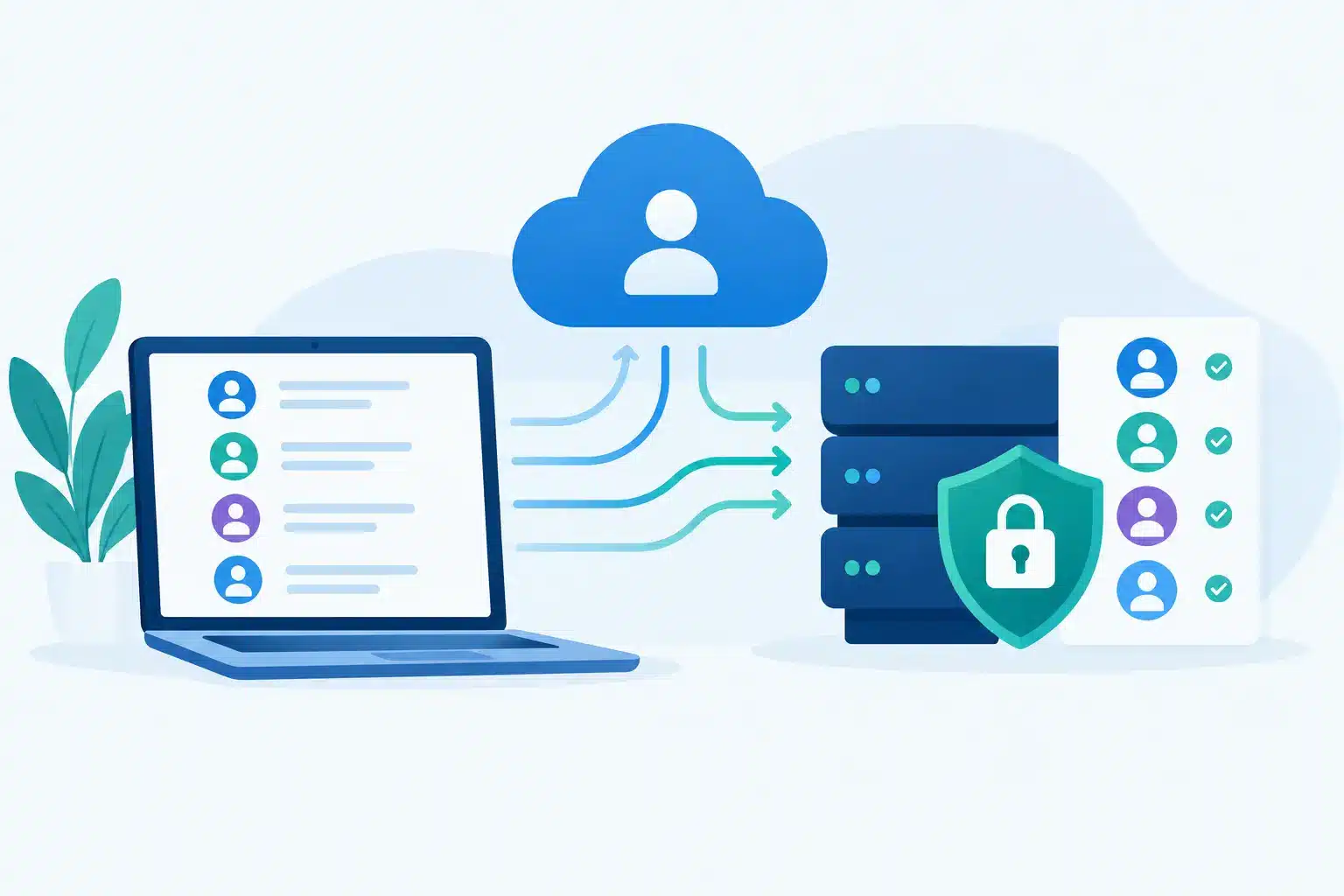
In AWS, Identity and Access Management, or IAM, is the framework used to define who or what can access AWS resources and under what conditions. It governs human users, workloads, applications, services, and temporary sessions. At a practical level, IAM lets organizations authenticate identities and authorize actions across accounts, services, and environments.
That sounds straightforward, but in production it is rarely simple. Permissions accumulate over time. Teams move quickly. Developers need access now, while security teams need control that holds up under audit, incident response, and growth. AWS IAM is the control layer that helps reconcile those pressures, if it is designed and operated correctly.
What is identity access management in AWS, really?
The shortest answer is that AWS IAM controls access to AWS resources. The more accurate answer is that it provides the policy model and identity structures needed to enforce least privilege across a cloud estate.
AWS IAM determines whether a principal, such as a user, role, or federated session, can perform an action on a resource. For example, it can allow a DevOps engineer to start and stop EC2 instances in one account, while preventing access to production databases or billing data. It can also allow an application running on an EC2 instance or in a Kubernetes pod to retrieve secrets or write logs without exposing long-term credentials.
This is why IAM is not just a provisioning tool. It is a security control system. Every permission assigned in AWS is effectively a statement of risk tolerance. If access is broader than required, the attack surface expands. If access is too narrow, operations slow down. Good IAM design finds the balance without relying on manual exceptions.
The core building blocks of AWS IAM
AWS IAM is built around a few fundamental components. Users represent identities, though mature organizations often reduce direct IAM user usage in favor of federated workforce access. Groups help organize users with similar permission needs. Roles are central because they support temporary, assumable access for people, workloads, and AWS services.
Policies are the real enforcement engine. These JSON-based documents define permissions by stating what actions are allowed or denied, against which resources, and sometimes under which conditions. Conditions matter because they add context, such as requiring multi-factor authentication, restricting access by source IP, or allowing use only within a specific AWS region.
There are also permission boundaries, service control policies in AWS Organizations, and resource-based policies. This is where many teams start to lose visibility. Permissions in AWS are not always decided in one place. A single access decision may be influenced by identity policies, resource policies, organizational guardrails, session policies, and explicit denies. That flexibility is powerful, but it also creates complexity that has to be governed deliberately.
Why roles matter more than users
If you are assessing what is identity access management in AWS from a security architecture perspective, roles deserve special attention. They are generally the preferred mechanism for access because they support temporary credentials rather than static keys.
For workforce identities, roles can be assumed after federated authentication from a corporate identity provider. That means users sign in with enterprise credentials and receive scoped AWS access without the need to maintain separate long-term IAM passwords inside AWS. For workloads, roles allow applications and services to obtain temporary credentials automatically, reducing the risk associated with embedded secrets or unmanaged access keys.
This approach improves control, but only if role design is disciplined. Overloaded admin roles, weak trust policies, and broad cross-account assumptions are common failure points. In many cloud breaches, the issue is not that IAM was absent. It is that temporary access was still over-privileged.
AWS IAM and the principle of least privilege
Least privilege is the standard objective, but in AWS it is often easier to state than to implement. Cloud environments change quickly. New services are introduced. Engineering teams need flexibility. As a result, many organizations begin with wildcard permissions and plan to tighten them later. Later often does not come.
A mature IAM program in AWS works to reduce permissions continuously. That usually involves baselining common access patterns, using managed policies carefully, reviewing unused permissions, and separating duties between administration, operations, and audit functions. It also means understanding service-specific nuances. An S3 permission issue looks different from an IAM role trust issue or a Lambda execution role misconfiguration.
There is a trade-off here. Highly granular permissions improve control but increase administrative overhead. Broad permissions reduce friction but raise risk and complicate compliance. The right model depends on the sensitivity of the workload, the maturity of the engineering process, and the organization’s ability to monitor and recertify access over time.
Where AWS IAM fits into a larger identity program
AWS IAM is necessary, but it is not complete by itself. It handles access control within AWS, yet most enterprise identity environments span cloud platforms, SaaS applications, on-prem systems, privileged access workflows, and machine identities.
That is where IAM in AWS needs to connect with broader identity disciplines. Federation ties AWS access back to the enterprise identity source. Privileged access management adds session control and accountability for elevated actions. Identity governance introduces access review, role lifecycle, and policy enforcement. Certificate and machine identity management address non-human access that AWS IAM alone does not fully govern.
This distinction matters for regulated organizations. Auditors do not usually care that AWS has an IAM service. They care whether access is governed, justified, reviewed, and traceable across the full control chain.
Common mistakes in AWS identity access management
The most common AWS IAM problems are not exotic. Long-term access keys remain active long after they should be retired. Human users receive direct console permissions instead of federated role-based access. Workloads share roles that were never intended to support segregation. Administrative privileges spread through convenience, not design.
Another recurring issue is visibility. Teams may know who has access inside a single account, but not how permissions behave across dozens or hundreds of accounts. Shadow roles, inherited privileges, and stale trust relationships become difficult to track. As multi-account AWS environments grow, weak IAM hygiene becomes an operational risk, not just a technical one.
Then there is the policy problem. AWS policies are expressive, but they are also easy to misuse. A single wildcard action or resource can undermine an otherwise careful permission model. Deny logic, conditions, and policy inheritance create outcomes that are not always obvious during change implementation.
How to approach AWS IAM operationally
The strongest AWS IAM programs treat identity as an operational discipline. They do not stop at setup. They define access models, integrate with enterprise identity, monitor privileged activity, review entitlements, and refine policies as the environment changes.
A practical starting point is to reduce standalone IAM users, enforce federation for workforce access, prefer roles over long-term credentials, and segment access by environment and function. From there, organizations should establish guardrails at the account and organizational level, monitor anomalous access patterns, and create a review process for privileged and cross-account permissions.
This is also where many organizations benefit from specialist support. AWS IAM can be configured quickly, but secure and governable implementation takes more than configuration alone. It requires policy design, role engineering, trust model validation, and alignment with broader IAM, PAM, and governance controls. That is the difference between access working and access being controlled.
What is identity access management in AWS for enterprise teams?
For enterprise teams, the answer is simple: AWS IAM is the control plane for access risk in AWS. It defines who can do what, from where, under which conditions, and for how long. It affects breach containment, audit readiness, change control, and resilience.
For security leaders, that means IAM should be evaluated as part of risk management, not treated as a narrow cloud admin task. For infrastructure and identity teams, it means access architecture must be designed for scale, not patched together account by account. And for regulated businesses, it means AWS permissions need the same governance standard as any other critical access domain.
AWS provides the mechanisms. Security comes from how consistently those mechanisms are implemented, reviewed, and enforced. If your cloud environment is growing faster than your access model, IAM is usually where control needs to be rebuilt first.
The most effective identity programs do not wait for an audit finding or privilege-related incident to expose weaknesses. They establish clear ownership, reduce ambiguity in access design, and keep permissions aligned with real business need. That is how cloud access becomes measurable, defensible, and materially safer over time.