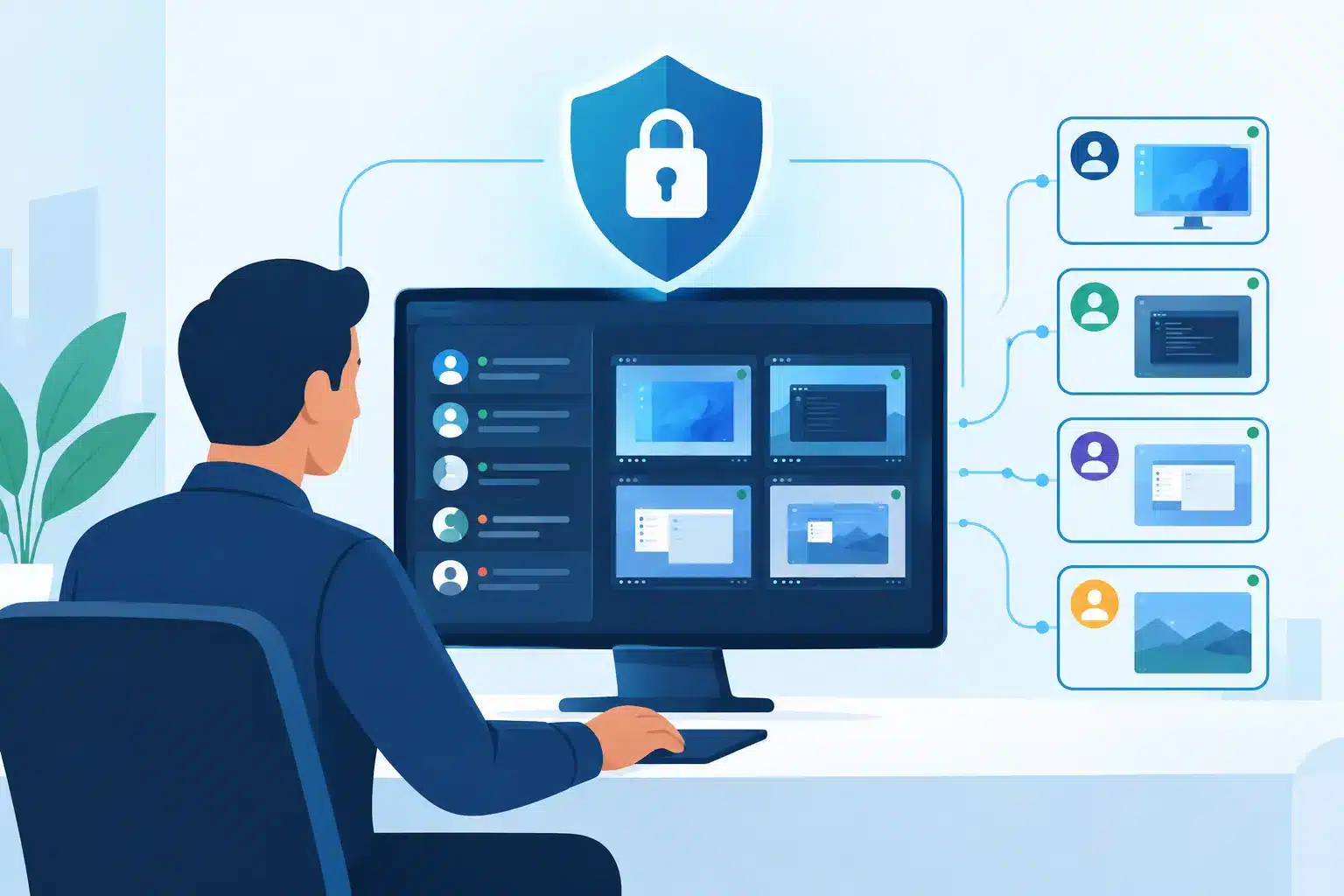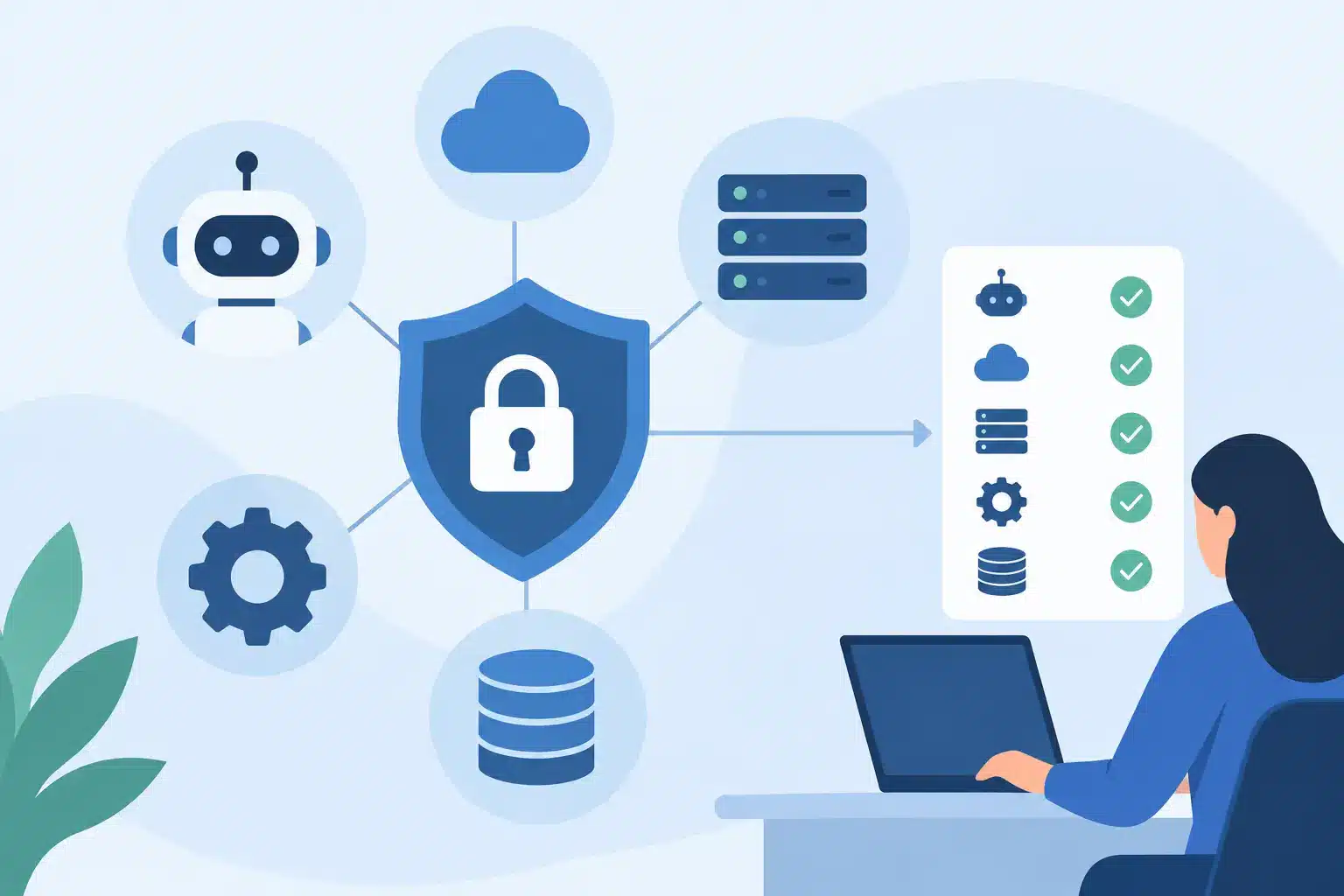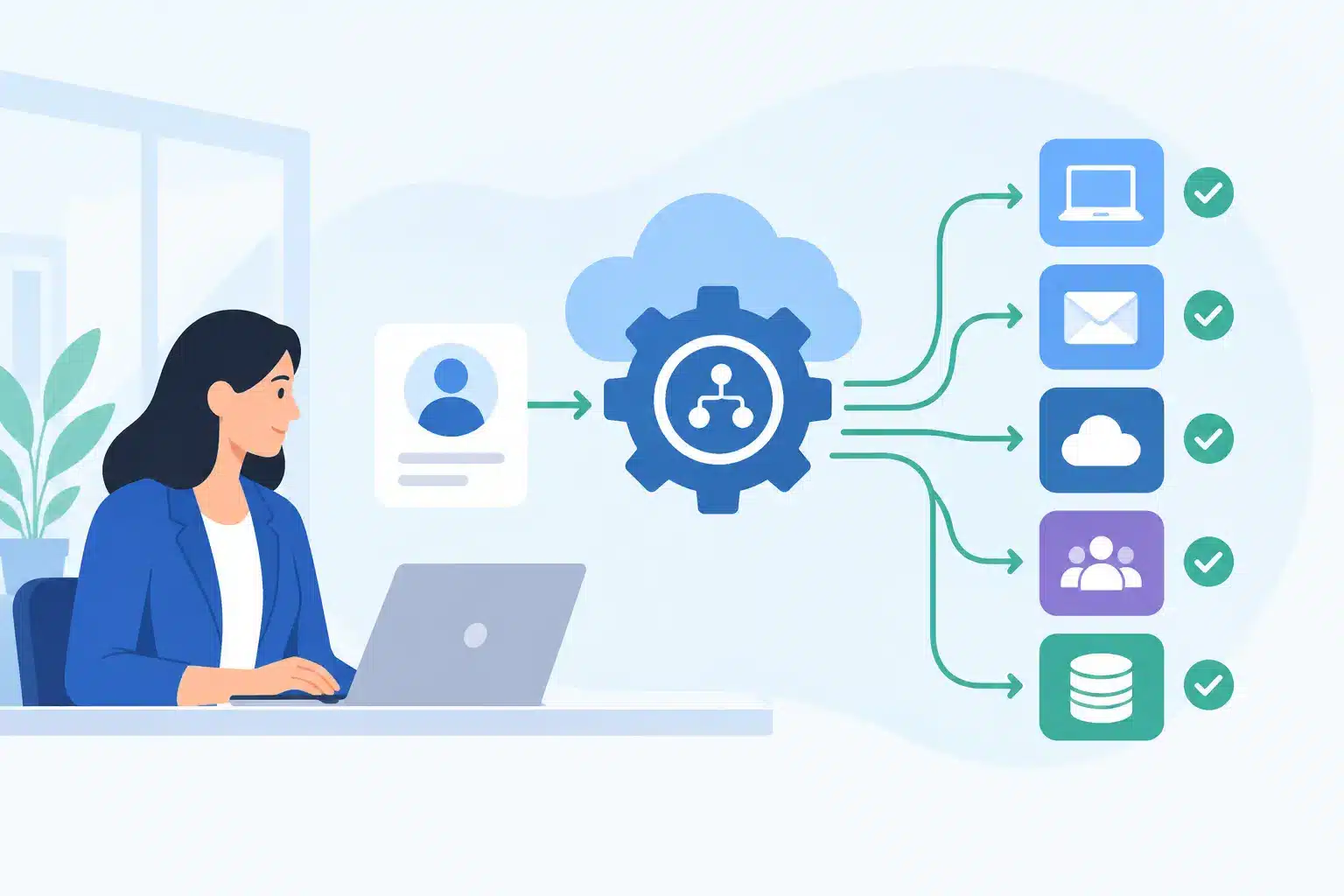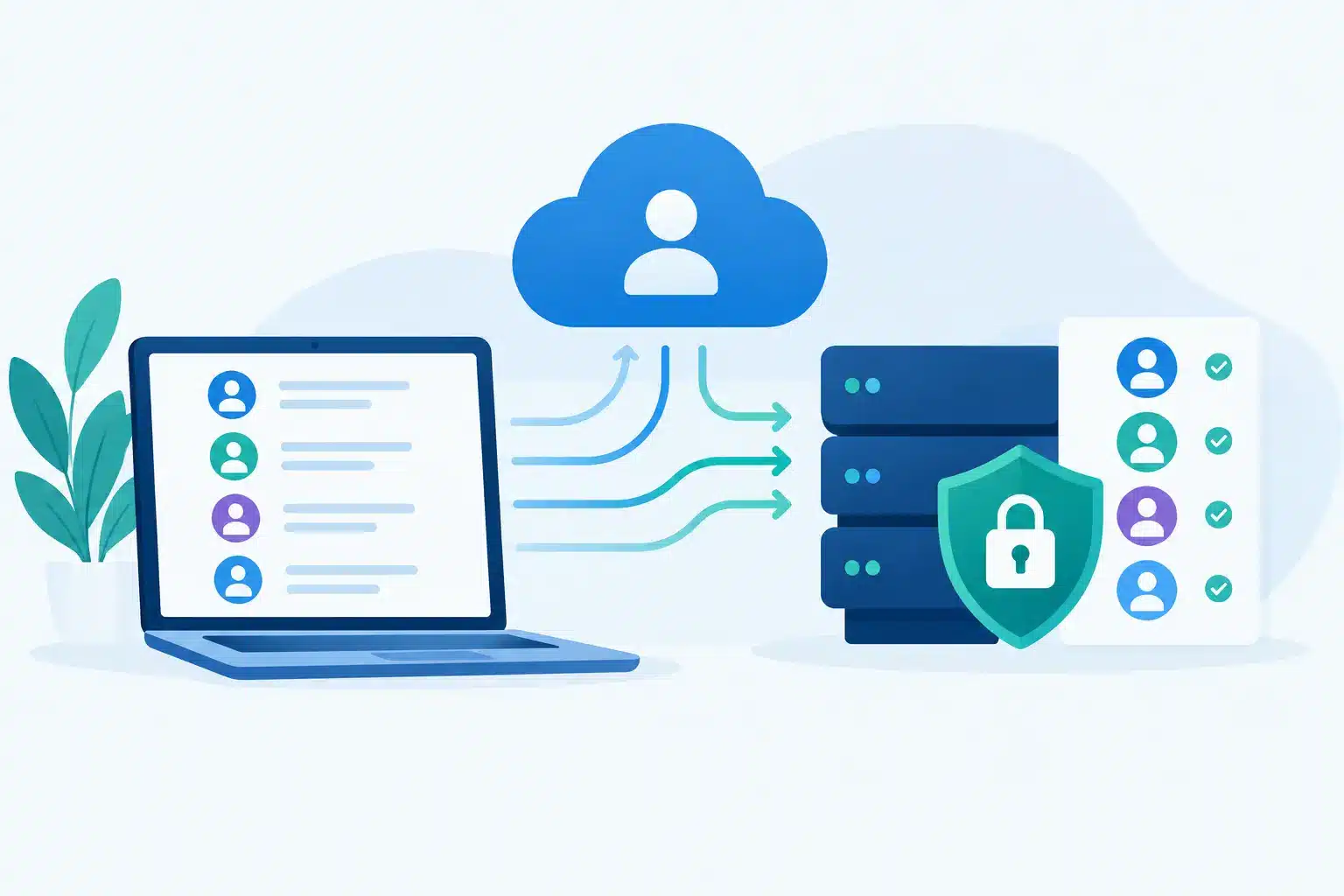
AI agents are already taking on real work – querying systems, triggering workflows, handling approvals, and interacting with sensitive data across SaaS, cloud, and internal environments. That is exactly why the conversation around top ai agent security tools has moved out of innovation teams and into security, IAM, and compliance programs. Once an agent can act with autonomy, its identity, permissions, credentials, and audit trail become security-critical.
For enterprise teams, the core issue is not whether an AI agent is useful. It is whether that agent can be governed with the same discipline applied to users, service accounts, privileged admins, and machine identities. If the answer is no, the toolchain is incomplete.
What the top AI agent security tools actually need to do
A lot of products are being positioned as AI security solutions, but not all of them solve the security problem created by agents. Some focus on model safety. Some focus on data loss prevention. Some focus on application posture. Those categories matter, but agent security starts with control over identity, access, execution, and monitoring.
In practice, the top AI agent security tools should help answer a short list of operational questions. What identity does the agent use? How is it authenticated? What systems can it reach? What permissions does it inherit or request? Can high-risk actions be constrained, approved, logged, and reviewed? If the agent is compromised, can security teams revoke access quickly and understand the blast radius?
That is why identity-centered controls sit at the center of the problem. Enterprises do not need another isolated dashboard. They need agent activity to fit into established security operating models across IAM, PAM, IGA, secrets management, and continuous monitoring.
9 top AI agent security tools worth evaluating
1. CyberArk
CyberArk is one of the strongest options when AI agents require privileged access to critical systems, infrastructure, or sensitive workflows. Its value is straightforward: AI agents should not hold standing privilege, unmanaged credentials, or persistent secrets. CyberArk helps enforce least privilege, vaulted access, session control, and credential rotation in environments where agent actions could otherwise become high-impact attack paths.
This matters most when agents interact with servers, databases, cloud consoles, DevOps pipelines, or operational technology. If your use case includes elevated access, CyberArk is not optional category coverage. It is foundational control.
2. Okta
Okta is highly relevant when AI agents operate across SaaS applications, workforce identity ecosystems, and customer-facing environments that depend on modern authentication and lifecycle management. For many organizations, agents are showing up as a new class of non-human identity that still needs policy enforcement, federation strategy, and centralized visibility.
Okta is especially useful when the challenge is not only authentication, but consistency. If business units are deploying agent-enabled apps quickly, a central identity layer helps reduce fragmentation. The trade-off is that Okta alone is not a complete agent security stack. It is most effective when paired with governance, privilege, and monitoring controls.
3. Saviynt
Saviynt belongs in this conversation because AI agents create a governance problem as much as a technical one. Entitlements expand quietly. Access accumulates over time. Ownership becomes unclear. In regulated environments, that turns into audit friction and elevated risk.
Saviynt helps organizations bring AI agents into identity governance processes such as access certification, role design, policy enforcement, and separation of duties analysis. That is particularly important when agents are connected to finance, HR, clinical systems, or any environment where excess access creates compliance exposure. If your team cannot explain why an agent has access, governance is already behind.
4. BeyondTrust
BeyondTrust is a strong fit for controlling privileged sessions, endpoint access, and delegated administrative activity involving AI agents. Where CyberArk often leads in broader privileged access strategy, BeyondTrust can be particularly effective for organizations focused on endpoint privilege management and practical control over administrative pathways.
For AI agents, that matters when automation touches desktops, servers, support tooling, or distributed operational teams. The right choice between BeyondTrust and CyberArk depends on architecture, privilege model, and existing investments. In some enterprises, the decision is less about which platform is better overall and more about which one better matches the privileged access patterns the agents will use.
5. Microsoft Entra ID
Microsoft Entra ID is increasingly central in organizations building or deploying AI agents inside Microsoft-heavy ecosystems. If agents interact with Microsoft 365, Azure, internal apps, or cloud-native workflows, Entra ID provides identity controls that can be extended into conditional access, app registration governance, and tenant-wide visibility.
Its strength is proximity to the environment where many agents will live. Its limitation is that proximity does not equal full governance. Entra ID can provide critical authentication and policy enforcement, but enterprises still need to manage privilege, secrets, and access reviews beyond the identity provider alone.
6. HashiCorp Vault
Not every AI agent security problem starts with sign-on. Many start with embedded tokens, API keys, certificates, and unmanaged secrets. HashiCorp Vault is a key tool for organizations that need agents to authenticate to services securely without hardcoded credentials or weak secret distribution practices.
Vault is especially relevant for development teams building custom agents or orchestration layers across cloud and hybrid environments. If the agent ecosystem is homegrown, secret sprawl can become the first real control failure. Vault helps reduce that risk, but only if teams integrate it early rather than treating secrets as a cleanup task after deployment.
7. Wiz
Wiz enters the list from a different angle. It is not an IAM or PAM platform, but it is highly useful in identifying where AI-related components, identities, and permissions create exposure across cloud environments. If agents are running in cloud workloads, calling APIs, or connected to storage and compute layers, cloud posture visibility becomes essential.
Wiz helps teams understand misconfigurations, over-privileged identities, and risky paths that agents could exploit or amplify. It should not be mistaken for a complete control plane for AI agents. What it provides is context – and context is what allows security teams to prioritize remediation before an agent becomes the shortest path to a critical asset.
8. Palo Alto Networks Prisma Cloud
Prisma Cloud deserves consideration when AI agents are part of cloud-native application stacks and containerized services. It helps security teams assess runtime risk, workload exposure, and policy violations across environments where agents may be deployed as part of broader application architectures.
This is important because many agent deployments are not standalone tools. They are embedded in apps, APIs, orchestration frameworks, and CI/CD pipelines. Prisma Cloud helps bring those deployment layers into view. As with Wiz, however, the platform is strongest when used alongside identity and access controls rather than as a substitute for them.
9. CrowdStrike Falcon
CrowdStrike Falcon rounds out the list because compromised endpoints, workloads, and identities often intersect. If AI agents run on managed hosts, invoke scripts, or operate inside developer and operational environments, endpoint and workload telemetry can help detect misuse, persistence, and lateral movement.
Its role in agent security is not governance first. It is detection and response. That distinction matters. Falcon can help identify malicious behavior involving agents, but it does not solve identity design, access modeling, or privilege control. It is part of the operating picture, not the whole picture.
How to choose among the top AI agent security tools
The right toolset depends on how your AI agents operate and what level of autonomy they have. A low-risk internal assistant that summarizes documentation does not need the same control stack as an agent that can initiate payments, modify infrastructure, approve transactions, or access regulated records.
Start with the identity model. If your agents are using shared service accounts, static API keys, or inherited application permissions with little ownership clarity, fix that first. The most expensive mistake organizations are making right now is treating agent access as a development detail instead of an identity security program issue.
Then map the control domains. IAM platforms establish identity and authentication. PAM platforms control elevated access. IGA platforms govern entitlements and accountability. Secrets tools protect credentials and service trust. Cloud and endpoint security tools provide posture and detection. Most enterprises will need coverage across several of these layers, not a single product marketed as an all-in-one answer.
It is also worth being cautious about vendor claims. Some tools are strong at AI discovery but weak at access control. Others can monitor prompts and model usage but do little to enforce least privilege. If the product cannot answer who the agent is, what it can do, how that access is approved, and how activity is reviewed, it is only covering part of the problem.
The control model matters more than the product list
Security leaders should resist turning AI agent security into a race to buy point tools. The better approach is to define an operational model first. AI agents should be inventoried, classified by risk, assigned accountable owners, integrated into identity lifecycle processes, and monitored as active identities with permissions that can be reviewed and revoked.
That is where many programs stall. The technology exists, but the controls are scattered across teams responsible for IAM, cloud, DevOps, security operations, and compliance. Without a unifying identity-centered design, the result is partial coverage and unclear ownership. This is exactly why specialized delivery matters. Platforms do not secure access on their own. Architecture, implementation, governance, and ongoing operations do.
For organizations trying to secure critical access without slowing down AI adoption, the best path is usually not to start with the broadest AI security marketing message. It is to start with the systems your agents can touch, the privileges they require, and the controls you already trust for human and machine identities. From there, the top tools become much easier to evaluate – and much harder to misapply.
As AI agents take on more authority, the security standard should rise with them: no unmanaged identity, no ungoverned privilege, and no blind trust in automation.