Last updated: July 2026
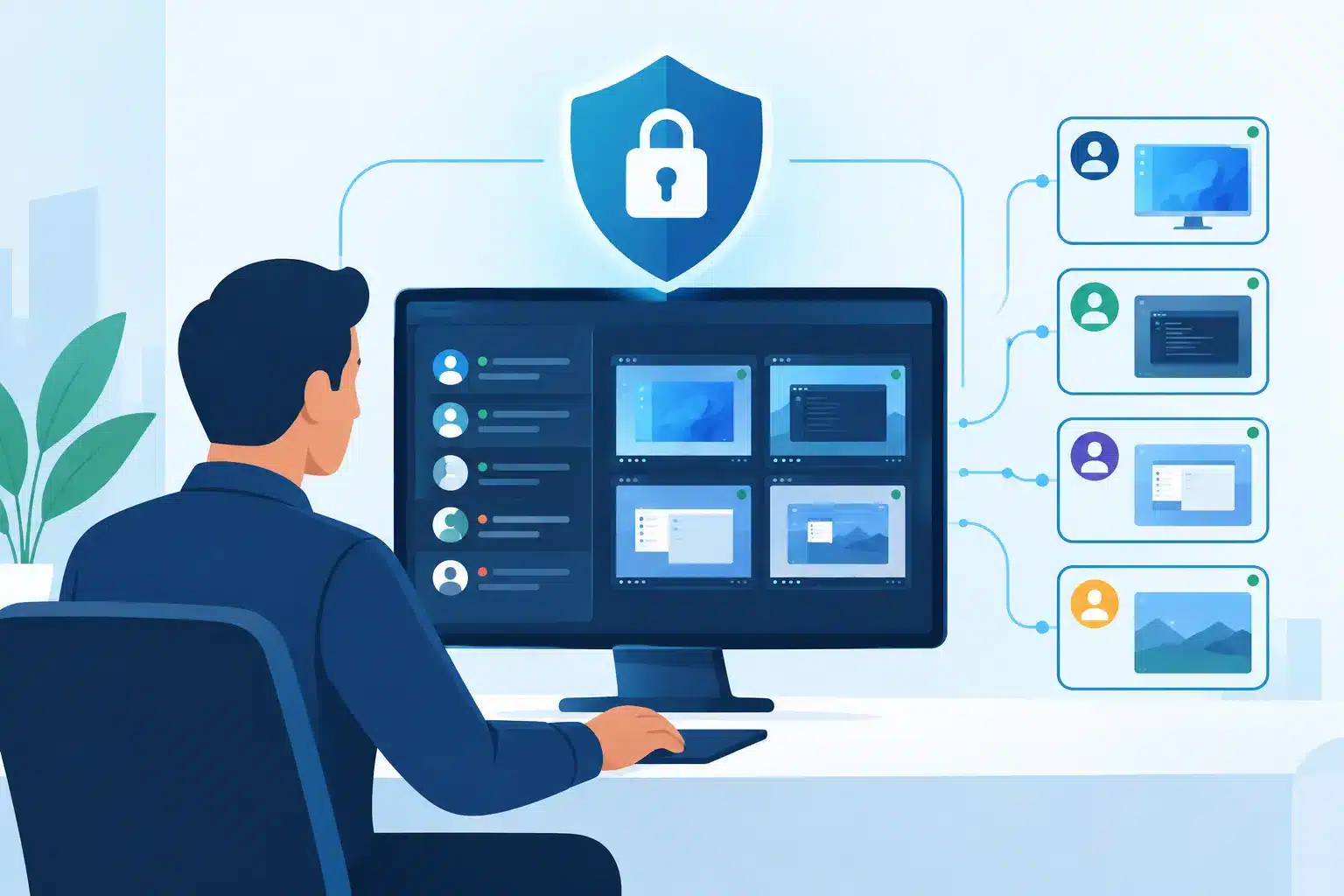
For years, cybersecurity meant defending a perimeter: firewalls at the edge, trusted networks inside. That model is gone. In 2026, attackers rarely break in, they log in, using valid credentials that bypass perimeter defenses entirely. Identity has become the primary battleground, which is why identity and access management (IAM) now sits at the center of modern cybersecurity. This guide explains the role of IAM in security, why it matters more than ever, and how to build an identity-first defense.
What is IAM in cyber security?
In cybersecurity, identity and access management (IAM) is the framework of policies, processes, and technologies that ensures the right identities have the right access to the right resources, at the right time, and for the right reasons. It governs who (or what) can authenticate, what they are authorized to do, and how that access is monitored and revoked, across every human, machine, and AI agent identity in the organization.
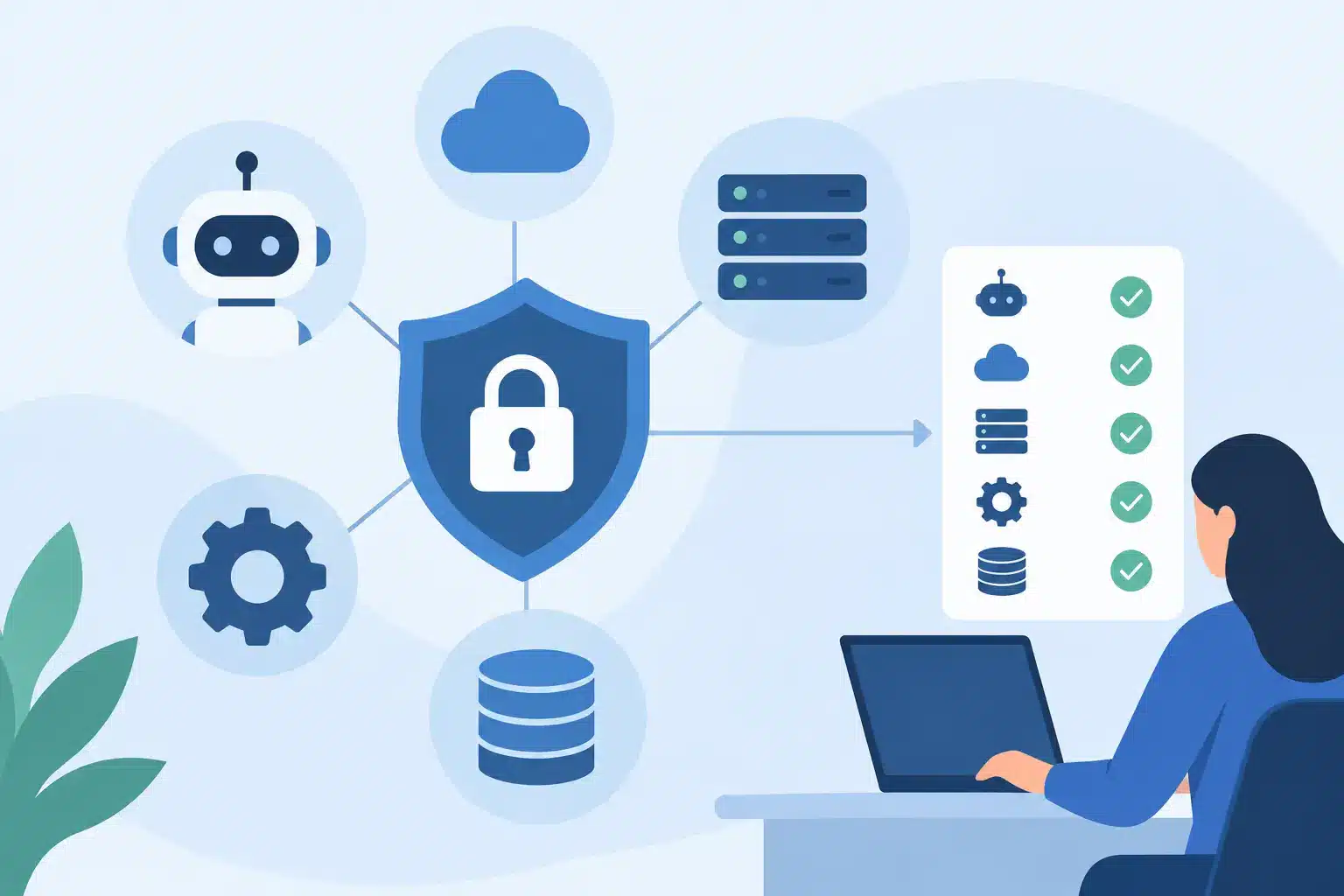
IAM’s role in security is to control the single most exploited element of any breach: identity. It combines authentication (proving who an identity is), authorization (deciding what they can access), and governance (ensuring that access stays appropriate over time). When those controls are strong, a stolen password or a compromised account leads nowhere. When they are weak, it opens the door to the entire environment. IAM is now widely considered the true security perimeter, and it is the foundation of the broader discipline of identity and access management.
Why identity is the new security perimeter
The shift to identity-centric security is not a slogan, it is a response to how breaches actually happen. Stolen or compromised credentials are consistently the leading or near-leading initial access vector across every major threat report. Verizon’s 2025 Data Breach Investigations Report identified compromised credentials as the initial access vector in 22% of confirmed breaches, the leading vector for the second consecutive year, and in 88% of basic web application attacks.
The reason attackers favor credentials is simple: a valid username and password grants legitimate access, with no exploit needed, no malware to detect, and no anomaly to trigger. According to Verizon, about 88% of system-intrusion breaches involving stolen credentials used those credentials to authenticate as a legitimate user without setting off alerts. Microsoft’s Digital Defense Report goes further, finding that more than 97% of identity attacks are password attacks.
These breaches are also the most damaging and the hardest to catch. IBM’s Cost of a Data Breach Report prices credential-related breaches at around $4.8 million per incident, and finds they take the longest to identify and contain of any attack vector, roughly 292 days. When 82% of breaches involve the human element, defending identity is no longer one control among many, it is the control.
The core components of IAM security
An effective IAM security program rests on several layers that work together to make identity hard to abuse.
Authentication
Verifying that an identity is who it claims to be. Modern authentication moves beyond passwords toward multi-factor authentication (MFA) and passwordless methods like passkeys, which cannot be phished because the credential never leaves the device. IBM found that a meaningful share of cloud breaches trace directly back to missing MFA.
Authorization and least privilege
Deciding what a verified identity is allowed to do, and keeping that to the minimum necessary. Enforcing least privilege limits the blast radius when an account is compromised, so a single breach cannot cascade across the environment.
Identity governance
Ensuring access stays appropriate over time through reviews, certification, and lifecycle management. This closes the gap where orphaned accounts and privilege creep silently accumulate into risk.
Monitoring and detection
Watching identity activity for anomalies, unusual logins, impossible travel, or privilege escalation, so a compromised credential is caught in use rather than months later.
IAM and Zero Trust
IAM is the foundation of Zero Trust, the security model that assumes no implicit trust based on network location and verifies every access request continuously. Zero Trust is structurally impossible without a strong identity layer, because its core rule, never trust, always verify, depends on knowing exactly who is requesting access, on what device, and in what context.
In a Zero Trust architecture, IAM acts as the policy enforcement point. Every request is evaluated against identity, device posture, and contextual risk before access is granted, and access is continuously re-verified rather than assumed for the length of a session. As enterprises adopt Zero Trust to replace the failed perimeter model, IAM is what makes it work in practice.
The modern IAM threat landscape
The identity attack surface is expanding faster than most programs can keep up. Three shifts define the 2026 landscape.
AI-powered attacks. Attackers use generative AI for highly convincing phishing, voice clones, and deepfake impersonation of executives and staff, making identity-based social engineering harder to spot. The FBI logged thousands of complaints in 2025 referencing AI use by cybercriminals.
Machine and non-human identities. Service accounts, API keys, and AI agents now vastly outnumber human users, and each unmanaged credential is a potential entry point that traditional, human-centric IAM was never designed to govern.
Third-party and supply-chain risk. Vendors and partners with excessive or long-lived access have become a leading breach origin, with third-party involvement in breaches rising sharply year over year. External identities are now among the highest-impact risk vectors.
Building an identity-first security strategy
Strengthening cybersecurity through IAM follows a clear path. Start by inventorying every identity, human, machine, and third-party, because you cannot secure what you cannot see. Enforce phishing-resistant authentication like MFA and passkeys everywhere, since this alone neutralizes the most common attack vector. Apply least privilege across all identities so compromise cannot spread. Govern the full identity lifecycle so access is granted, reviewed, and revoked in step with reality. And monitor identity activity continuously to catch misuse in progress.
Above all, treat IAM as a holistic security practice rather than a collection of disconnected tools. The organizations that succeed unify authentication, authorization, governance, and monitoring into one architecture that covers people, machines, and AI agents. A dedicated identity and access management solution combined with expert integration turns identity from an organization’s weakest link into its strongest layer of defense.
Frequently asked questions
What is IAM in cyber security?
IAM is the framework of policies and technologies that controls who can access what, ensuring the right identities have appropriate access to the right resources. In security terms, it governs authentication, authorization, and the monitoring of every identity, making it the primary defense against credential-based attacks.
Why is IAM important for cybersecurity?
Because identity is the leading breach vector. Stolen credentials are the top initial access method in most breaches and bypass perimeter defenses entirely. Strong IAM neutralizes stolen credentials, limits the damage of a compromise, and is the foundation of Zero Trust.
How does IAM relate to Zero Trust?
IAM is the foundation of Zero Trust. Zero Trust verifies every access request continuously based on identity, device, and context, which is impossible without a strong identity layer. IAM acts as the policy enforcement point that makes Zero Trust work.
What are the main IAM security threats in 2026?
The biggest threats are AI-powered phishing and deepfakes, the explosion of unmanaged machine and AI agent identities, and third-party or supply-chain access. Each expands the identity attack surface beyond what traditional, human-centric IAM was built to handle.
Does IAM stop credential theft?
IAM dramatically reduces its impact. Phishing-resistant authentication like passkeys prevents credentials from being stolen or reused, while least privilege and monitoring ensure that even a compromised account cannot move freely or go undetected.
Key takeaways
- Identity is the new security perimeter: stolen credentials are the leading breach vector, appearing in 22% of confirmed breaches and 88% of web application attacks, and bypass perimeter defenses entirely.
- IAM controls authentication, authorization, governance, and monitoring, making it the foundation of both modern cyber defense and Zero Trust.
- The 2026 threat landscape, AI-powered attacks, machine identities, and third-party risk, demands an identity-first strategy that covers people, machines, and AI agents as one architecture.