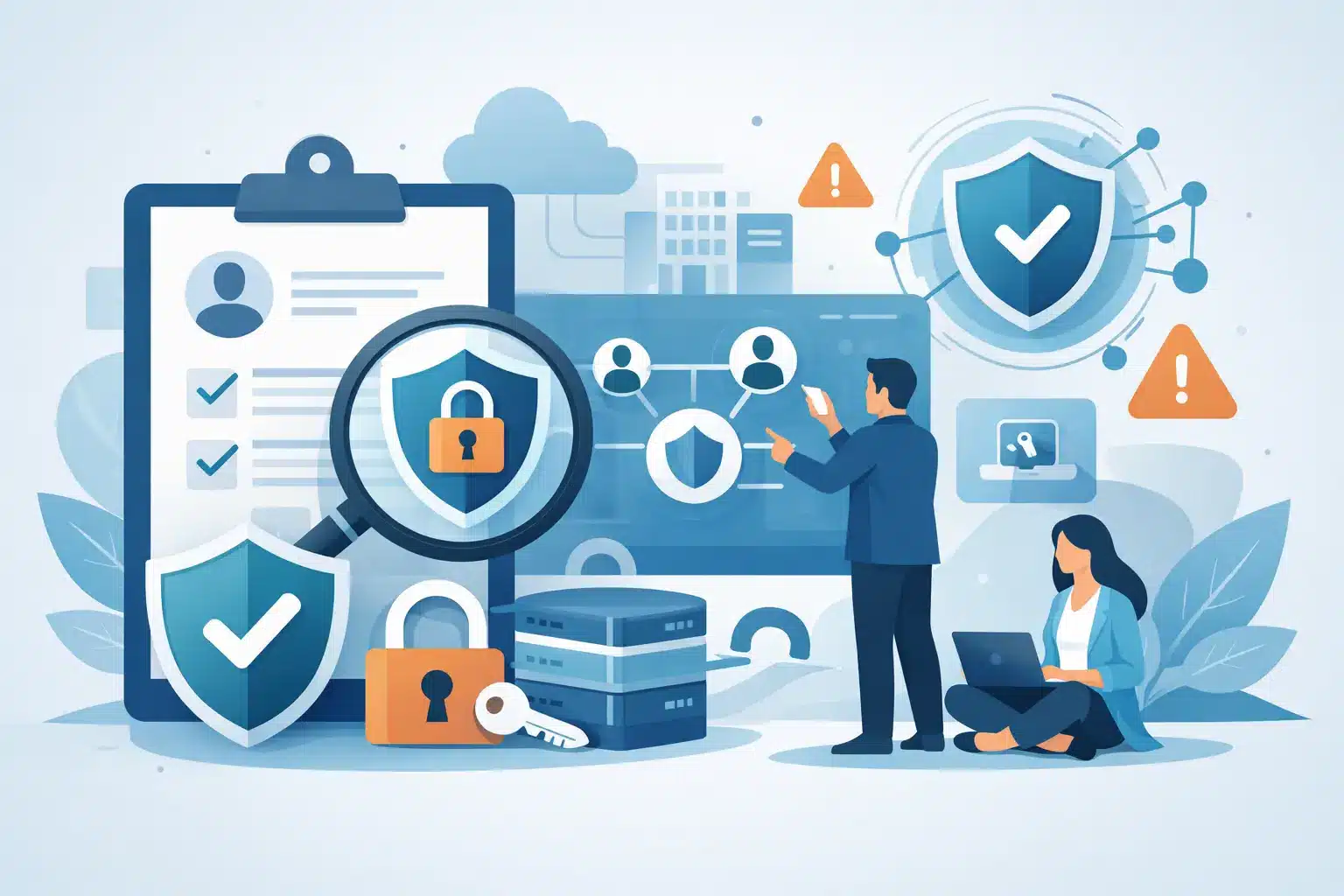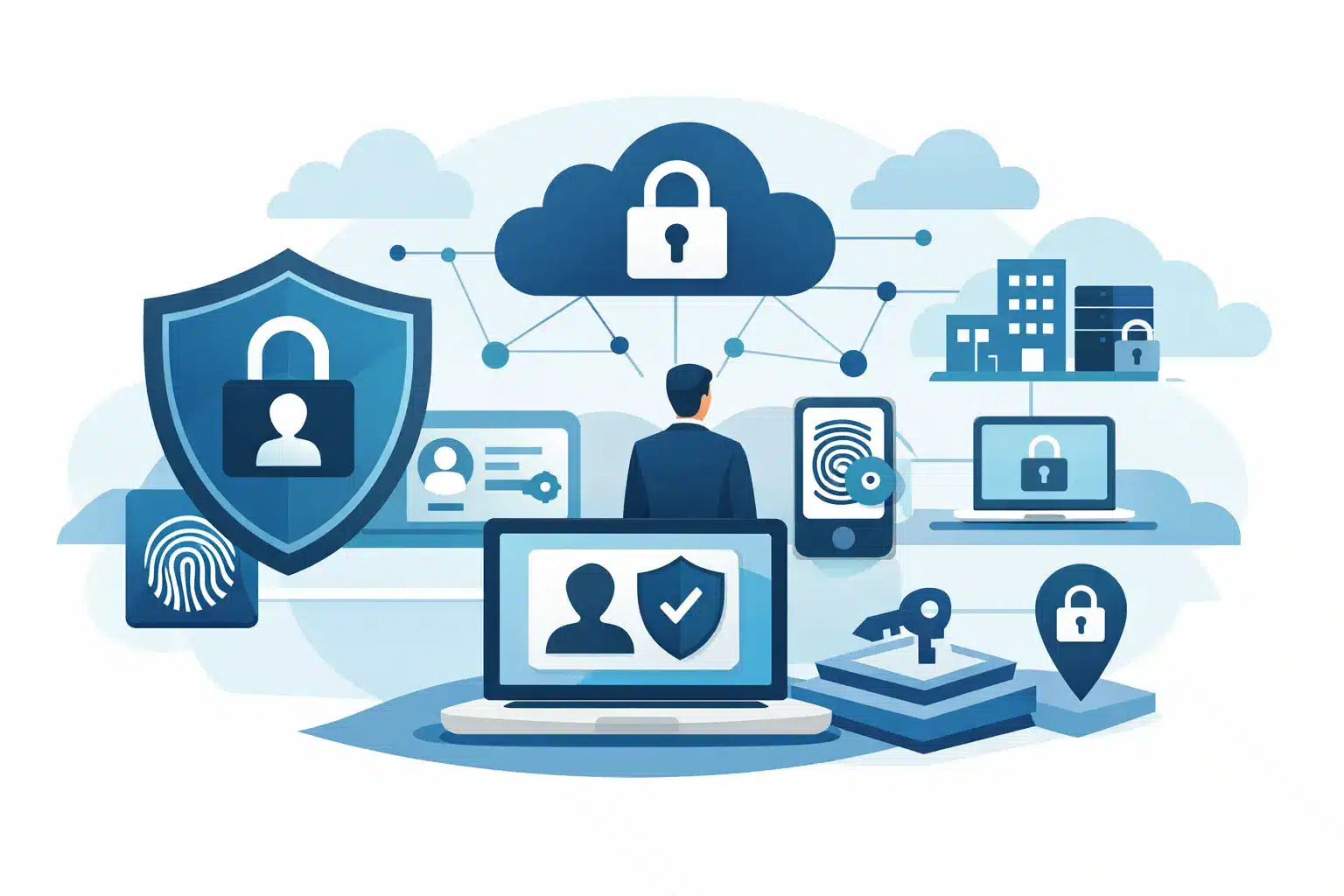
A zero trust identity guide is not a checklist for adding MFA to a few high-risk applications. For enterprise security teams, it is a practical model for deciding who can access what, under which conditions, for how long, and with what evidence. The objective is direct: reduce the chance that a compromised identity becomes unrestricted access to critical systems, data, or operations.
Identity sits at the center of modern attack paths. Users work across SaaS platforms, hybrid infrastructure, APIs, cloud consoles, and partner environments. Privileged accounts administer systems that can affect the entire business. Machine identities and certificates often outnumber human users. AI agents introduce another class of non-human actor that may initiate actions, call tools, and access sensitive information. A perimeter-first security model cannot govern this complexity on its own.
What Zero Trust Means for Identity
Zero trust does not mean trusting no one or blocking every request. It means removing assumed trust. Access decisions are continuously based on verified identity, the sensitivity of the requested resource, device and session context, authorization policy, and current risk signals.
For identity teams, this changes the operating question. Instead of asking whether a user is inside the network, ask whether this specific identity should receive this specific level of access right now. A valid password alone is not sufficient evidence. Neither is a successful login from a managed laptop if the requested privilege is excessive, permanent, or disconnected from a business purpose.
The strongest identity programs apply three disciplines together: verify explicitly, grant the least privilege needed, and assume access can be abused. Each discipline has technical and operational consequences. Explicit verification requires reliable authentication and context signals. Least privilege requires roles, entitlements, approval controls, and time limits. Assuming breach requires logging, detection, rapid revocation, and recovery procedures that work under pressure.
Start With the Access Paths That Matter Most
A common mistake is attempting to redesign every identity control at once. That creates long programs, fragmented ownership, and limited risk reduction in the early stages. Start where excessive access would have the greatest business impact.
Map the identities, systems, and access paths connected to crown-jewel assets. This should cover more than the primary workforce directory. Include contractors, vendors, service accounts, emergency accounts, cloud roles, API credentials, certificates, and emerging AI agents. The purpose is to identify where access is persistent, shared, difficult to review, or poorly monitored.
The initial assessment should establish answers to five questions:
- Which business systems, data stores, and administrative platforms would create material impact if compromised?
- Which identities can directly or indirectly reach those assets?
- Where are credentials shared, unmanaged, inactive, or exempt from standard authentication controls?
- Which entitlements provide privileged or high-risk capabilities beyond a user’s normal job requirement?
- Can the organization prove who approved access, when it was last reviewed, and how quickly it can be removed?
This exercise often exposes the real control gap. The issue is not that an organization lacks security tools. It is that identity data, policies, ownership, and operational procedures are distributed across too many systems to produce a reliable access decision.
Build a Zero Trust Identity Architecture
A zero trust architecture should connect controls into a decision framework rather than create a collection of isolated products. The exact design depends on the environment, regulatory requirements, and existing technology investments, but several capabilities are foundational.
Establish a trustworthy identity source
Authoritative identity data is the base layer. Human identities should be tied to reliable HR or contractor records, with clear lifecycle events for hiring, role change, leave, and termination. Non-human identities need their own ownership and lifecycle model. A service account without a named owner, documented purpose, and expiration or review process is a standing risk.
Identity Governance and Administration provides the structure to correlate accounts, model roles, manage access requests, and perform certification campaigns. Governance is not paperwork after access is granted. It is the mechanism for ensuring that access remains aligned to a current business need.
Strengthen authentication without creating blind exceptions
Multi-factor authentication should protect remote access, cloud services, administrative workflows, and other material entry points. Yet not all MFA methods offer the same resistance to phishing, session theft, or push fatigue. For high-risk populations and privileged workflows, phishing-resistant authentication should be the target state.
Authentication policy should also account for context. Device posture, location anomalies, impossible travel events, risky sign-ins, and unusual session behavior can justify step-up authentication or session restrictions. Context must be used carefully. Overly aggressive conditional access policies can disrupt legitimate operations, particularly for field teams, third parties, and incident responders. Tune controls against actual workflows and maintain a documented exception process with an owner and expiration date.
Remove standing privilege
Privileged Access Management is central to zero trust because administrative rights create disproportionate impact. Administrators should use separate privileged identities, obtain elevated access only when needed, and perform sensitive actions through controlled sessions. Credentials should be vaulted, rotated, and monitored rather than known and reused by individuals.
Just-in-time elevation reduces the exposure created by permanent assignments. Just enough access limits the specific commands, systems, or roles available during that period. These controls are especially valuable in cloud environments, where broad tenant-level roles can grant far more access than the task requires.
Break-glass accounts remain necessary for operational resilience, but they should be few, tightly governed, tested, and monitored. An emergency account that cannot be used during an outage is a failure. An emergency account that is never reviewed is also a failure.
Govern machine identities and certificates
Zero trust programs lose credibility when they focus only on employees. Workloads authenticate to workloads, applications request API access, and certificates establish trust across infrastructure. These machine identities commonly have long-lived secrets, excessive permissions, and unclear ownership.
Certificate Lifecycle Management helps prevent expired certificates from becoming availability incidents while improving visibility into cryptographic identity. The same discipline applies to service principals, workload identities, keys, and tokens: assign an owner, minimize permissions, rotate credentials, monitor use, and remove access when the service is retired. Automation matters here because manual tracking cannot keep pace with enterprise scale.
Make Authorization a Continuous Control
Authentication establishes confidence in an identity. Authorization determines what that identity can do. Zero trust requires both controls to be treated as dynamic.
Access should be evaluated according to resource sensitivity and risk, not only user department. A finance analyst may need routine access to reporting systems but require additional approval, a managed device, and a stronger authentication method before exporting regulated data. A cloud engineer may receive a time-bound role for production remediation but not standing rights to alter identity policies.
Policy design must balance precision with operability. Highly granular entitlements can reduce risk but become impossible to manage if they are not backed by a role model, ownership structure, and automation. Broad roles are easier to administer but often accumulate permissions over time. The practical target is a manageable role hierarchy supported by controls for exceptional access, privileged elevation, and periodic review.
Operate the Program, Not Just the Platform
The difference between a deployed identity product and a functioning zero trust program is operational discipline. Policies drift. Business units acquire applications. Administrators create temporary exceptions that become permanent. Certificates expire. Mergers introduce new directories and incompatible access models. Without continuous ownership, the original architecture degrades.
Define measurable controls and review them on a consistent cadence. Useful measures include privileged accounts without current owners, dormant accounts, access removal time after termination, MFA coverage for high-risk applications, excessive entitlement findings, certificate expiration exposure, and completion rates for access certifications. Metrics should drive remediation, not merely satisfy audit reporting.
Security operations also need identity context. Detection teams should be able to determine whether a sign-in came from a privileged account, whether elevation was approved, what entitlements were active, and what the identity accessed after authentication. Identity telemetry becomes far more valuable when IAM, PAM, IGA, endpoint, and cloud signals can be correlated during an investigation.
A Practical Implementation Sequence
Most organizations should treat zero trust identity as a staged program. First, establish visibility and correct the highest-risk identity conditions: unmanaged privileged accounts, weak administrative authentication, stale accounts, shared credentials, and missing ownership. Next, strengthen lifecycle governance, role design, and privileged elevation across critical platforms. Then extend policy enforcement and continuous monitoring to cloud workloads, machine identities, certificates, third parties, and AI agents.
Technology selection comes after architectural decisions, not before them. A strong platform can support the program, but it cannot resolve unclear ownership, poor identity data, or an undefined access model. Integration quality also matters. A control that works in a pilot but cannot support production onboarding, change management, help desk operations, and audit evidence will not deliver durable risk reduction.
For organizations with fragmented environments, specialist support can shorten the path from assessment to operational control. IDENT1TY approaches identity security as an ongoing discipline, connecting architecture, integration, governance, and managed operations around the access risks that matter most.
The useful test is simple: when an identity is compromised, can the organization limit its reach, see its activity, and remove its access quickly? Building that capability, one controlled access path at a time, is where zero trust becomes real.