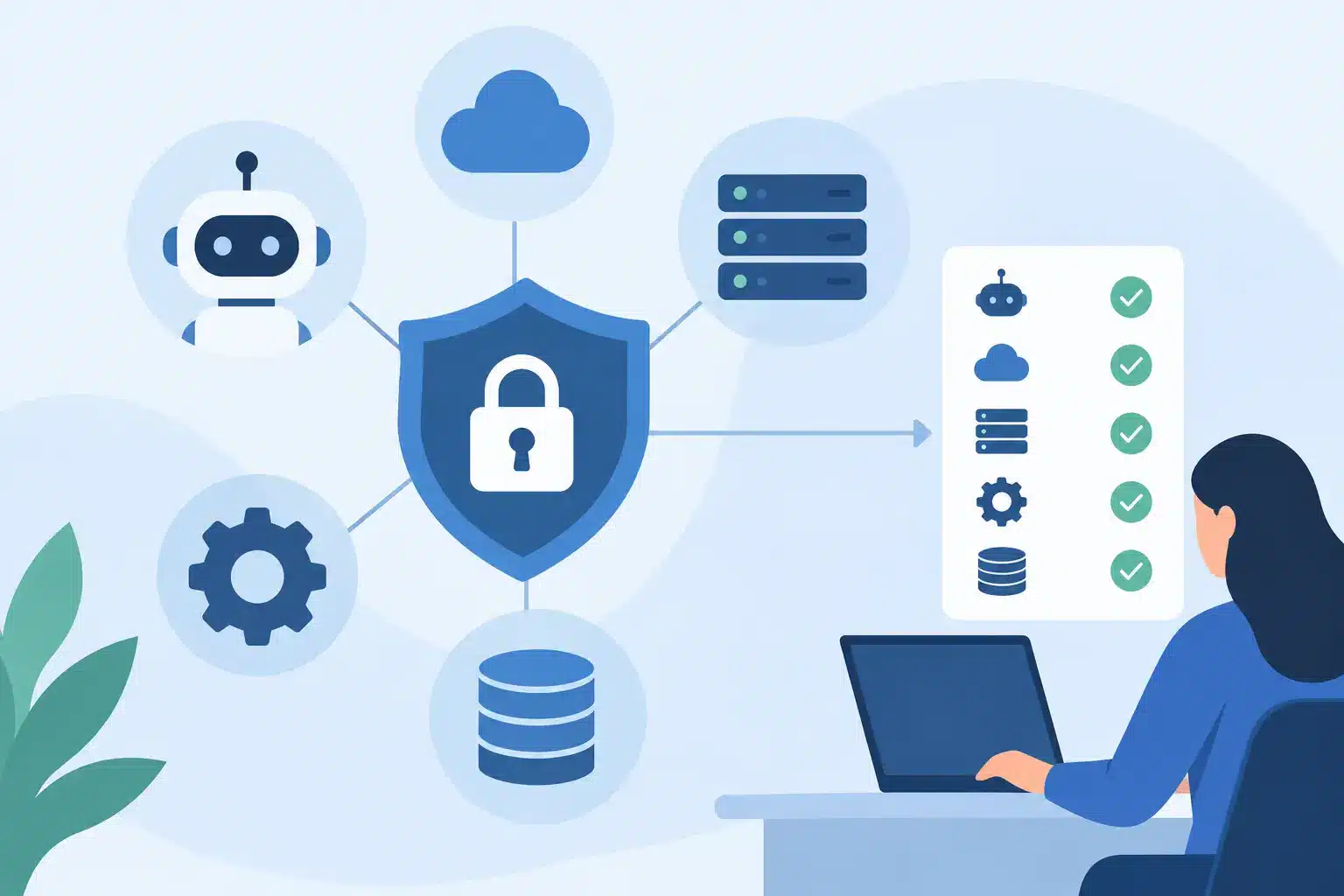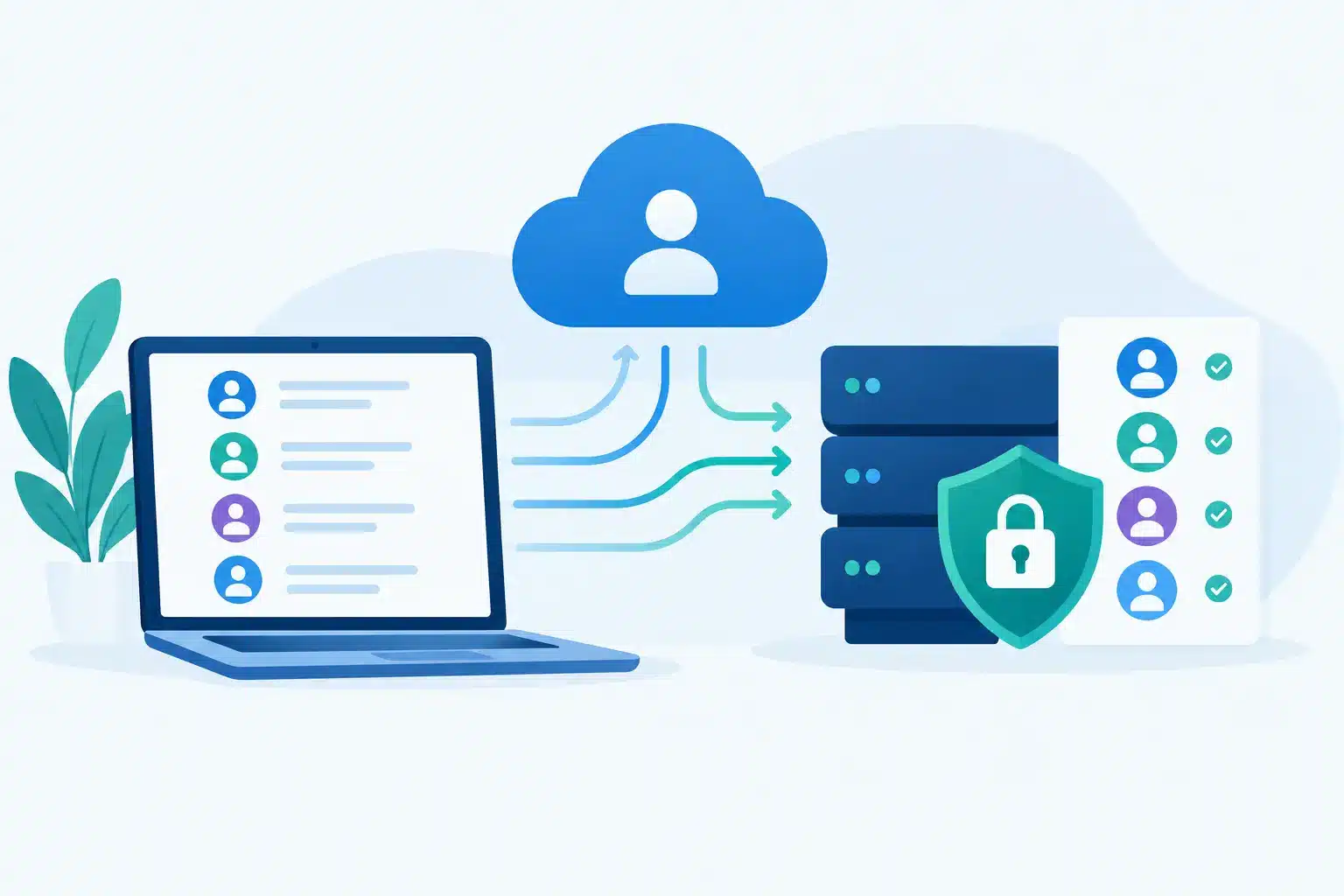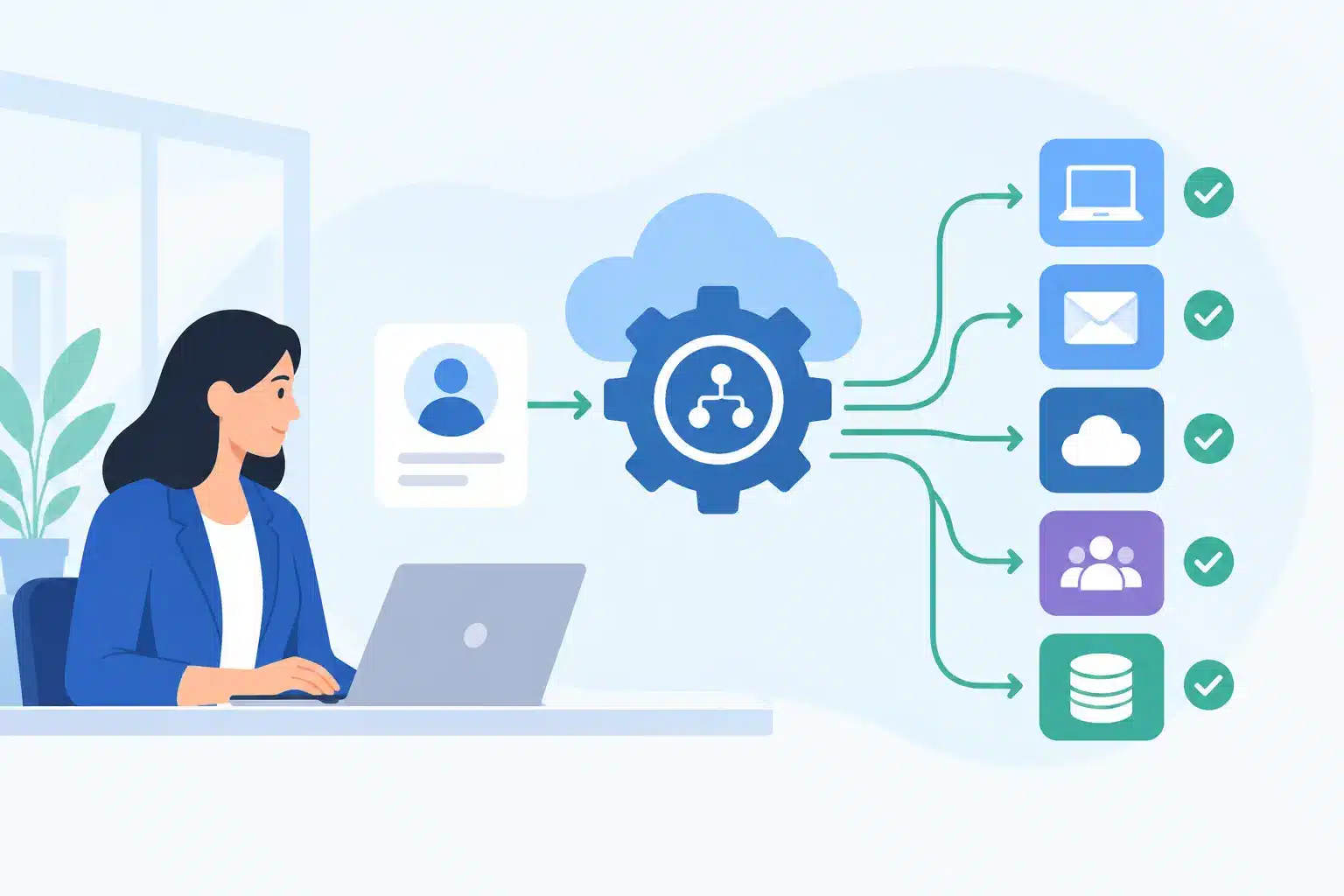
A new employee should not spend their first week waiting for a laptop account, collaboration tools, clinical systems, finance applications, or approved data access. Nor should a manager, help desk analyst, and application owner need to exchange tickets to make routine access decisions. When organizations automate employee access provisioning, they reduce that operational drag while closing a significant source of identity risk.
The objective is not simply faster account creation. It is controlled access delivery based on verified identity data, approved business roles, policy, and a traceable lifecycle. Done well, automation gives employees what they need on day one, prevents unnecessary privilege from accumulating, and gives security teams evidence that access decisions are governed.
Why manual provisioning creates persistent risk
Manual provisioning breaks down at scale because it depends on people interpreting requests consistently across disconnected systems. HR records may identify a new hire, but the hiring manager still submits tickets. An administrator creates accounts in some applications, while another team handles a legacy platform. The result is delay, inconsistency, and limited visibility into what was actually granted.
The larger problem appears after onboarding. Employees change departments, take on temporary projects, move between regions, or leave the organization. If these events are not connected to access changes, permissions remain long after their business purpose has ended. This creates orphaned accounts, excessive entitlements, license waste, and potential paths to sensitive data.
For regulated organizations, the control failure is also an audit problem. A ticket history may show that someone asked for access, but it often cannot prove that the request matched policy, that the right approver authorized it, or that access was removed when the employee changed roles. Security leaders need a defensible chain from identity source to access decision to enforcement.
Automate employee access provisioning from authoritative data
The foundation of provisioning automation is an authoritative identity source. For most employees, that is the HR system. It should provide the core attributes that define the person and their employment status: worker ID, manager, department, location, employment type, job code, start date, and end date where applicable.
These attributes should not be treated as administrative details. They are control inputs. If a worker is classified as a finance analyst in a specific business unit, that information can drive a policy-based access package. If the worker changes to a sales role, the same identity data should trigger an evaluation of existing access and the required future state.
This model works best when the HR source, identity provider, directory, IGA platform, and target applications have clear ownership boundaries. HR owns employment facts. The identity platform correlates identities and orchestrates authentication. IGA defines governance policy, roles, approvals, and certification. Target applications enforce their assigned permissions. Blurring these responsibilities is a common source of brittle integrations and disputed access decisions.
Start with joiner, mover, and leaver events
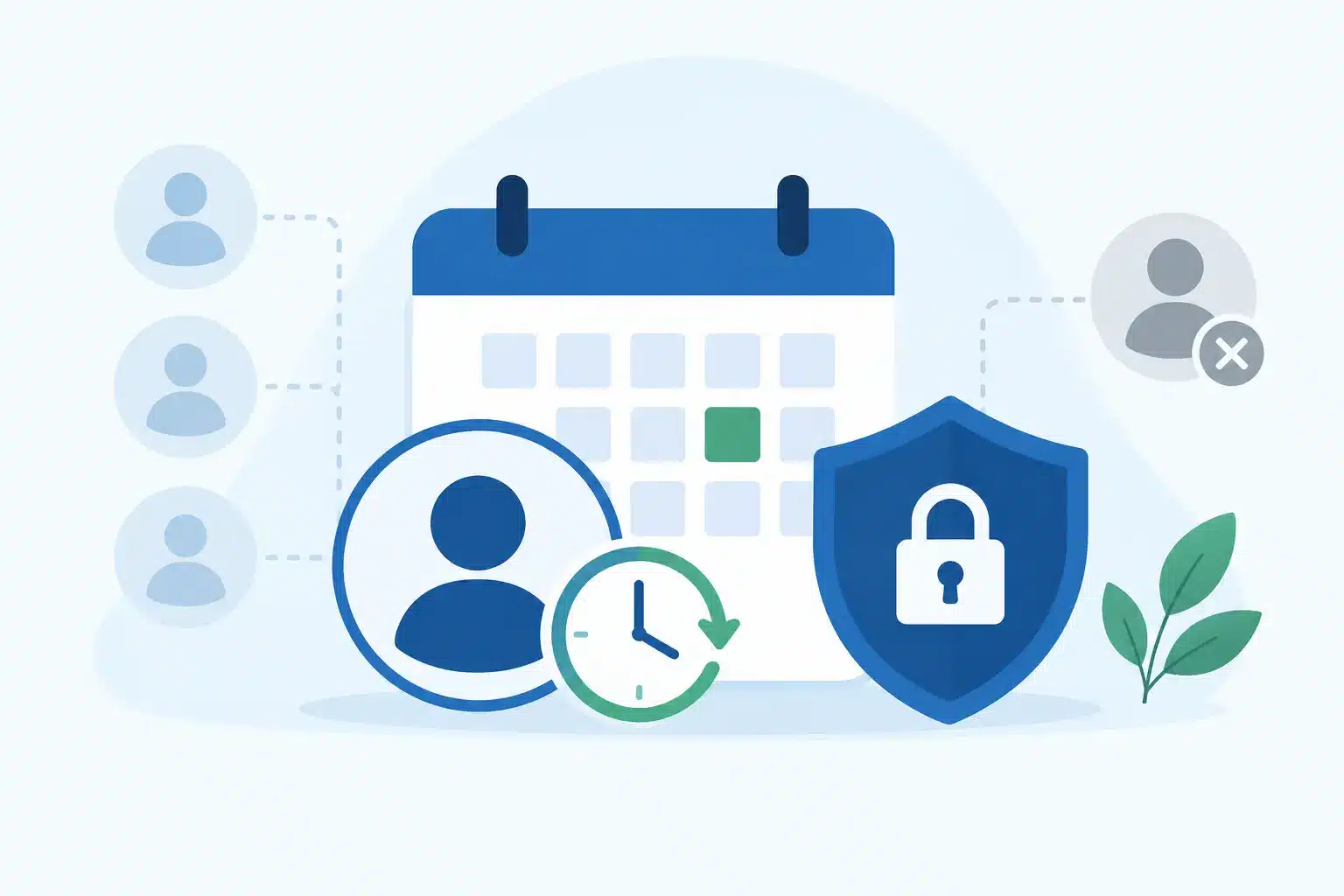
A controlled lifecycle begins with three events: joiners, movers, and leavers. Joiner automation creates the workforce identity and assigns baseline access before the start date. Mover automation reassesses access when a relevant attribute changes, such as department, manager, location, or job role. Leaver automation disables access promptly and initiates downstream deprovisioning based on defined offboarding rules.
The word “promptly” requires precision. A voluntary departure known in advance can follow a scheduled cutoff. An involuntary termination may require immediate suspension across identity systems, remote access, privileged platforms, and critical applications. Organizations should define these paths separately rather than applying a single offboarding workflow to every scenario.
Temporary workers require equal attention. Contractors, interns, contingent staff, and acquired-company employees often have different sponsors, end dates, and access boundaries. Automating expiry and requiring sponsor recertification can prevent temporary access from becoming permanent by neglect.
Build access models that reflect the business
Automation does not correct unclear access design. It can spread unclear access design much faster. Before connecting provisioning workflows to hundreds of applications, establish how the organization will express entitlement decisions.
Birthright access is the limited baseline every employee in a defined population needs, such as a corporate identity, email, collaboration access, security training, and approved endpoint services. Role-based access adds permissions based on a stable business function. Attribute-based policies are useful where access depends on context, including location, cost center, worker type, or data classification.
Most enterprises need a combination. A global role catalog alone may be too rigid for regional operations and specialized teams. Pure attribute-based assignment can become difficult to troubleshoot when policies overlap. The practical goal is a model that application owners, auditors, and administrators can understand and maintain.
Avoid building roles around every minor variation in access. That creates role explosion, where the catalog becomes as complex as the entitlements it was meant to control. Start with high-volume, high-risk, and repeatable access patterns. Use governed request workflows for legitimate exceptions, then examine recurring exceptions to determine whether the role model needs refinement.
Separate standard access from privileged access
Privileged access should not be provisioned as a permanent extension of an employee’s standard account. Administrative access requires stronger controls, including separate privileged identities where appropriate, approval based on job responsibility, time-bound elevation, session oversight, and periodic review.
The same principle applies to access that can move money, alter patient data, change production configurations, or export regulated information. Automation should make these workflows more controlled, not make sensitive access easier to obtain. Integrating IGA policy with PAM enforcement is often necessary to ensure an approved entitlement translates into controlled use.
Design workflows for control, not ticket replacement
A provisioning workflow should answer five questions: Who is requesting or triggering access? What policy supports the assignment? Who must approve it? What system action will occur? How will the organization verify the outcome?
For standard birthright access, the workflow may be fully automatic because the policy is preapproved. For higher-risk access, the workflow may require manager approval, application owner approval, segregation-of-duties analysis, or risk-based escalation. Automation should remove unnecessary handling, not remove required accountability.
Closed-loop provisioning matters. A workflow is incomplete if it sends an instruction to an application but does not verify whether the account and entitlement were created successfully. Failed connectors, duplicate identities, conflicting data, and application-side errors must enter an exception process with ownership and service targets. Otherwise, teams revert to manual workarounds that undermine governance.
Access removal needs the same verification. Disabling an account in the identity provider may not revoke a local application account, active token, service assignment, or privileged credential. Define the downstream systems in scope and monitor deprovisioning completion, especially for critical applications.
Measure the control environment
Provisioning automation should produce operational evidence, not just a faster experience. Track the percentage of joiners provisioned before their start time, median time to fulfill standard access, deprovisioning completion time, failed workflow volume, and the number of accounts without a correlated workforce identity.
Governance measures are equally useful. Review excess entitlement findings, policy violations, exceptions that remain open beyond target dates, and access certification completion rates. These metrics reveal whether the access model is working in practice or merely generating workflow activity.
Do not measure success only by the number of integrations completed. An application connected without reliable identity matching, meaningful entitlement data, or revocation support may create a false sense of coverage. Prioritize systems by business criticality, data sensitivity, user volume, and the likelihood that access changes frequently.
Implement in controlled phases
A phased program reduces disruption and exposes design issues early. Begin with a reliable identity data assessment and select a small group of high-value applications that have clean ownership and well-understood access patterns. Prove the joiner, mover, and leaver flows, including failure handling and audit reporting.
Then expand by reusable patterns rather than one-off integrations. SaaS applications using standard provisioning interfaces can often follow a consistent design. Legacy systems may require custom development, database integration, or a managed operational process where full automation is not technically justified. The right answer depends on risk and operational value, not on forcing every platform into the same connector model.
IDENT1TY approaches this work as an operating capability spanning IAM, IGA, PAM, integration, and ongoing support. Technology selection matters, but sustained control depends on governed processes, accountable owners, and teams prepared to handle exceptions as the business changes.
Employee provisioning is a daily security control, not a deployment milestone. When identity data, access policy, enforcement, and verification operate together, the organization can give people the access they need without losing control of critical access.