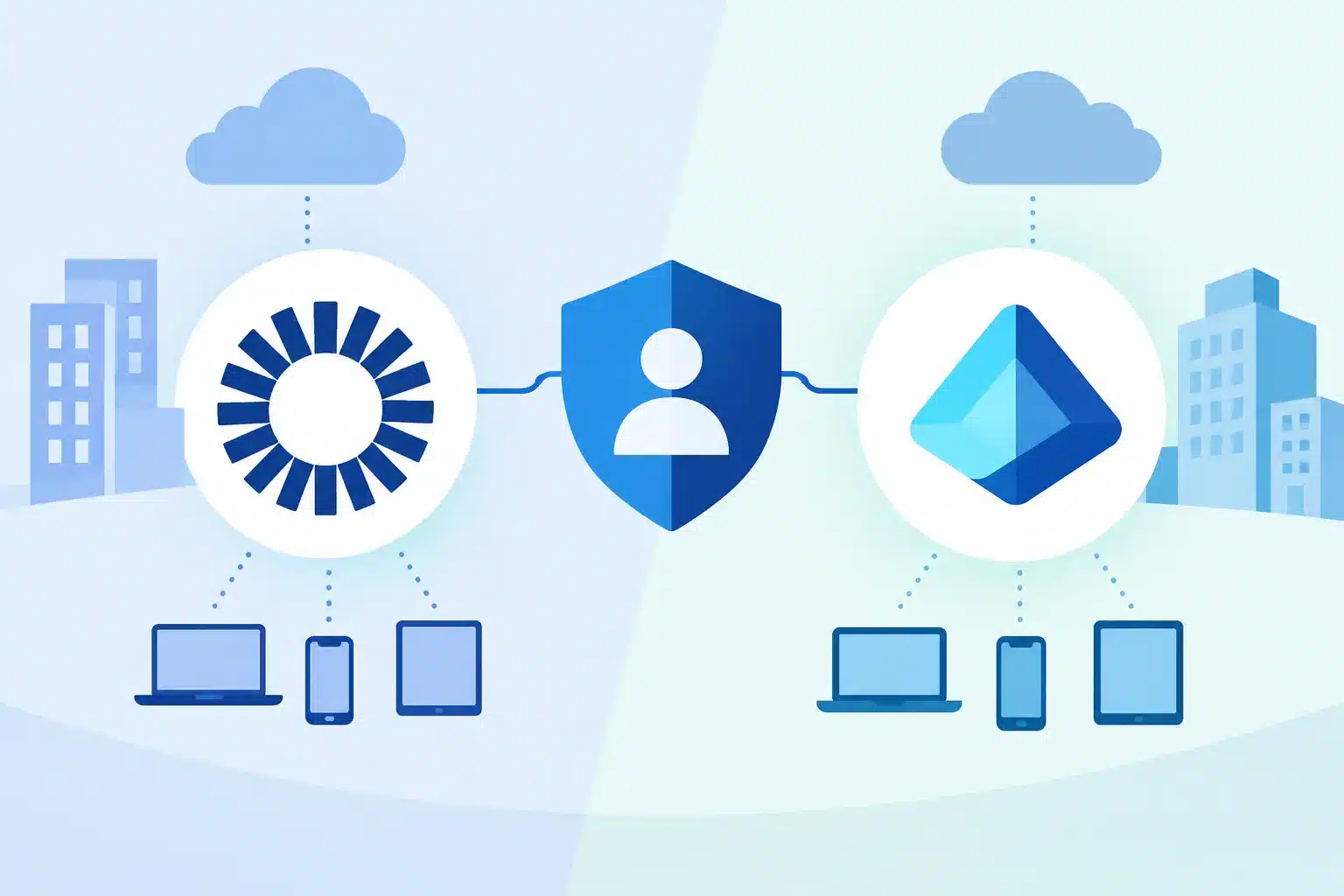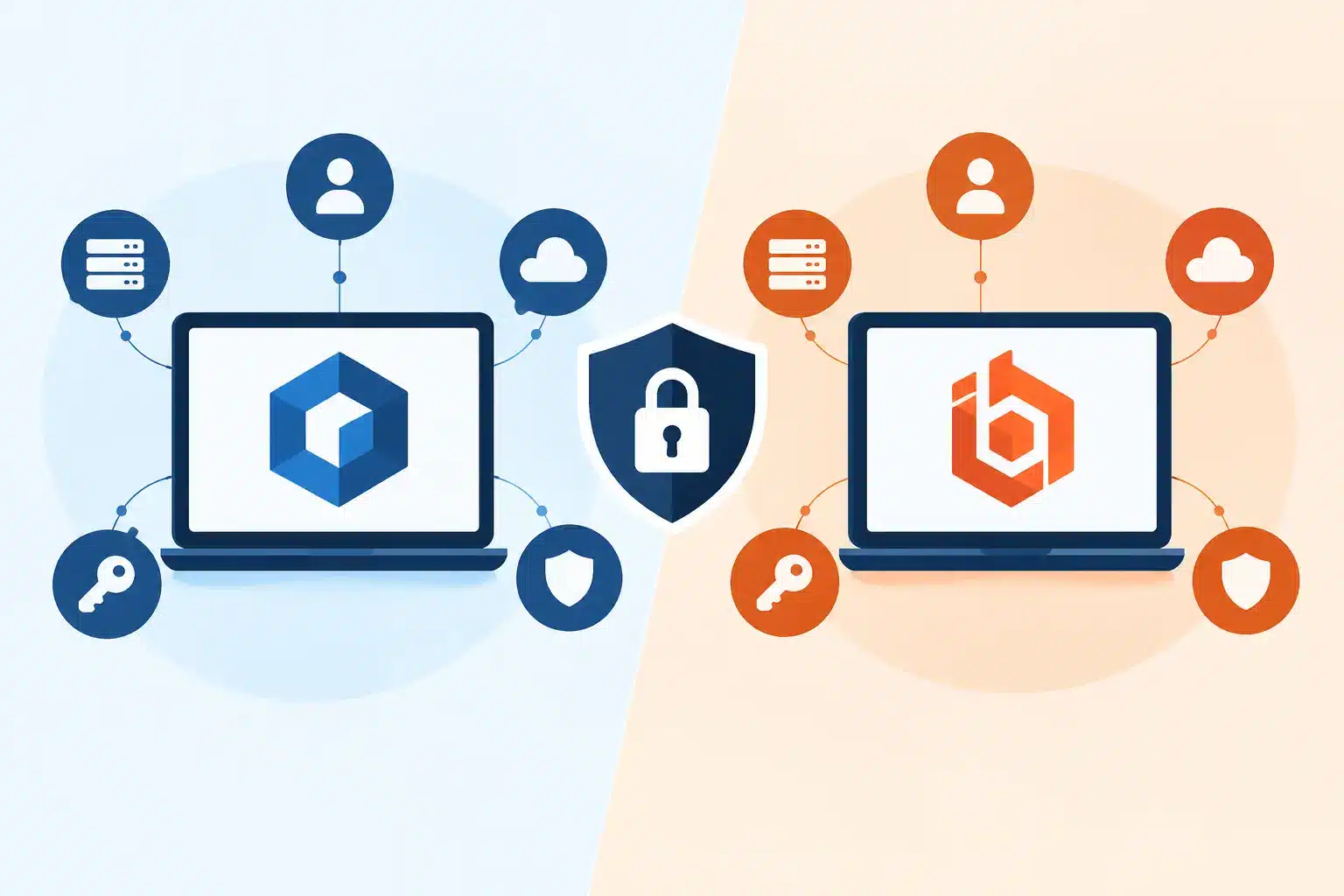
A PAM decision becomes urgent when privileged access is spread across administrators, vendors, cloud consoles, service accounts, and endpoints that were never designed to be governed together. CyberArk versus BeyondTrust PAM is not a simple feature checklist. Both platforms can materially reduce privileged access risk, but they reflect different operational strengths, deployment patterns, and priorities.
For enterprise security teams, the right decision starts with the access problem that creates the most exposure. Is the primary concern standing privilege across a large hybrid estate? Is it administrator productivity and endpoint control? Is a mature vaulting program required for highly regulated systems? The answers determine which platform will create durable control rather than another security tool that requires constant exception management.
CyberArk versus BeyondTrust PAM: The Core Difference
CyberArk is commonly selected for enterprise-scale privileged access programs centered on credential vaulting, session isolation, access workflows, and governance across diverse infrastructure. It has deep roots in securing high-value privileged identities, including human administrators, application accounts, service accounts, cloud credentials, and secrets used by workloads. Organizations often view it as a strategic platform for building centralized control over privileged access at scale.
BeyondTrust has a strong position in privileged access management with particular depth in endpoint privilege management, remote support access, and practical control of administrator rights. Its portfolio is well suited to organizations that need to remove local administrator privileges, govern elevated activity on endpoints, and provide secure remote access to internal systems without exposing persistent credentials.
This distinction should not be overstated. Both vendors offer capabilities across password management, session management, least privilege, remote access, and cloud environments. The more useful distinction is operational: CyberArk often fits organizations building a broad, centralized privileged identity control plane, while BeyondTrust can be especially compelling where endpoint privilege reduction and secure operational access are immediate priorities.
Start With the Risk You Need to Remove
A PAM platform should be evaluated against real attack paths, not a generic requirements document. Credential theft, unmanaged local administrator rights, third-party access, overprivileged cloud roles, and service account sprawl require different controls and different implementation sequencing.
CyberArk is frequently a strong fit where privileged credentials are distributed across critical infrastructure and must be discovered, vaulted, rotated, and monitored through a central operating model. This is particularly relevant in financial services, healthcare, energy, and large industrial environments where legacy systems coexist with cloud platforms and compliance evidence must be repeatable. The platform supports a programmatic approach to reducing credential exposure while enforcing approvals, time-bound access, and recorded sessions.
BeyondTrust is often attractive when the operational problem is visible on the endpoint: users and IT teams have local administrator rights because they need to install software, run specific tools, or perform support tasks. Removing those rights without a workable elevation process can disrupt the business. BeyondTrust’s endpoint privilege capabilities can help teams apply policy-based elevation, application control, and detailed audit trails while maintaining user productivity.
If a company has both problems, which is common, the selection should be based on the program’s first critical control objective and the architecture needed over the next three to five years. A pilot that solves a narrow issue but cannot scale into the wider identity security strategy can create another fragmented access control layer.
Credential Vaulting and Privileged Session Control
For organizations with large populations of privileged accounts, vaulting and session management are central evaluation areas. CyberArk is widely recognized for deep credential lifecycle controls. It can support discovery, onboarding, password rotation, just-in-time access patterns, session monitoring, and controlled access to sensitive systems. Its strength is most apparent when privileged credentials must be managed consistently across Windows, Unix, databases, network devices, cloud environments, and business applications.
The operational benefit is not simply that passwords are hidden. A well-run vaulting program reduces the number of people who know privileged credentials, creates accountability for each access event, and limits the damage from a compromised administrator workstation. It also gives security teams evidence for audits and investigations.
BeyondTrust also provides credential management and session capabilities, including controlled remote access and recording. It can be a practical choice where secure support workflows are a major driver. Service desks, infrastructure teams, and external support providers often need fast access to systems, but that access still requires identity verification, authorization, session visibility, and a clear end point.
The key evaluation question is how each product handles the systems that matter most to your organization. Test credential rotation reliability, session launch behavior, access approvals, account reconciliation, and the experience for administrators under real operating conditions. A polished demonstration does not expose integration gaps, network constraints, or exceptions created by legacy applications.
Endpoint Privilege and Remote Access
Endpoint privilege management is where BeyondTrust may have a clear advantage for many organizations. Persistent local administrator rights remain a common route to ransomware deployment, credential theft, and unauthorized software changes. A platform that allows elevation by policy, rather than broad local admin membership, can shrink this attack surface quickly.
This approach requires disciplined policy design. Policies that are too permissive preserve risk. Policies that are too restrictive create help desk volume and user workarounds. The deployment must identify legitimate business applications, distinguish trusted publishers from unsafe execution paths, and establish a process for exceptions that does not become a permanent bypass.
CyberArk also addresses endpoint-related privileged access through its broader portfolio, but organizations focused primarily on endpoint least privilege should compare day-to-day policy administration, reporting, user experience, and support workflows in detail. The best technical architecture fails if IT operations cannot maintain it after the implementation team leaves.
For remote access, evaluate more than connectivity. External vendors and support teams should receive access only to approved targets, only for approved time windows, and only through monitored sessions. The platform should remove the need to distribute shared VPN credentials or expose internal systems directly to third parties.
Deployment Model and Operational Load
PAM is an operational discipline. The work does not end when the vault, agents, or connectors are installed. Accounts change ownership, systems are retired, applications break rotation policies, new cloud services appear, and administrators need exceptions. The platform choice must account for the operating model required to keep controls effective.
CyberArk can require meaningful design effort, especially in complex enterprises. That investment can be justified when the goal is a mature, integrated privileged access program spanning many identity types and environments. However, teams should plan for account onboarding processes, platform ownership, credential rotation testing, integrations with IT service management and identity systems, and ongoing policy governance. Treating the deployment as a one-time infrastructure project creates avoidable control gaps.
BeyondTrust can offer a faster route to measurable reduction of endpoint privilege and improved remote access control in specific use cases. It still requires operational ownership, especially for application elevation policies, endpoint coverage, and privileged remote access workflows. Faster initial deployment should not be confused with lower long-term governance requirements.
Cloud strategy also matters. Teams should assess data residency, administrative separation, high availability, integration architecture, and how each vendor supports cloud-hosted and on-premises systems. A hybrid environment needs controls that work consistently across old and new infrastructure without forcing administrators into unsafe manual processes.
Governance, Integration, and Audit Evidence
PAM should not operate as an isolated security island. It needs to connect with identity providers, directory services, ticketing platforms, SIEM tools, vulnerability management, and identity governance processes. Access decisions become more defensible when they are tied to a verified identity, an approved role, a business justification, and a recorded activity trail.
CyberArk is often well positioned for enterprises that need detailed privileged identity governance across a broad estate. Its value increases when it is integrated with IAM and IGA controls so privileged access can reflect joiner, mover, and leaver events, role changes, and periodic access reviews.
BeyondTrust can also produce meaningful audit evidence, particularly around endpoint elevation and remote support activity. The question is whether its reporting and integrations support the organization’s specific control objectives, such as proving that vendors accessed only designated assets or showing that elevated application use followed approved policy.
For either platform, define success measures before deployment. Useful measures include the percentage of privileged accounts vaulted, the number of standing local administrators removed, credential rotation success rates, unmonitored third-party sessions, and time required to produce audit evidence. Metrics turn PAM from a software investment into a controlled security capability.
How to Make the Decision
Choose CyberArk when your primary requirement is enterprise-wide control of privileged credentials and sessions across a complex, high-value estate. It is a strong candidate when the organization needs a strategic platform for privileged identity security, has the maturity to support a structured rollout, and must extend governance across human, application, and machine identities.
Choose BeyondTrust when reducing endpoint privilege, securing remote support, and enabling controlled elevation are dominant requirements. It can be particularly effective for organizations seeking to remove broad local admin rights without obstructing operations or creating an unmanageable support burden.
Many evaluations will reveal a mixed environment where each platform has strengths. That does not automatically justify deploying both. Separate products should only be considered when their roles, ownership, integrations, and evidence models are explicit. Otherwise, overlapping controls can create administrative friction and unclear accountability.
A disciplined assessment should map privileged identities, access paths, critical assets, operational teams, and compliance obligations before selecting a platform. IDENT1TY approaches that work as an identity security operating model, connecting technology choices to deployment, governance, and long-term support. The objective is not to buy the most features. It is to secure critical access in a way your teams can sustain under pressure.