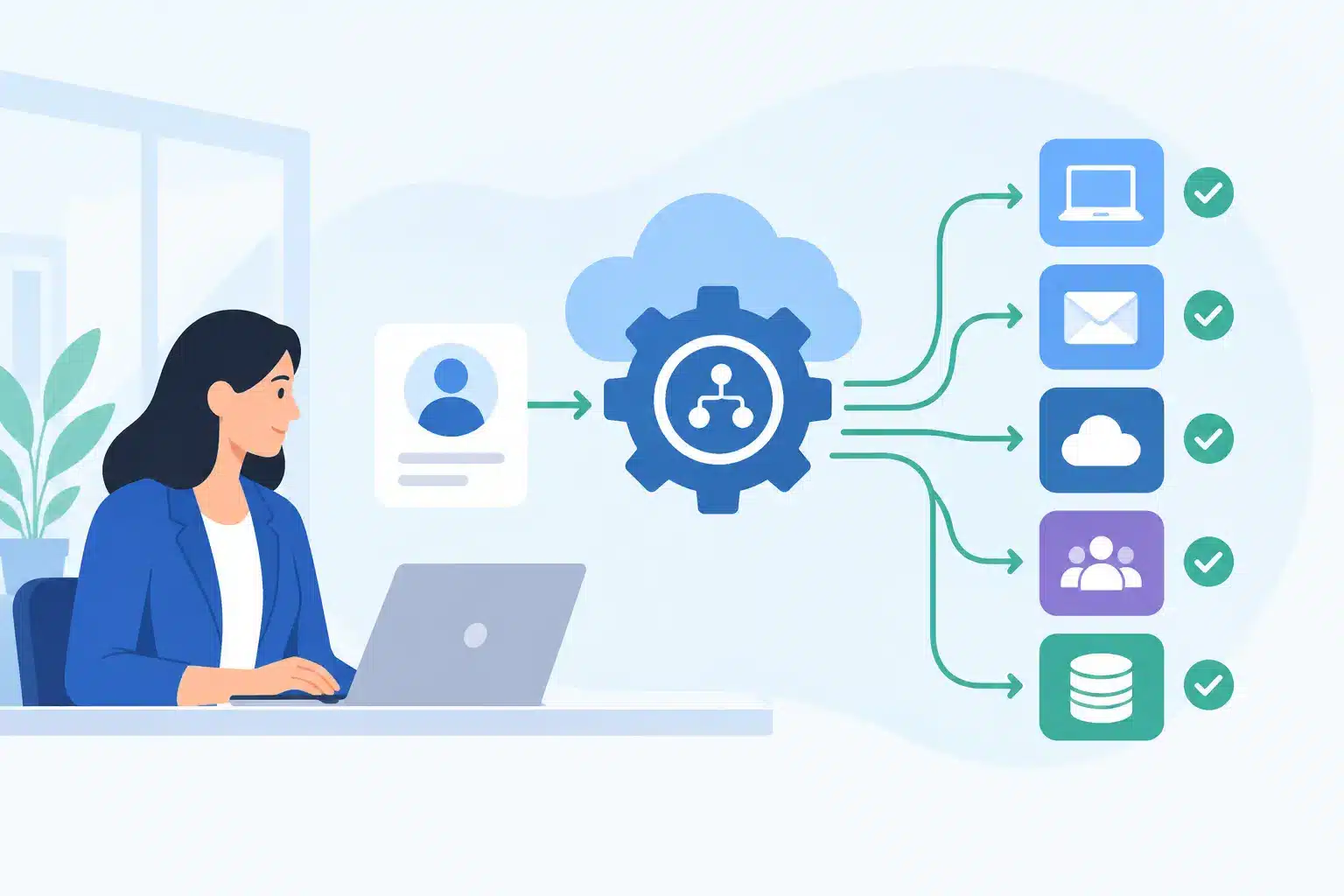
A service account password that has not changed in three years is not a stable production dependency. It is an unmeasured exposure. When organizations rotate service account credentials, they reduce the usable life of a stolen secret, validate ownership of machine access, and expose dependencies that have been operating without control.
The challenge is operational. Service accounts often sit behind critical applications, scheduled jobs, integration middleware, databases, cloud workloads, and third-party connections. A poorly planned rotation can interrupt revenue-generating services, delay clinical workflows, or break a batch process that no one notices until the following morning. The goal is not simply to change a password. The goal is to establish a repeatable control that protects non-human identities without creating avoidable outages.
Why service account rotation fails in production
Most failures begin with incomplete visibility. An account may be listed in Active Directory, an identity platform, or a privileged access management vault, but its real dependencies are distributed across application configuration files, scripts, CI/CD pipelines, Windows services, Linux daemons, task schedulers, APIs, and vendor-managed systems.
Teams also frequently confuse account ownership with technical administration. Infrastructure may own the directory object, while an application team owns the service, a database team maintains a connection string, and a managed service provider supports the underlying platform. When responsibility is fragmented, no one can confidently approve a rotation window or verify that every credential consumer has been updated.
Manual rotation compounds the risk. An administrator changes a password, updates a few known locations, and waits for alerts. This approach depends on institutional memory and creates inconsistent evidence for audit, incident response, and governance. It may work for a small number of accounts. It does not scale across enterprise machine identity environments.
Build an inventory before changing anything
A credible rotation program starts with an inventory that records more than account names. For every service account, identify the system owner, technical owner, business service, privilege level, authentication method, credential location, dependent applications, rotation method, and approved rotation frequency.
This information should answer practical questions quickly. Which accounts can access production databases? Which ones hold local administrator or domain-level privileges? Which credentials are embedded in code or configuration? Which accounts support a critical business process with no documented recovery procedure?
Classify accounts by impact and exposure. A low-privilege account used by an internal reporting job does not require the same rotation process as an account that administers cloud infrastructure or accesses protected health information. Risk-based scheduling allows teams to prioritize high-value credentials while building operational maturity for the broader population.
Discovery should include accounts that do not look like traditional service accounts. Machine identities may use API keys, client secrets, SSH keys, certificates, cloud access keys, managed identities, workload identities, or tokens issued by an identity provider. Password rotation remains necessary in many environments, but reducing reliance on static passwords should be part of the long-term architecture.
Define ownership and a rotation standard
Every production service account needs a named accountable owner. This is not merely the person who can reset the password. The owner must understand the business impact of the service, approve maintenance timing, confirm dependencies, and accept remediation actions when a rotation fails.
Establish a standard that defines rotation intervals by risk tier, required password or secret complexity, vaulting requirements, emergency access procedures, logging expectations, and evidence retention. The standard should also define exceptions. Some legacy applications cannot consume a changed credential without downtime or vendor intervention. An exception may be justified temporarily, but it must include compensating controls, an expiration date, and a remediation plan.
A rotation policy without a practical operating model creates false assurance. Teams need clear handoffs between IAM, PAM, application owners, platform administrators, and the service desk. They also need an escalation path when an owner is unavailable or a critical dependency cannot be validated.
Use vaulting and automation to control the process
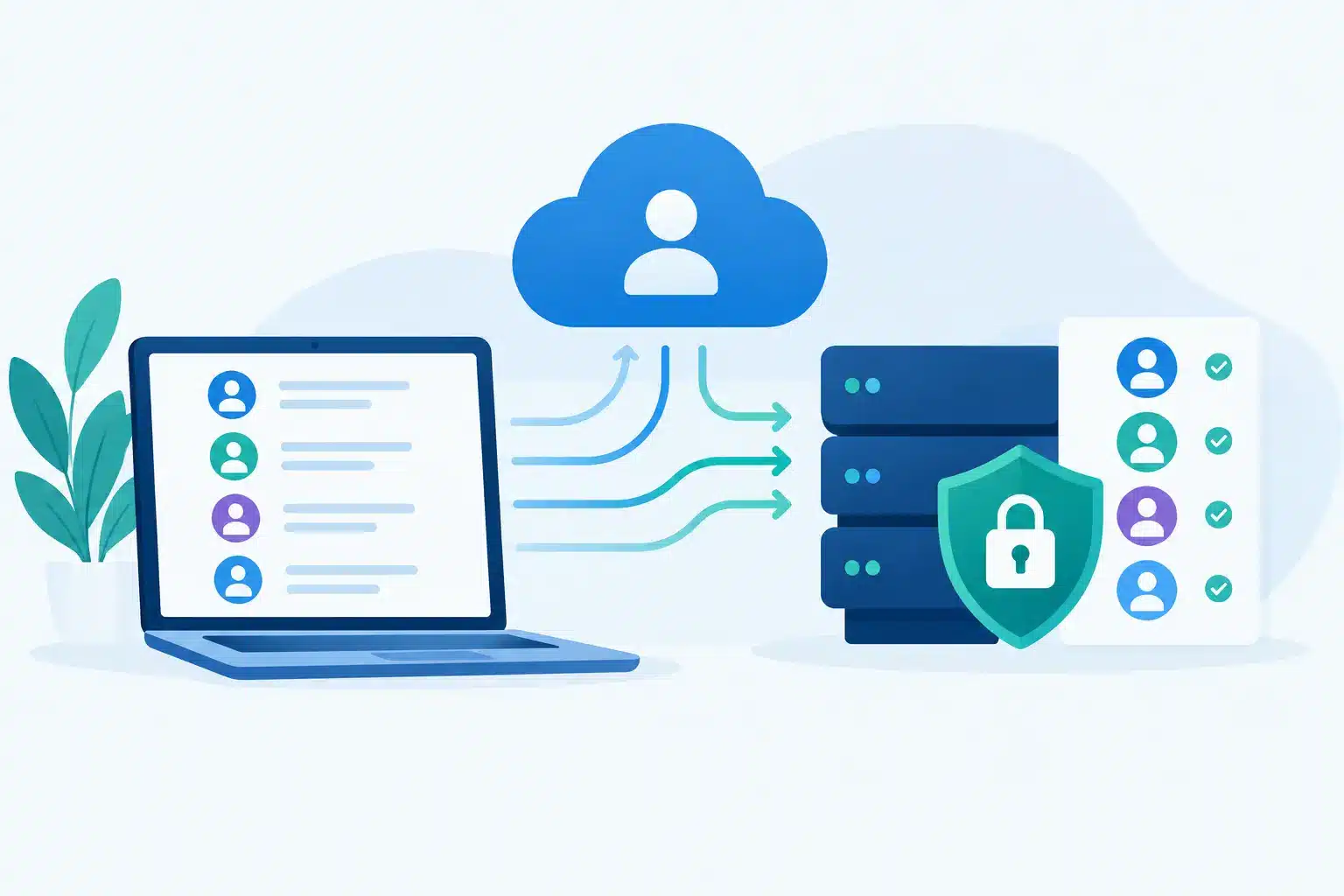
A privileged access management platform can centralize storage, generate unique credentials, enforce rotation schedules, and maintain an audit trail of access and change events. More importantly, it can reduce the number of people who ever see a service account password.
The highest-value capability is application-to-vault integration. Rather than embedding a static secret in a script or configuration file, the application retrieves an authorized credential at runtime or through a managed credential provider. This reduces secret sprawl and allows rotation to occur with less manual intervention.
Not every system supports modern retrieval patterns. In those cases, automated password management can still update a target account and reconcile the new credential in the vault. The process must be tested against the actual platform behavior. Some services require a restart. Others cache credentials, use multiple connection pools, or fail silently until a specific scheduled task runs.
Automation is not a substitute for governance. It will rotate the wrong account efficiently if the inventory, dependency map, or policy is wrong. Treat automation as an enforcement layer built on validated ownership and operational knowledge.
Test rotation as a controlled change
For critical accounts, rotation should follow a defined change procedure. Start with a pre-change validation: confirm the account is active, the vault has the current credential, the target system is reachable, owners are available, and a rollback path exists. If the credential is already out of sync, resolve that condition before introducing a scheduled rotation.
Where the application supports it, use overlapping credentials or a dual-secret pattern. Create a new secret, deploy it to the consuming application, validate authentication, and only then retire the previous secret. This approach materially reduces outage risk, though it requires applications and platforms that can hold more than one valid credential during the transition.
For systems that allow only one active password, schedule rotation during an approved maintenance window and monitor the service immediately afterward. Validate more than a successful password change. Confirm that the application can establish its required connections, scheduled jobs execute, API transactions succeed, and monitoring shows normal behavior.
A useful validation sequence covers four layers:
- The identity layer confirms the new credential is active and the prior credential is no longer accepted.
- The platform layer confirms services, agents, tasks, and containers can authenticate after any required restart.
- The application layer confirms core transactions and integrations are functioning.
- The business layer confirms the expected workflow completed, such as file transfer, payment processing, order fulfillment, or report delivery.
This layered approach prevents a common mistake: declaring success because a directory password reset completed while the business service remains unavailable.
Monitor failures and improve the rotation cycle
Rotation events should feed into security and operational monitoring. Alert on failed rotations, repeated authentication failures, vault reconciliation errors, unauthorized credential retrieval, and accounts that miss their required rotation date. These signals can indicate a broken dependency, a hard-coded secret, an untracked application, or attempted misuse of a credential.
Metrics make the program manageable. Track the percentage of in-scope accounts inventoried, vaulted, assigned to an owner, rotated on schedule, and successfully validated. Track exceptions separately. A high exception rate is not an administrative detail. It is evidence that architecture or application modernization work is needed.
Review failures after each rotation cycle. If the same class of issue appears repeatedly, such as secrets stored in deployment variables or services that require manual restarts, create a standard remediation pattern. This is how credential rotation becomes an operating discipline rather than a recurring emergency.
Reduce static credentials where possible
The strongest service account credential is often the one that does not need to be stored or manually rotated. Cloud workload identities, managed identities, short-lived tokens, certificate-based authentication, and federated workload access can reduce dependence on long-lived shared secrets.
That does not mean every password-based account can be eliminated immediately. Legacy platforms, packaged applications, and external integrations may require traditional credentials for years. The practical approach is to protect those accounts with vaulting, least privilege, monitoring, and disciplined rotation while designing new services around short-lived, attributable machine identities.
AI agents add another reason to act. An agent with access to APIs, data stores, or automation platforms is a non-human identity with potentially broad operational reach. Its credentials need the same ownership, least-privilege design, lifecycle controls, and evidence as any other privileged workload.
Make rotation a measurable identity control
Organizations should not measure success by how many passwords changed this quarter. Measure whether every high-risk service account has an owner, a known purpose, controlled storage, tested dependencies, an enforceable rotation schedule, and verifiable evidence of successful use after change.
That standard brings identity, infrastructure, and application teams into the same operating model. It also turns an often-neglected task into a control that limits credential exposure and improves production resilience. IDENT1TY helps organizations establish that model across PAM, IAM, machine identity, and long-term managed operations.
Start with the accounts that can cause the greatest damage or disruption. Establish ownership, map the dependencies, test the change path, and automate only after the process is understood. Control improves fastest when rotation is treated as a production capability, not a password-reset project.