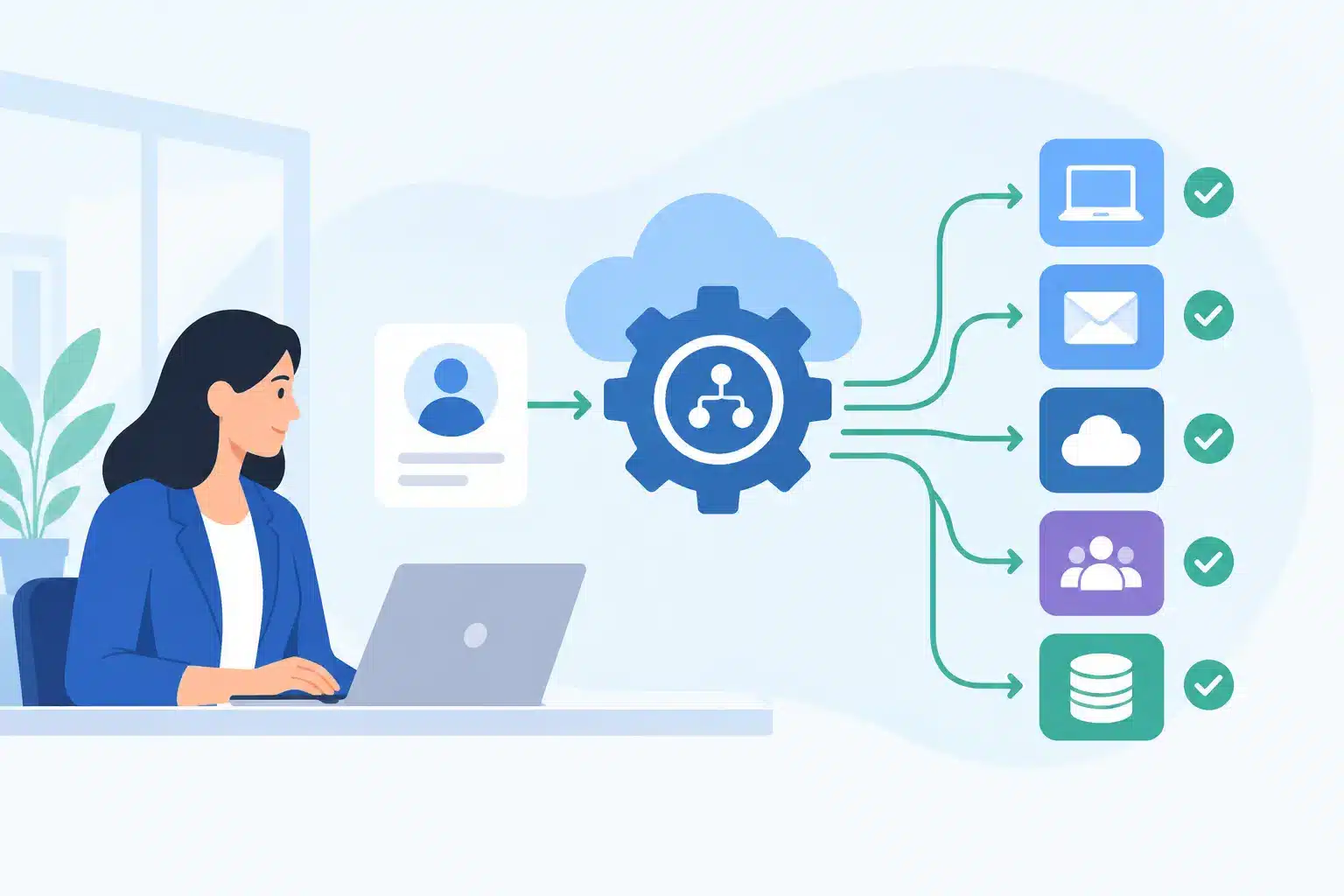
A privileged account that nobody can locate is not an exception. It is an active security exposure. Local administrator accounts, embedded service credentials, cloud root accounts, emergency access paths, and third-party remote sessions often sit outside formal controls until an incident exposes them. Knowing how to deploy privileged access means bringing those paths under deliberate, measurable control without disrupting the systems that run the business.
Privileged access deployment is not simply a vault implementation. A vault is a critical control, but it does not establish ownership, remove standing access, define emergency procedures, or prove that access was appropriate. The program has to connect identity architecture, infrastructure operations, security monitoring, and governance from the start.
Start with the privileged access risk model
The first deployment decision is scope. Organizations that begin by trying to onboard every account, platform, and vendor usually create a long project with limited early risk reduction. Organizations that start too narrowly can leave the most consequential access paths untouched. The right approach is risk-based and sequenced.
Identify where privileged control can cause material impact: production infrastructure, domain administration, cloud tenants and subscriptions, network devices, databases, industrial systems, security tools, and business-critical applications. Include human administrators, service accounts, application-to-application credentials, API keys, SSH keys, certificates, and non-human identities. Privilege is defined by capability, not by an account label.
For each access path, establish the system owner, technical owner, business criticality, authentication method, current credential location, and recovery dependency. This produces the inventory that a privileged access management program needs to operate. It also exposes a common problem: the accounts with the broadest reach often have the weakest ownership records.
A useful priority model considers impact, exposure, and recoverability. A domain administrator account used only during maintenance may be high impact but relatively straightforward to control. A service account embedded across legacy applications may have lower visibility and a higher chance of outage during rotation. Both matter, but they should not necessarily be onboarded in the same release.
How to deploy privileged access in controlled phases
A disciplined deployment moves from discovery to operational control. Each phase should have clear acceptance criteria, a named owner, and a rollback plan.
Establish the target architecture
Decide which privileged access controls are required for each use case. For interactive administrators, that commonly includes centralized authentication, multi-factor authentication, just-in-time elevation, credential checkout where needed, session recording, and command or activity monitoring. For non-human accounts, the focus shifts to ownership, credential vaulting, automated rotation, dependency mapping, and exception management.
The architecture must account for hybrid reality. A deployment may need to control on-premises Active Directory, cloud platforms, SaaS administration consoles, Linux and Windows servers, network appliances, and managed service provider access. Do not assume one access method fits every environment. Browser-based sessions, remote desktop proxying, SSH proxying, API-based rotation, and privileged endpoint elevation solve different operational problems.
Define the authentication and authorization chain before onboarding assets. Administrators should authenticate with their individual enterprise identity, not a shared privileged credential. Access decisions should use approved roles, time limits, and contextual controls where the environment supports them. The privileged account is then used or brokered by the platform, rather than becoming the administrator’s permanent identity.
Clean up before you automate
Automating rotation for an unknown or unstable account can create a production outage at machine speed. Before onboarding, validate what the credential does, where it is consumed, whether it is shared, and whether the target system supports the intended management method.
Remove dormant privileged accounts and replace shared administrative accounts with attributable access wherever possible. Where a shared account cannot yet be removed, treat it as a temporary exception with a documented owner, access approval, monitoring requirements, and a retirement date. Exceptions without expiration become architecture.
Service accounts require particular care. Some can be migrated to managed identities, workload identities, or application-specific authentication. Others may require password rotation because the platform cannot support a better model. The deployment objective is not to force every workload into the same pattern. It is to reduce credential exposure while maintaining service continuity.
Pilot high-value, repeatable use cases
A pilot should prove operating capability, not just technical connectivity. Select a contained set of high-risk systems with engaged owners, such as tier-zero administration, a representative server group, or cloud console access. Avoid using a highly customized legacy application as the first proof point unless it represents the primary business risk.
Test the full access lifecycle: request, approval, authentication, elevation, session activity, session termination, credential rotation, audit review, and emergency recovery. Include failed scenarios. What happens when the vault is unavailable, a password change fails, an administrator loses connectivity mid-session, or a break-glass account is used?
The pilot should also measure administrator friction. Excessive prompts, unclear access requests, slow session launch, or poorly designed role assignments lead teams to seek workarounds. Security controls must be strict, but they also need to support real operational tempo. This is where an experienced implementation team can distinguish a necessary control from a configuration that adds friction without reducing meaningful risk.
Expand by platform and risk tier
Once the pilot meets its criteria, expand in waves. Group systems by common technology, ownership model, and risk tier so that integrations and operating procedures can be reused. A wave for Windows server local administrators should not be treated the same as a wave for network devices or application service accounts.
Every wave needs a business owner and a technical sign-off confirming that access, rotation, monitoring, and recovery have been tested. This prevents a familiar failure mode: accounts are marked as onboarded because they appear in a vault, while teams continue using unmanaged credentials stored in scripts, spreadsheets, or local password stores.
Track adoption through evidence, not enrollment counts. Useful measures include the percentage of privileged sessions brokered through approved controls, the number of standing privileged assignments removed, credential rotation success rates, unresolved privileged account ownership, emergency access events, and policy exceptions past their review date.
Build operations into the deployment
Privileged access management becomes weaker the moment its operating model is unclear. Someone must own platform health, connector maintenance, account onboarding standards, rotation failures, access policy changes, log review, and incident response procedures. Those responsibilities may sit across security, IAM, infrastructure, and an external managed services partner, but they must be explicit.
Define service levels for events that affect privileged operations. A failed rotation on a production service account needs a different response than a failed rotation on a noncritical lab account. A broken session proxy during an active incident may require an approved emergency workflow. Pre-approved break-glass access should be tightly scoped, time-bound where possible, independently monitored, and reviewed immediately after use.
Logging also needs operational purpose. Session recordings and privileged activity logs are valuable only if security teams can search, retain, and investigate them. Integrate privileged access events with the security operations process, then define what generates an alert and what requires periodic review. Recording every session without review criteria creates storage cost, privacy concerns, and little security value.
Connect privileged access to identity governance
PAM cannot be isolated from the broader identity program. Privileged roles should be governed through joiner, mover, and leaver processes; access reviews; segregation-of-duties controls; and authoritative ownership data. If an engineer changes teams, their standing administrative access and eligibility for just-in-time elevation should change with that event.
This connection matters even more in cloud and automation-heavy environments. Human users, workloads, API integrations, machine identities, and emerging AI agents can all obtain privileged capabilities. The control objective remains consistent: verify identity, limit authority, constrain duration, monitor activity, and revoke access when the business need ends.
Not every environment needs the same level of session monitoring or approval workflow. Highly regulated production systems may require recorded sessions and dual approval. A mature engineering organization may favor automated, policy-based just-in-time access for lower-risk environments to preserve delivery speed. The decision should reflect risk, compliance obligations, and the consequence of operational delay.
Avoid the deployment patterns that create blind spots
The most damaging PAM programs are often technically deployed but operationally bypassed. Common causes include onboarding only named administrator accounts while ignoring local accounts and service credentials, allowing permanent exceptions without review, treating emergency accounts as invisible, and failing to involve application owners before rotation begins.
Another problem is measuring success by the number of vaulted accounts. A large account count can conceal weak coverage if privileged users still log in directly, credentials remain hard-coded, or role memberships are never recertified. The stronger measure is whether critical actions are attributable, authorized, monitored, and recoverable.
IDENT1TY approaches privileged access as an operating discipline: assess the real access landscape, deploy controls around business-critical paths, and establish the governance needed to keep those controls effective as environments change. That is the difference between a PAM platform that exists and a privileged access program that reduces exposure.
Start with the access path that would cause the greatest damage if misused or unavailable. Secure it, test recovery, assign ownership, and use that operational proof to expand control across the enterprise.