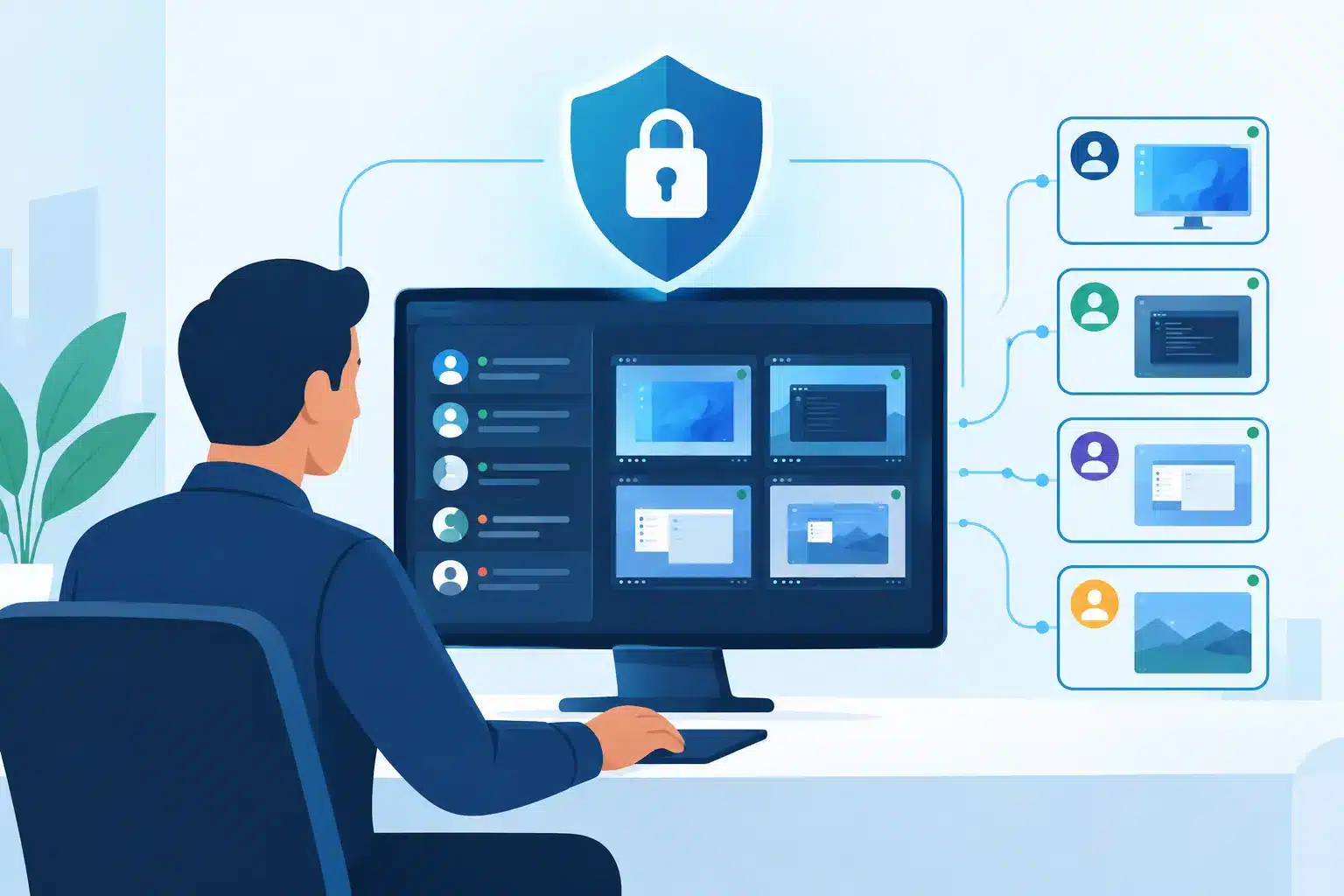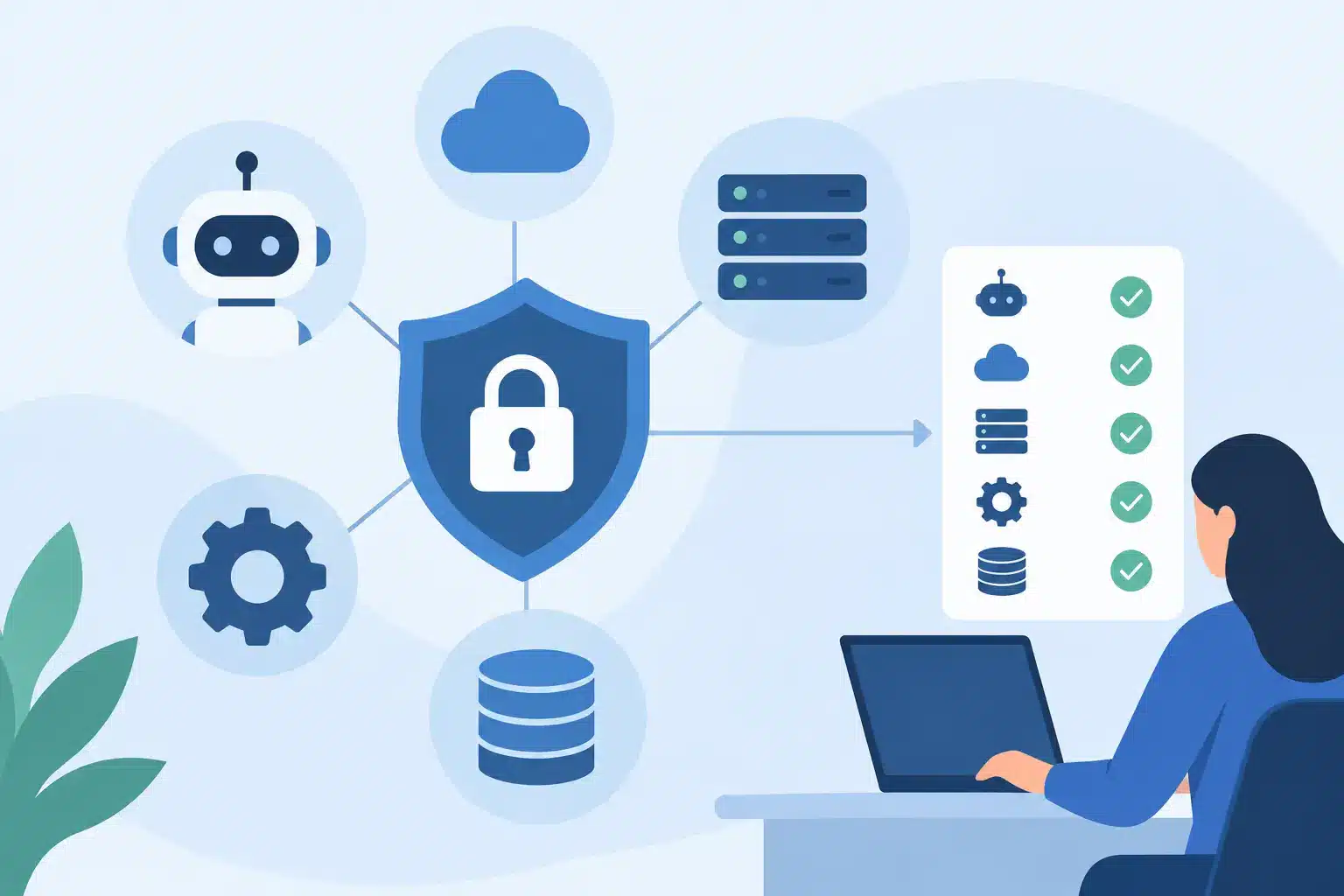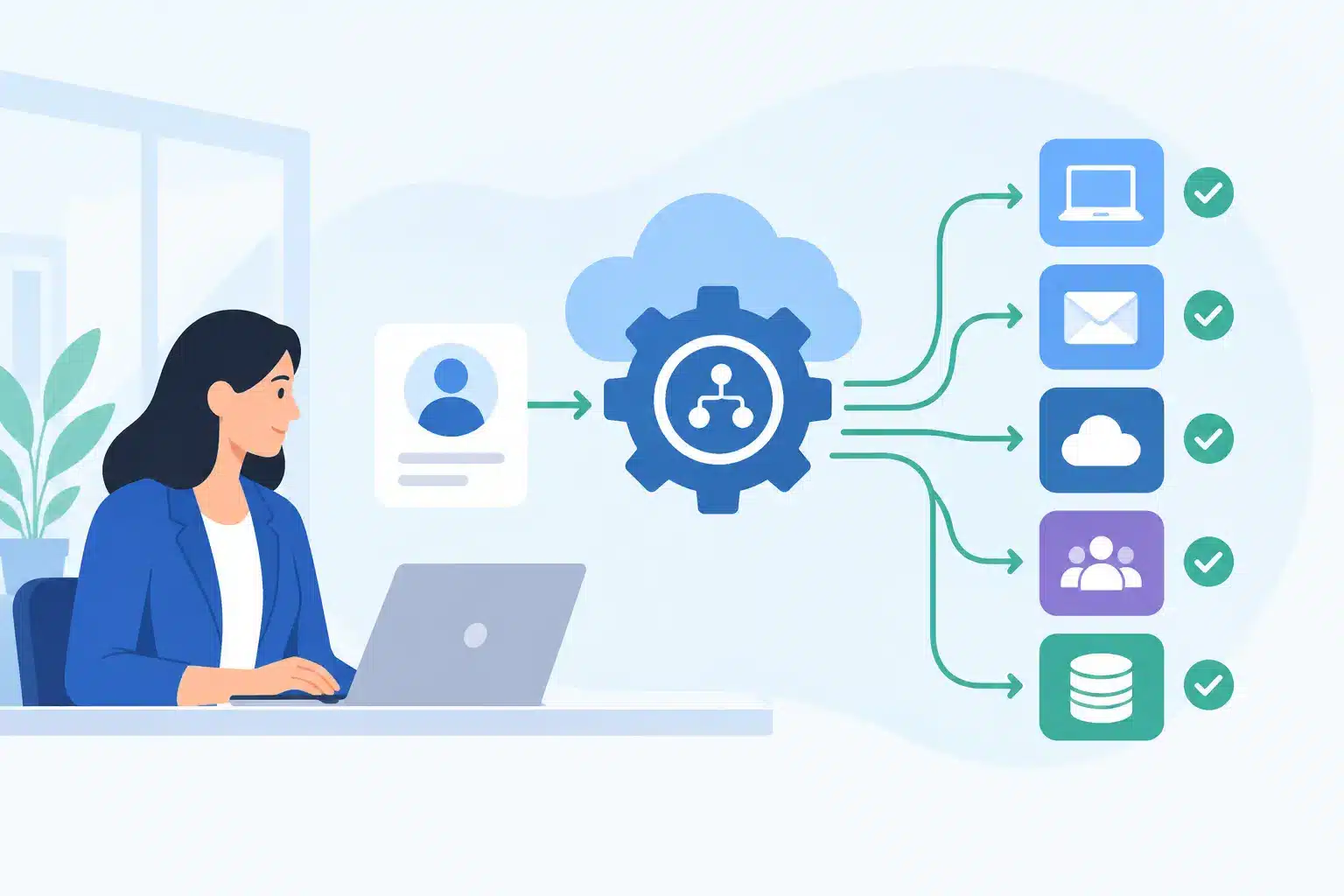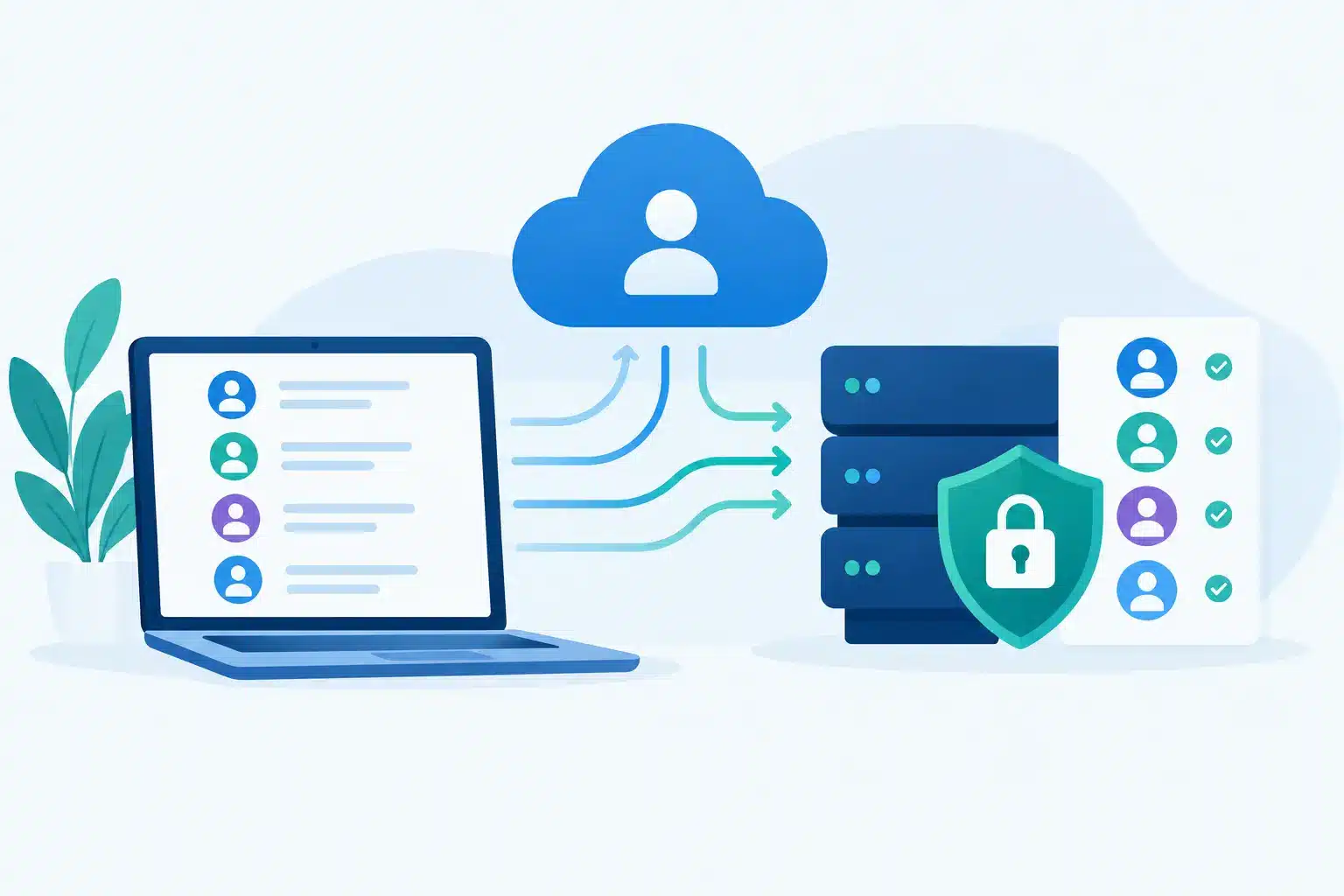
An AI agent with access to your ticketing system, cloud console, and customer data can do useful work fast. It can also move bad decisions, bad prompts, or bad permissions through your environment just as fast. That is why learning how to secure AI agents has become an identity problem first, not just an application security task.
Most enterprise teams are not starting from a clean slate. They are introducing agents into environments already shaped by IAM gaps, excess privilege, fragmented secrets management, and inconsistent governance across human and non-human identities. If you treat AI agents as isolated tools, you create another blind spot. If you treat them as digital identities with real access paths, you can bring them under control.
How to secure AI agents starts with identity
The first mistake many organizations make is securing the model while ignoring the agent. A model may be hosted in a controlled environment, but the agent wrapped around it often holds the real power. It can call APIs, retrieve documents, trigger workflows, open sessions, and make decisions based on external inputs. That operational layer is where exposure grows.
An AI agent should be treated like any other identity that can act in production. It needs a defined owner, an approved purpose, controlled entitlements, authenticated access paths, and full lifecycle management. If none of those elements exist, the agent is effectively operating as an unmanaged privileged entity.
This changes the conversation. The core question is no longer whether the agent is intelligent. The question is what the agent can access, who approved that access, how its activity is monitored, and how quickly it can be constrained when behavior changes.
Define the agent’s role before granting any access
Security failures usually begin long before deployment. Teams rush to prove value, connect the agent to five systems, and sort out governance later. Later rarely comes without an incident, an audit finding, or both.
Start by defining a narrow operational role. The agent should have a specific business function such as triaging support tickets, assisting developers with approved repositories, or collecting evidence for compliance workflows. That role should map to a limited set of systems, actions, and data classes.
This is where least privilege needs to be applied with more discipline than usual. AI agents can chain actions, interpret ambiguous instructions, and operate at machine speed. Overprovisioning a human user is risky. Overprovisioning an autonomous or semi-autonomous agent is worse because errors scale immediately.
In practice, this means separating read access from write access, limiting administrative functions, restricting execution scope by environment, and denying broad wildcard permissions. If an agent does not need production write access, it should never receive it. If it only needs a subset of records, filter access at the data layer instead of relying on prompt instructions to behave.
Use strong authentication for every agent interaction
Many AI deployments still rely on shared API keys, static secrets, or embedded credentials passed between services. That approach does not hold up in enterprise environments. It weakens attribution, makes rotation difficult, and creates persistent exposure when secrets are copied across pipelines and tools.
Agents should authenticate using enterprise-grade identity controls. Depending on the architecture, that may include workload identities, short-lived tokens, certificate-based authentication, and brokered access through approved identity providers. The point is simple: every agent interaction should be authenticated in a way that is unique, traceable, and revocable.
This is especially important when one agent connects to multiple downstream services. If a single credential unlocks everything, one compromise becomes a platform-wide event. Segmenting credentials by system and function reduces blast radius and improves incident response. It also gives security teams cleaner visibility into what the agent actually did.
Put privileged access under explicit control
Some agents will need elevated access. That may be justified in IT operations, cloud administration, or infrastructure support use cases. The answer is not to ban those use cases. The answer is to govern them the same way you would govern any privileged identity, with stricter guardrails where autonomy increases risk.
Privilege should be time-bound, approval-based where feasible, and tied to a defined task or policy condition. Session controls matter here. If an agent is initiating privileged actions, organizations need visibility into the command path, the target system, and the sequence of events that followed. In higher-risk cases, sensitive actions may need human approval gates before execution.
There is a trade-off. More approvals can reduce efficiency. Less control can increase operational risk fast. The right balance depends on the action. An agent summarizing logs is not the same as an agent changing firewall rules or rotating credentials in production.
Govern the data the agent can see and use
A well-controlled identity can still create exposure if the agent is pointed at the wrong data. Retrieval layers, document stores, knowledge bases, and connected SaaS systems often contain regulated or sensitive information far beyond what the use case requires.
To secure AI agents, data access has to be scoped with the same discipline as system access. Classify the data sources, validate whether the agent needs them, and apply access policies that reflect confidentiality, jurisdiction, and retention requirements. If your environment includes regulated workloads, policy enforcement should be aligned to those obligations from the start.
Context also matters. Some agents should never receive raw personal data when tokenized, masked, or summarized content would support the same result. Others should be blocked from ingesting highly sensitive records entirely. Security teams should not assume the model or prompt layer will reliably enforce those boundaries on its own.
Monitor behavior, not just uptime
Traditional application monitoring tells you whether a service is available. It does not tell you whether an agent is behaving safely. Security monitoring for AI agents has to focus on identity activity, decision patterns, tool usage, and deviations from expected behavior.
That means logging authentication events, API calls, privilege elevation, data access requests, prompt-triggered actions, and downstream changes. It also means establishing a baseline. If an agent that normally reads from one repository suddenly starts querying finance systems or making repeated failed access attempts, that should be visible and actionable.
Behavioral monitoring becomes even more important as agents gain more autonomy. A compromised human account often shows recognizable signs. An agent can appear operationally normal while carrying out harmful actions at scale. Detection logic needs to reflect that difference.
Build lifecycle management into the operating model
One of the most common control failures with machine identities is orphaning. Agents are created for pilots, copied into new workflows, and left running after the original project changes hands. Over time, no one is fully accountable for access, maintenance, or review.
That is not a tooling issue alone. It is an operating model issue. Every AI agent should have a clear owner, an approved deployment record, periodic access reviews, and a defined retirement process. When the use case changes, access should be revalidated. When the project ends, credentials and integrations should be deprovisioned.
This is where mature IAM, PAM, IGA, and certificate lifecycle practices start to converge. AI agent security is not a standalone control tower. It sits inside the broader identity program. Organizations that already manage human and machine identities with discipline are in a much better position to extend that control to agents.
How to secure AI agents without slowing the business
Security teams often face the same pushback: the business wants the productivity gains now, and governance is seen as delay. The practical answer is not to force every use case through the heaviest possible process. It is to tier control based on risk.
A low-impact internal research assistant does not need the same approval path as an agent that can modify cloud configurations or access regulated customer data. Set minimum controls for all agents, then add stronger requirements for privileged, autonomous, or externally exposed deployments. That approach preserves momentum while still protecting critical access.
It also helps to standardize deployment patterns. Approved identity methods, secret handling, logging requirements, and entitlement models should not be reinvented for every team. A repeatable control framework reduces friction and produces better outcomes than case-by-case exceptions.
For organizations operating at enterprise scale, this is where specialist support matters. IDENT1TY approaches AI agent security as part of the identity security stack, not as a disconnected experiment. That matters because the real challenge is not just deployment. It is maintaining control as agents multiply across systems, teams, and business processes.
The organizations that get this right will not be the ones with the most agents. They will be the ones that can prove who each agent is, what it can access, why that access exists, and how to shut it down the moment risk changes.